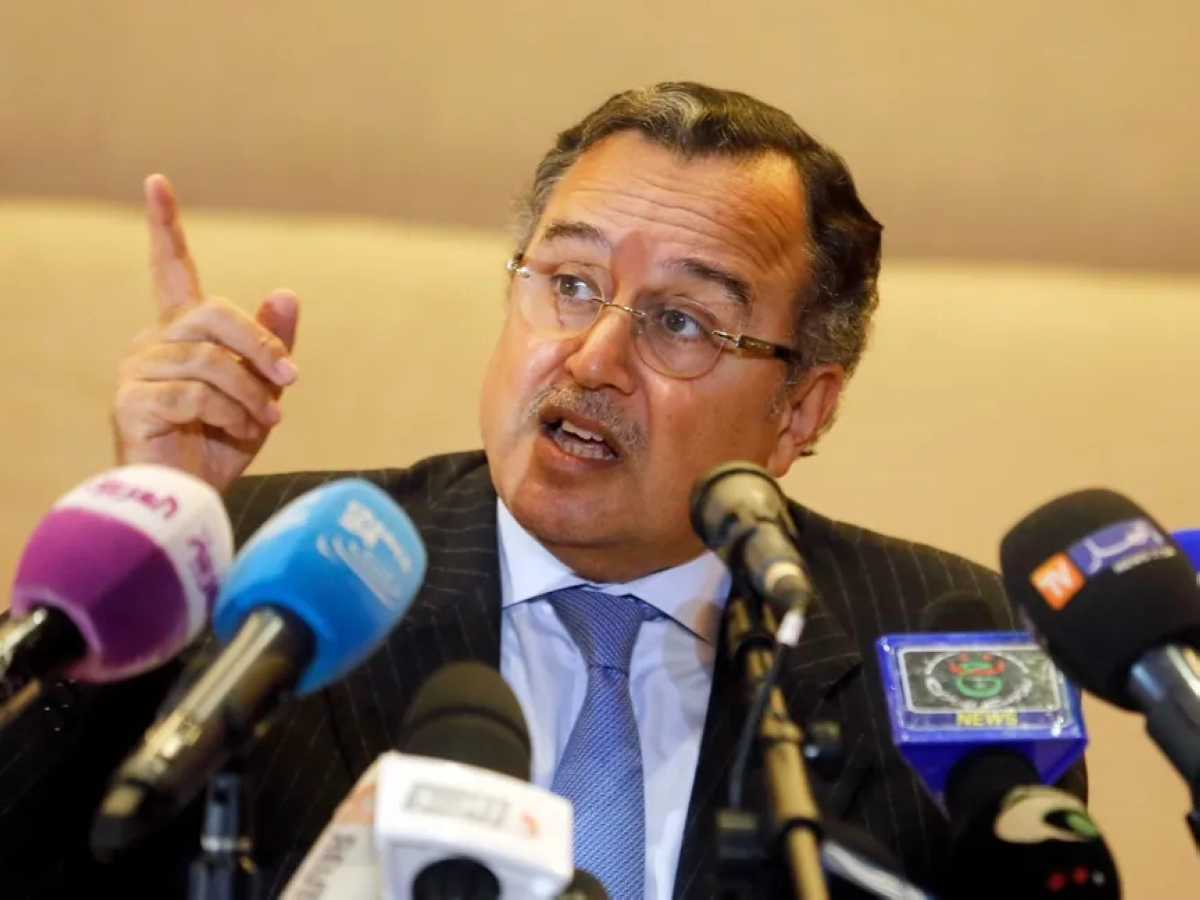
The Arab League Council, during its 165th session at the ministerial level, approved the nomination of former Egyptian Foreign Minister Nabil Fahmy to be the Secretary-General of the Arab League for a term of five years, starting on July 1, 2026. This decision comes as part of Egypt's efforts to enhance its leadership role in the Arab world and will be submitted for ratification during the upcoming Arab Summit to be held in the Kingdom of Saudi Arabia.
The ministerial meeting, which was conducted via video conference, was chaired by the Bahraini Foreign Minister, where the Egyptian nomination was formally presented through a memorandum submitted by Egypt's permanent mission to the Arab League. It is worth noting that Ahmed Aboul Gheit, the current Secretary-General, will complete his second term on June 30.
Details of the Event
Nabil Fahmy is a prominent Egyptian diplomat who served as Foreign Minister in 2013 and was Egypt's ambassador to the United States from 1999 to 2008. Additionally, he was the Dean of the School of Global Affairs and Public Policy at the American University in Cairo. Fahmy is recognized as a well-known figure in the diplomatic arena, possessing extensive experience in Egyptian and Arab foreign policy.
This move comes at a critical time for the Arab League, which faces numerous challenges, including political and economic crises in several member states. Fahmy is expected to seek to enhance Arab cooperation and achieve greater coordination among member states in addressing these challenges.
Context and Background
The Arab League was established in 1945 with the aim of promoting cooperation among Arab states in various fields. Since then, the League has witnessed many changes and challenges, including regional conflicts and political crises. In recent years, the League has faced criticism for its inability to effectively resolve conflicts, making the need for new leadership more urgent.
The nomination of Nabil Fahmy is part of Egypt's efforts to regain its leadership role in the region, especially following the political changes the country has experienced in recent years. Fahmy is seen as a capable figure to enhance dialogue among Arab states and achieve consensus in the face of shared challenges.
Implications and Impact
The appointment of a new Secretary-General for the Arab League could have significant implications for regional politics. Fahmy is expected to work towards rebuilding trust among member states and enhancing cooperation in areas such as security and economy. He may also contribute to improving relations between Arab states and major powers, particularly amid current tensions in the region.
Furthermore, Fahmy could play a role in strengthening the Arab position on international issues, such as the Palestinian cause, which is considered a central issue requiring special attention from the Arab League.
Impact on the Arab Region
The appointment of Nabil Fahmy could have a positive impact on relations among Arab states, especially in light of the common challenges facing the region. Fahmy is viewed as a figure capable of promoting dialogue and understanding among member states, which could contribute to achieving stability and peace in the region.
In conclusion, the appointment of Nabil Fahmy as Secretary-General of the Arab League is an important step towards enhancing Arab cooperation and achieving greater coordination among member states in addressing current challenges. His success in this position will depend on his ability to build strong relationships with member states and achieve consensus in Arab policy.