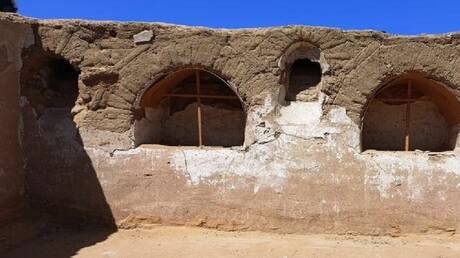
A joint Egyptian archaeological mission between the Supreme Council of Antiquities and the Faculty of Archaeology at Cairo University has made a significant archaeological discovery in the Wadi Natrun area of Beheira Governorate. This discovery redraws the outlines of the beginnings of monasticism in Egypt and reflects the historical and religious importance of this region.
Wadi Natrun, considered a major center for Christian monasticism in Egypt, has witnessed numerous archaeological activities over the decades. The recent discovery includes a collection of tools and artifacts dating back to the early days of monasticism, contributing to a deeper understanding of the religious history in the country.
Details of the Discovery
According to statements from officials in the mission, remains of ancient buildings and tools used in the daily life of monks were found. This evidence indicates that Wadi Natrun was a vital center for monastic life, where religious rituals were practiced and important meetings were held.
Additionally, ancient texts written in Coptic were discovered, reflecting the influence of Coptic culture during that period. These texts may assist researchers in understanding how religious thought evolved in ancient Egypt.
Background & Context
The history of monasticism in Egypt dates back to the early centuries of Christianity, where Saint Anthony the Great established monastic life in the third century AD. Wadi Natrun became a primary center for monks, attracting many from various parts of the country to live in solitude and contemplation.
This discovery comes at a time when the world is witnessing an increased interest in cultural and religious heritage, highlighting the importance of preserving archaeological sites that hold a rich history.
Impact & Consequences
The new archaeological discovery could open new horizons for studying the history of monasticism in Egypt, aiding academics and researchers in gaining a deeper understanding of the evolution of religious thought. It may also enhance cultural tourism in the region, as Wadi Natrun is considered an important destination for visitors interested in religious history.
Furthermore, this discovery could contribute to strengthening Egyptian cultural identity and demonstrate to the world the significance of religious heritage in shaping national identity.
Regional Significance
This discovery is not merely a local event; it has broader implications for the Arab region. Monasticism in Egypt has had significant influences on Christianity in the Middle East, and its history is intertwined with that of many Arab countries.
Moreover, the growing interest in cultural and religious heritage can enhance dialogue between different cultures and contribute to fostering peace and understanding among peoples.
In conclusion, archaeological discoveries like this highlight the importance of preserving cultural heritage and open the door for further studies and research that enhance our understanding of our shared history.