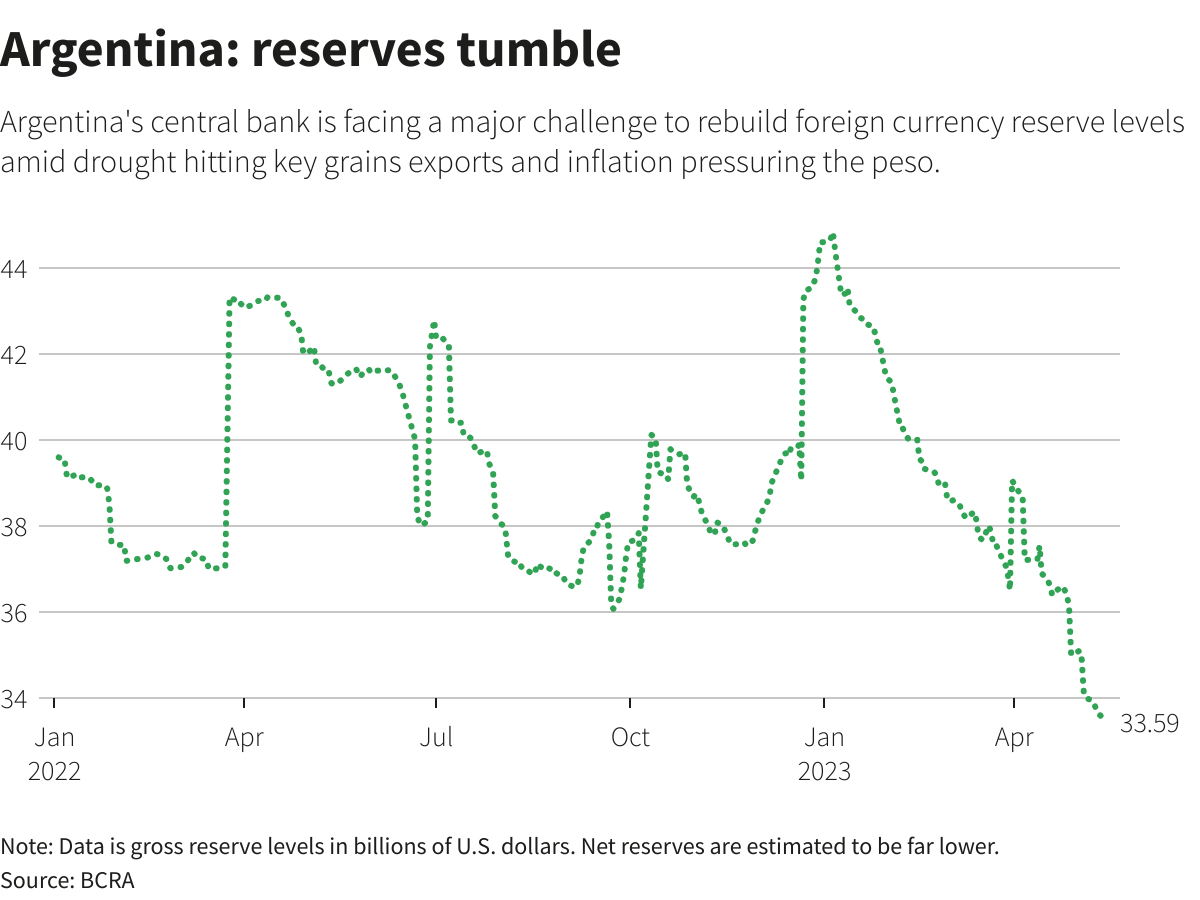
Fitch Ratings has indicated that Argentina's path to a credit rating upgrade heavily relies on a sustainable increase in foreign currency reserves. This warning comes at a time when Argentina is suffering from a severe economic crisis, as the government continues its efforts to stabilize the national economy.
Argentina is seeking to improve its credit rating, which could open doors to external financing at lower interest rates. However, Fitch has confirmed that this goal will only be achieved if the government can sustainably increase its foreign currency reserves, which poses a significant challenge given the current economic conditions.
Details of the Situation
Argentina is facing a severe economic crisis, with inflation rates reaching record levels, negatively impacting citizens' purchasing power. In this context, increasing foreign currency reserves is vital for maintaining the stability of the local currency, the peso. Recent data has shown some improvement in foreign reserves, but they remain far from the levels needed to achieve economic stability.
The Argentine government is implementing a range of economic policies aimed at attracting foreign investments and increasing exports. However, the challenges the country faces, including high debt levels and corruption, may hinder these efforts.
Background & Context
Historically, Argentina has experienced numerous economic crises, having defaulted on its debts in 2001, which led to a comprehensive economic collapse. Since then, successive governments have attempted to address economic issues, but the results have been mixed. In recent years, economic pressures have increased due to the COVID-19 pandemic, complicating the situation further.
Foreign currency reserves are an important indicator of economic health, as they enable the country to withstand financial crises and meet its import needs. In Argentina's case, increasing these reserves could help restore confidence in the local economy and attract investments.
Impact & Consequences
If Argentina can increase its foreign currency reserves, it may lead to an improvement in its credit rating, making it easier for the country to borrow from international markets. This could positively reflect on the Argentine economy, potentially leading to new investments and improved living conditions for citizens.
However, challenges remain, as genuine efforts from the government are required to achieve this goal. If the government fails to increase reserves, it could exacerbate economic conditions and increase social pressures.
Regional Significance
Argentina is one of the largest economies in Latin America, and any changes in its economic status could impact global markets. For Arab countries, improving the economic situation in Argentina could open new avenues for trade and investment between the two sides, especially in sectors such as agriculture and energy.
At the same time, Arab nations must be cautious of the economic challenges facing Argentina, as economic crises in countries like Argentina can affect global markets and lead to price fluctuations.