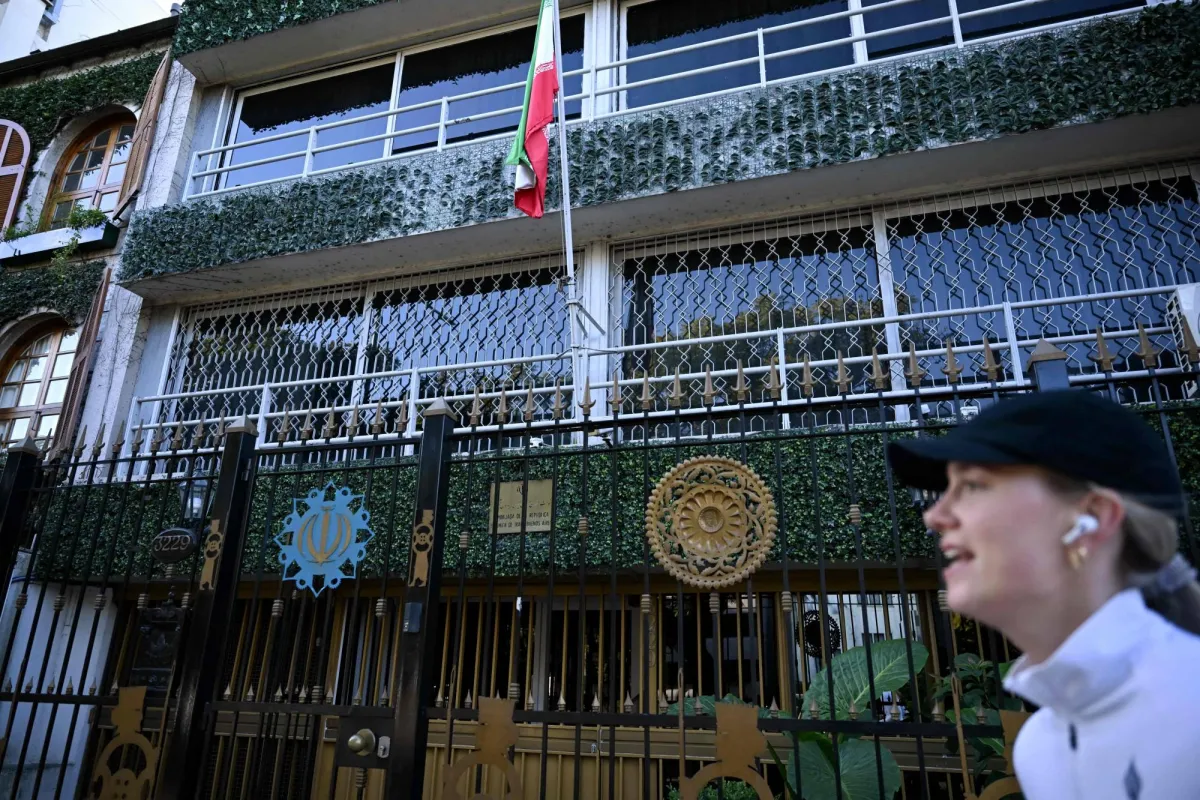
In a provocative move, the Argentine government announced on Thursday the expulsion of Iranian chargé d'affaires Mohsen Taherani, considering him a 'persona non grata.' This decision follows accusations from the Iranian Foreign Ministry against Argentine President Javier Milei and his Foreign Minister of involvement in military attacks against Iran.
According to a statement from the Argentine Foreign Minister, Taherani must leave the country within 48 hours. The Argentine minister described the Iranian allegations as 'false and offensive,' emphasizing that there is no basis for such claims against the country.
Details of the Incident
The Argentine decision comes after Milei's government designated the Iranian Revolutionary Guard as a terrorist organization, reflecting a radical shift in Argentina's foreign policy since Milei took office in December 2023. The Argentine government included the Revolutionary Guard in its list of terrorist individuals and organizations, allowing it to impose financial sanctions and restrictions on its activities within the country.
As part of this shift, the Argentine government has expressed its commitment to redirect the country towards Western civilization, condemning and fighting those who seek to destroy it. The government also added the Quds Force, affiliated with the Revolutionary Guard, to the list of terrorist organizations in January 2024.
Background & Context
Historically, Argentine-Iranian relations have been marked by significant tensions, especially following the attack on the AMIA Jewish community center in Buenos Aires in 1994, which resulted in the deaths of 85 people. Argentine judiciary has held Iran and Hezbollah responsible for this attack, complicating relations between the two countries further.
These developments occur within a broader context of regional and international tensions, as Argentina seeks to strengthen its ties with the United States and Israel, while Iran faces increasing pressure from the West.
Impact & Consequences
This move is expected to affect diplomatic relations between Argentina and Iran, as Tehran may take retaliatory actions. Additionally, the designation of the Iranian Revolutionary Guard as a terrorist organization could exacerbate the situation in the region and heighten tensions between Iran and the West.
Furthermore, these events may impact trade and economic relations between Argentina and other countries, especially amid rising political and economic pressures on Tehran.
Regional Significance
These developments are particularly significant for the Arab region, reflecting escalating tensions between Iran and Western countries. The new alliances forming in Latin America could influence regional dynamics, especially amid ongoing tensions between Iran and Gulf states.
In conclusion, these events reflect a shift in Argentina's foreign policy, which may lead to increased tensions in international relations and complicate the geopolitical landscape in the region.