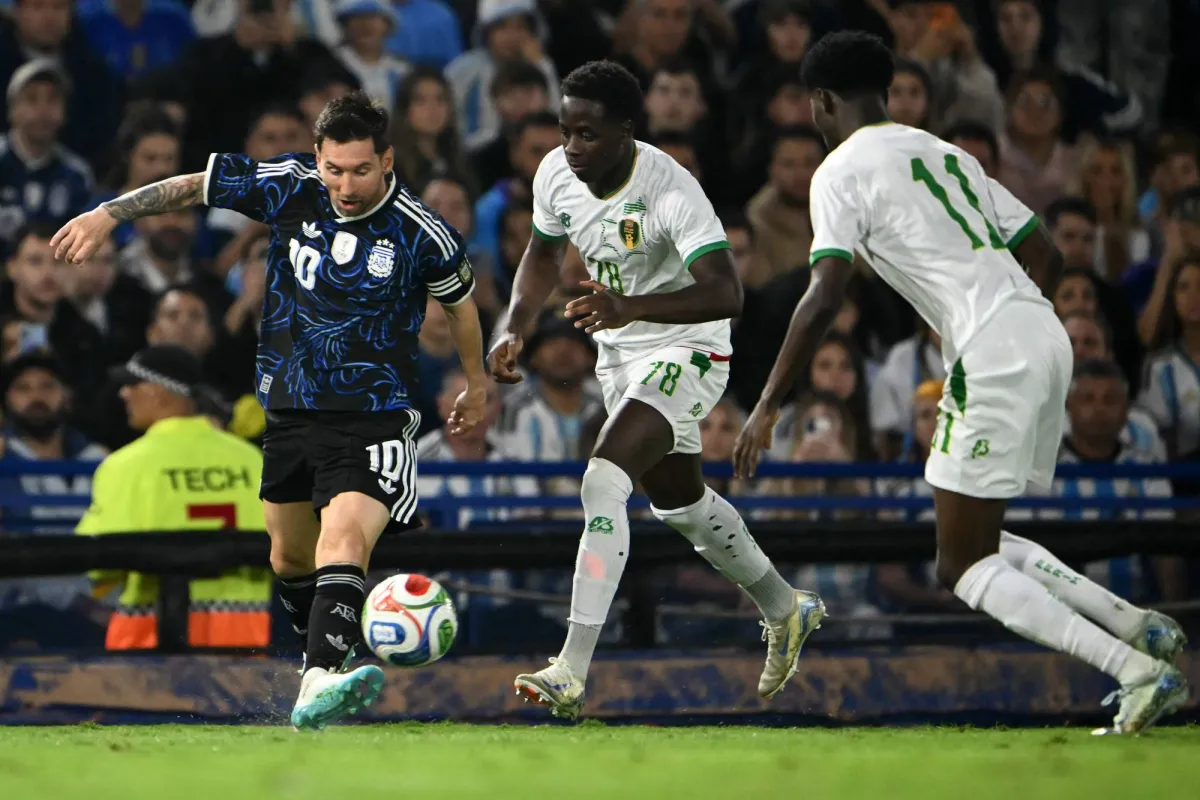
Argentina is facing major challenges ahead of the World Cup, having secured a difficult victory over Mauritania with a score of two to one. This has sparked concerns among Argentine fans regarding the team's readiness to defend its title.
In preparation for the World Cup, Argentina had hoped to face Spain, the European Championship champions, but political circumstances in the Middle East prevented this match. Consequently, the team returned its players to Buenos Aires to spend time with their families while conducting training sessions and friendly matches.
Event Details
Argentina was originally scheduled to face Guatemala, but FIFA's intervention led to the hosting of Mauritania and Zambia as substitutes. These matches are part of the preparation for the World Cup, where the Argentine team aims to maintain the title it won in Qatar four years ago.
Despite Argentina leading the South American World Cup qualifiers, the performance in recent friendly matches raises questions. The team has shown inconsistent performance, particularly in the second half of the match against Mauritania, where the performance notably declined after star player Lionel Messi came on as a substitute.
Background & Context
Historically, no team has ever won the World Cup twice in a row outside its continent, which adds pressure on Argentina to achieve this feat. After winning the Copa America, the team is eager to make history in the upcoming World Cup, but this requires a real test of its capabilities.
Concerns are growing about the defense line, which suffered repeated collapses during Argentina's journey in the 2022 World Cup. With no new defenders emerging, the team will rely on the same defensive line that participated in the previous World Cup, raising worries about its ability to withstand pressure in the upcoming tournament.
Impact & Consequences
All eyes are on Messi, who has yet to announce his participation in the World Cup. As he approaches his thirty-ninth birthday, many are questioning his ability to deliver the required performance in the tournament. While Julián Álvarez is considered one of the standout players on the team, Messi's absence from his previous form could impact the overall performance of the team.
Moreover, the absence of Ángel Di María, a key player in major tournaments, complicates matters further. While hopes were pinned on Alejandro Garnacho, his performance has not met expectations, placing the team in a difficult position ahead of the tournament.
Regional Significance
Argentina is regarded as one of the prominent teams in the football world, and its success in defending its title would have a significant impact on football fans in the Arab region. Many have strong ties with Argentine players, especially Messi, who enjoys widespread popularity in the Arab world.
Arab fans are looking forward to seeing a remarkable performance from Argentina in the World Cup, as its success could enhance its status on the international stage and increase the popularity of football in the region.
In conclusion, Argentina remains in a precarious position, needing to improve its performance before the World Cup kicks off. With numerous challenges ahead, it will be crucial to monitor the team's preparations in the coming period.