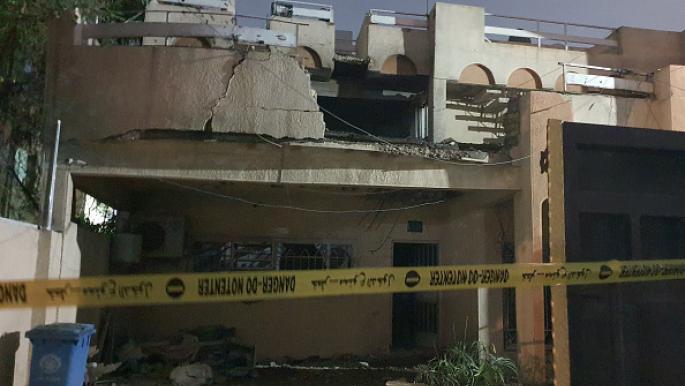
An armed faction in Iraq conducted a missile attack from within a residential area in western Baghdad late Saturday night, leading to material damage. This attack marks a qualitative shift in the pattern of armed operations, as residential neighborhoods are now being used as launch points for attacks, raising serious security concerns.
The assault, which took place at around 1 a.m. on Saturday, involved the use of locally-made missiles by the attackers, causing panic among the residents in the neighborhood. Photos and videos shared on social media highlighted the extent of the damage in the area, where some windows were shattered and parts of buildings collapsed.
Details of the Incident
According to local sources, preliminary information indicates that the compound from which the attack was launched is located near densely populated residential areas, making it difficult for security forces to respond effectively to such acts. Doubts have grown regarding the Iraqi government's capability to control sites that have witnessed this type of attack, reflecting a rise in armed activities within the capital.
In response to the attack, security forces in Baghdad announced that they would bolster their presence in sensitive areas. Official spokespersons refrained from providing any specific details about the attackers or the individuals responsible for the operation, adding to the ambiguity surrounding the orchestrators of these assaults.
Background & Context
The Iraqi capital, Baghdad, has been experiencing increasing security chaos in recent years, suffering from a series of attacks by various armed groups. While the government continues its efforts to combat these factions, the situation appears to be becoming more complicated, coinciding with rising political and economic tensions in the country.
It is noteworthy that using residential neighborhoods as launch points for attacks represents a troubling development, reflecting weaknesses in security measures and heightened risks faced by civilians. Over the years, the violence from armed factions has had direct effects on the daily lives of citizens in Baghdad.
Impact & Consequences
This attack adds to a list of violent events that reflect a state of security disruption in Iraq, potentially leading to a decline in public confidence in local authorities. Residents' fears of similar attacks recurring are increasing, which may drive them to leave their areas or take individual precautionary measures, potentially impacting local economic activity.
Such incidents require accelerated security measures, alongside effective political responses aimed at restoring stability. These attacks are likely to exacerbate political division and debate over how to deal with armed factions.
Regional Significance
These events point to the continued isolation of Iraq from its Arab surroundings, where enhancing security conditions and ensuring control over civilian areas are vital for maintaining regional stability. Neighboring countries remain apprehensive about the ramifications of Iraqi instability and its impact on their own security and political plans.
The escalation of violent acts may reinforce the conviction among regional powers that investing in Iraq requires calculated risks, adversely affecting growth and development in the country. Therefore, it is essential for the Iraqi government to find effective solutions aimed at improving the security of residential neighborhoods and restoring citizens' trust.