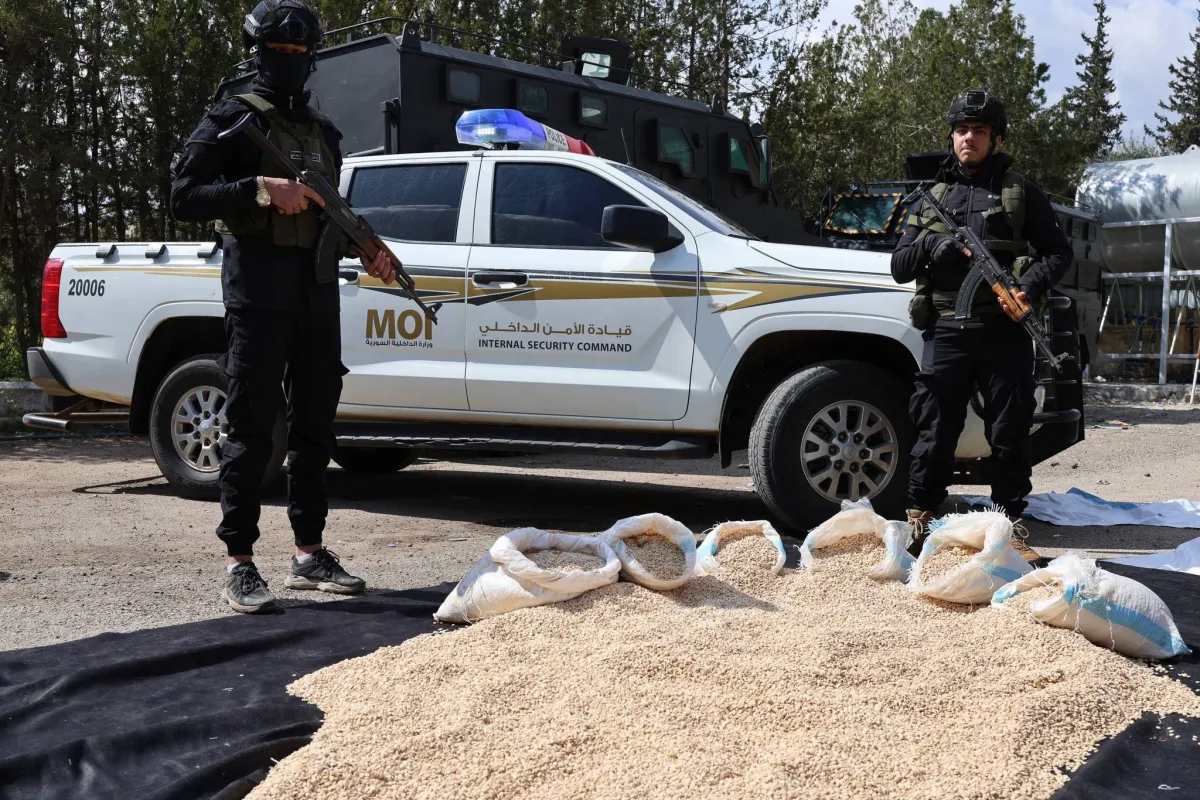
In a significant security move, the Syrian Anti-Narcotics Administration announced the arrest of Fayyad Al-Ghanem, who is accused of managing extensive drug trafficking networks through various internal and external routes. This announcement was made in an official statement issued by the Syrian Ministry of Interior on Sunday, detailing these networks and their connections to prominent figures in the previous regime.
According to the statement, investigations related to Al-Ghanem's activities revealed his involvement in smuggling large quantities of captagon to neighboring countries such as Lebanon, Iraq, and Turkey, indicating that these networks extend to international markets. His activities began in the areas of Aleppo and the Euphrates region, where he is credited with founding an armed militia called "Saqour Al-Raqqa", which included local fighters during the years of the revolution against the Assad regime.
Details of the Arrest
The statement reported that Al-Ghanem had close ties with military official Suhail Al-Hassan, as he operated within armed groups allied with him in the Raqqa and Euphrates regions. Relevant authorities are continuing their investigations to uncover the details of the networks linked to Al-Ghanem and track down all those involved, in preparation for bringing them to the competent judiciary.
In a related context, internal security forces managed to seize a drug packaging lab in the Dar'a countryside following precise intelligence monitoring, dismantling a machine used for packaging narcotics and confiscating large quantities of drugs, including nearly one million captagon pills that were prepared for smuggling.
Background & Context
Syria is considered one of the countries that has witnessed a surge in drug trafficking activities, especially after the outbreak of armed conflict in the country. Many individuals and armed groups have exploited the security chaos to expand their criminal activities, leading to the proliferation of drug phenomena in Syrian society. Currently, Syrian authorities are working to enhance their efforts to combat this phenomenon through intensive security operations.
Additionally, the internal security leadership in Raqqa province arrested a gang consisting of 12 individuals, including 4 women, after information surfaced about their involvement in drug trafficking and committing theft crimes. These operations are part of the Syrian authorities' efforts to maintain security and pursue smuggling networks.
Impact & Consequences
Concerns are rising regarding the impact of drug trafficking activities on community security in Syria, as these activities lead to an increase in crime and addiction rates among youth. These networks pose a significant challenge to authorities, who are striving to mitigate their impact on society.
The Syrian government aims to enhance cooperation with neighboring countries to combat drug trafficking, viewing this phenomenon as a threat to regional security. Reports have indicated a growing trend towards exporting drugs to other countries, necessitating a coordinated international response.
Regional Significance
The issue of drug trafficking in Syria represents a challenge not only for local authorities but also for neighboring countries. As smuggling operations increase, these countries face security and social pressures, requiring intensified efforts to address this phenomenon. Reports have shown an increase in the number of addicts in neighboring countries as a result of the influx of drugs from Syria.
In conclusion, the issue of drug trafficking emerges as one of the major challenges facing Syria and the region, necessitating an effective response from local and international authorities to mitigate this phenomenon and protect communities from its negative effects.