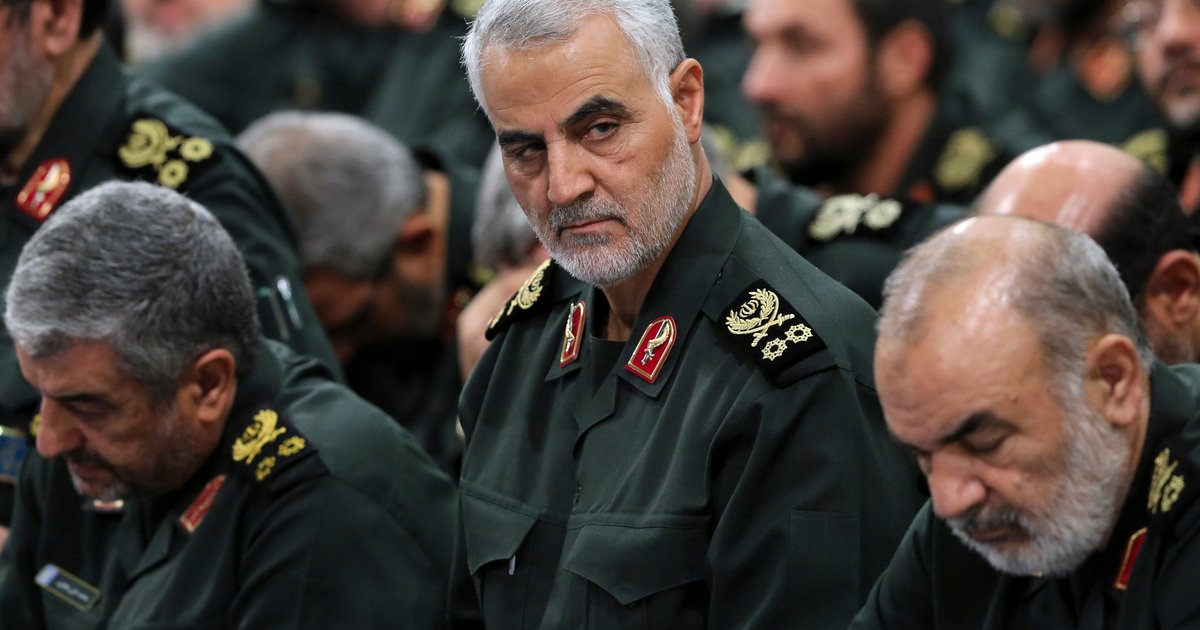
In a new development related to tensions between the United States and Iran, US authorities arrested family members of the late Iranian General Qassem Soleimani on Saturday. The arrests involved his niece and granddaughter after their residency permits were revoked. The US State Department confirmed that the arrests occurred following Secretary of State Marco Rubio's decision to cancel their legal status as permanent residents.
The arrests included Hamida Soleimani Afshar, Soleimani's niece, and her daughter, whose name has not been disclosed. Both are currently in the custody of US Immigration and Customs Enforcement, but their exact location has not been specified.
Details of the Incident
Qassem Soleimani, who led the Quds Force of the Iranian Revolutionary Guard, was killed in a US drone strike in Baghdad, Iraq, in January 2020, during Donald Trump's presidency. The US State Department confirmed that Soleimani Afshar had supported the Iranian regime, which the United States designates as a terrorist organization.
In the department's statement, it was noted that Soleimani Afshar praised Iran's Supreme Leader Ali Khamenei and referred to the United States as the "Great Satan." Her husband has also been barred from entering the United States, reflecting the current US administration's policy towards individuals associated with the Iranian regime.
Background & Context
These events come amid escalating tensions between the United States and Iran, with relations between the two countries deteriorating significantly since the US withdrawal from the Iranian nuclear deal in 2018. US policies have led to the imposition of severe sanctions on Iran, impacting the Iranian economy and exacerbating internal conditions.
The killing of Soleimani was a turning point in US-Iran relations, seen by many as a significant blow to the Iranian regime. Iran has responded in various ways, including attacks on US forces in Iraq.
Impact & Consequences
These arrests demonstrate that the current US administration remains committed to a policy of pressure on Iran, seeking to prevent any support for individuals considered part of the Iranian regime. This move may escalate tensions between the two countries and provoke reactions from the Iranian government.
Additionally, these events could affect US relations with its allies in the region, as neighboring Arab countries closely monitor developments, especially amid ongoing tensions in Iraq and Syria.
Regional Significance
These arrests are part of a broader policy aimed at undermining Iranian influence in the region. Arab countries, particularly those suffering from Iranian interventions, such as Iraq and Syria, may see this move as an opportunity to strengthen their stance against Iran.
At the same time, these events could heighten sectarian tensions in the region, as Iran supports many Shiite groups in Arab countries. Therefore, any escalation in US-Iran relations could negatively impact regional stability.
In conclusion, developments concerning the Soleimani family remain an indicator of ongoing tensions between the United States and Iran, highlighting the challenges faced by the region amid these complex dynamics.