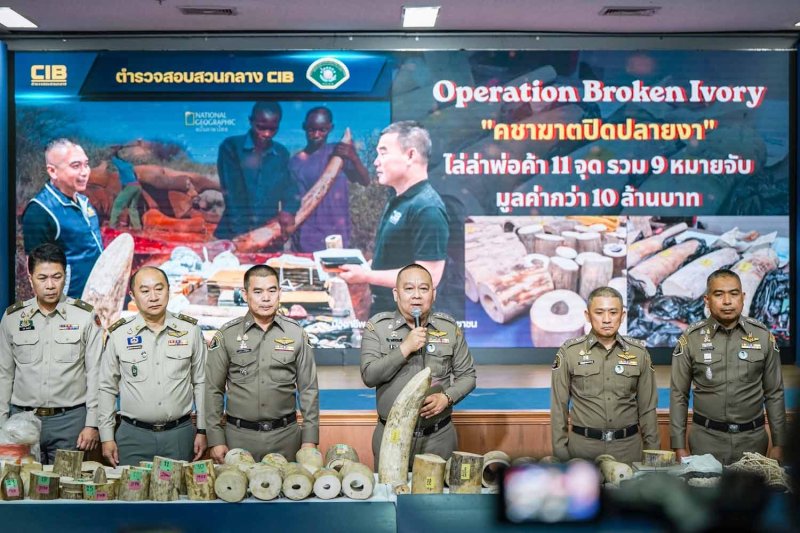
In a significant step towards combating illegal wildlife trafficking, Thai authorities announced the arrest of nine individuals during coordinated raids across seven provinces, accused of possessing 250 kilograms of smuggled African ivory from Vietnam. These operations come at a critical time, as concerns grow regarding the illegal ivory trade and its devastating impact on endangered African elephants.
Major Nathasak Chawanasai, commissioner of the Central Investigation Bureau, explained that joint task forces from the police and environmental agencies discovered that the ivory was being traded through a Facebook group known as "Khiaw Nga Khrueang Rang Chak Sat," which translates to "Tusks and Talismans Made from Animal Products." Investigators purchased items advertised as ivory, and tests confirmed they were made from African ivory.
Details of the Operations
On May 7, authorities executed coordinated raids at 11 locations in seven provinces, including Chanthaburi, Chon Buri, Chumphon, Kamphaeng Phet, Samut Sakhon, Songkhla, and Uthai Thani. These raids resulted in the arrest of nine suspects and the seizure of 250 kilograms of ivory, along with tools such as saws and drills. The total estimated value of the seized goods is around 9.9 million Thai Baht.
According to Major Nathasak, the ivory trading group was formed about a year ago and has generated sales estimated at approximately 10 million Baht. The ivory was shipped by sea from Africa to Vietnam, where Vietnamese workers in Thailand secured it, and then smuggled across the Mekong River into Thailand. Subsequently, the ivory was transformed into sellable products such as knife handles, Buddha amulets, and prayer beads.
Background & Context
The ivory trade is considered one of the largest threats facing African elephants, significantly contributing to their population decline. In recent years, many countries have taken stringent measures to combat this trade, including Thailand, which has banned the possession of African ivory. However, criminal networks continue to operate in secrecy, necessitating further efforts from authorities.
Historically, elephants have been regarded as cultural symbols in many societies, but illegal trade has led to the loss of many of these symbols. In Thailand, where ivory is considered part of the cultural heritage, combating this trade poses a significant challenge to preserving both the environment and cultural heritage simultaneously.
Impact & Consequences
This case exemplifies the challenges governments face in combating illegal wildlife trafficking. The recent arrests indicate the presence of an organized network operating across borders, calling for greater international cooperation to tackle this phenomenon. Additionally, these operations may lead to increased public awareness regarding the importance of protecting elephants and wildlife in general.
As the fight against illegal wildlife trade continues, it is crucial for authorities and communities to work together to safeguard endangered species and their habitats. The implications of this case extend beyond immediate arrests, highlighting the need for sustained efforts to dismantle trafficking networks.
Regional Significance
The significance of this case extends beyond Thailand, as it underscores the global nature of wildlife trafficking. The collaboration between local authorities and international partners is essential in addressing the complexities of this issue. By raising awareness and implementing stricter regulations, countries can work towards a future where wildlife is protected and preserved.
In conclusion, the recent arrests in Thailand serve as a reminder of the ongoing battle against wildlife trafficking and the urgent need for collective action to ensure the survival of endangered species like the African elephant.