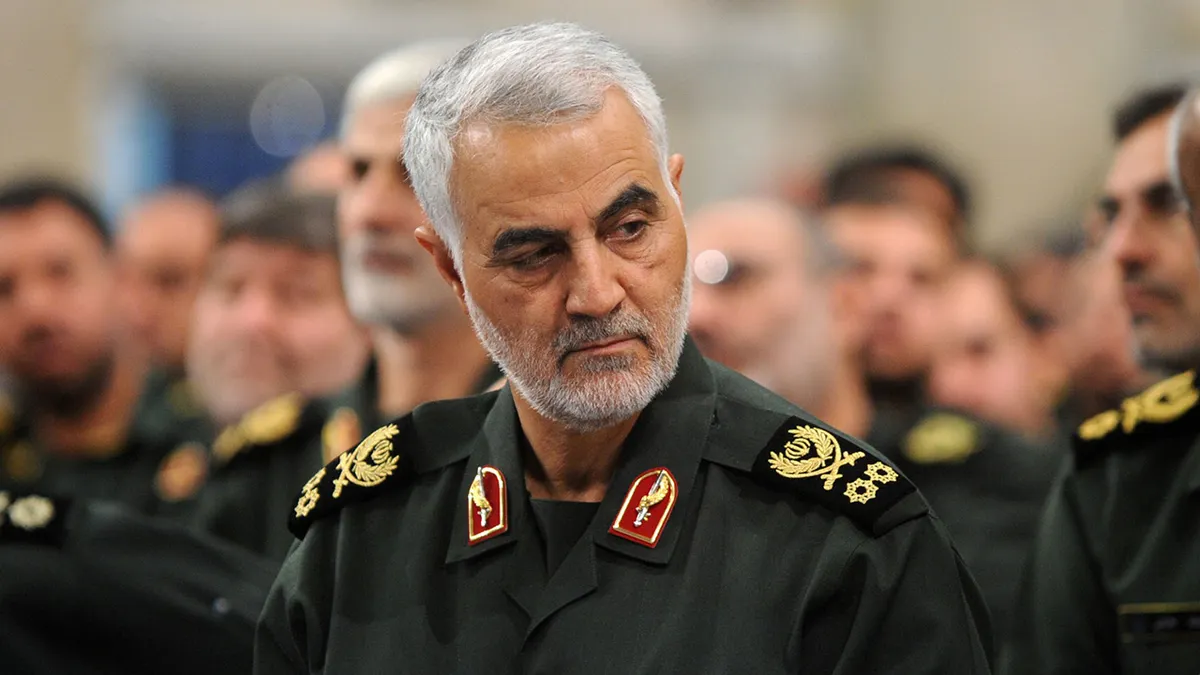
The US State Department announced on Saturday the arrest of two relatives of former Iranian Quds Force leader Qassem Soleimani, who was killed in a US strike in Iraq in 2020. This arrest came after US Secretary of State Marco Rubio decided to revoke the permanent residency status of the two relatives.
According to a statement from the department, federal agents detained the relatives last night, reflecting ongoing US pressure on individuals linked to the Iranian regime. This move comes at a time when tensions between the United States and Iran are escalating, particularly following recent events in the region.
Details of the Arrest
The two relatives, whose names have not been disclosed, are connected to the Soleimani family, which has been a prominent figure in Iran's military leadership. Soleimani was killed in January 2020 in a US airstrike near Baghdad International Airport, leading to a significant escalation in tensions between Washington and Tehran. The revocation of the relatives' permanent residency status is part of the US policy towards Iran, aimed at holding individuals associated with the Iranian regime accountable.
The statement from the US State Department did not provide additional details regarding the charges against the relatives, but it is clear that this step reflects Washington's strategy in countering Iran's influence in the region.
Background & Context
Historically, relations between the United States and Iran have been tense, especially following the Iranian Revolution in 1979. Since then, the US has taken several measures against Iran, including imposing economic and military sanctions. Qassem Soleimani was a symbol of these tensions, leading operations in Iraq and Syria to support Iran-aligned militias.
Following Soleimani's death, the region witnessed an escalation in hostilities, with Iran responding to the US strike by targeting American bases in Iraq. This ongoing tension reflects the broader conflict between regional and international powers in the Middle East.
Impact & Consequences
The arrest of the relatives could have significant repercussions on US-Iran relations. This action is likely to escalate tensions, as Iran may retaliate against US interests in the region. Additionally, this arrest could impact potential dialogue regarding Iran's nuclear program, as Washington seeks to pressure Tehran by targeting individuals linked to the regime.
Furthermore, this event may affect ongoing negotiations regarding the nuclear agreement, as Iran might view this action as a violation of previous agreements, complicating the situation further.
Regional Significance
These developments are particularly significant for the Arab region, where Iran plays a pivotal role in various regional conflicts. The escalation of tensions between the United States and Iran could affect the stability of countries like Iraq, Syria, and Lebanon, where Iran-aligned militias are present.
Moreover, these events could lead to increased divisions among regional powers, with some countries potentially taking a tougher stance against Iran, while others may seek to maintain diplomatic relations with it. Ultimately, the region remains on edge, awaiting the outcomes of these developments.