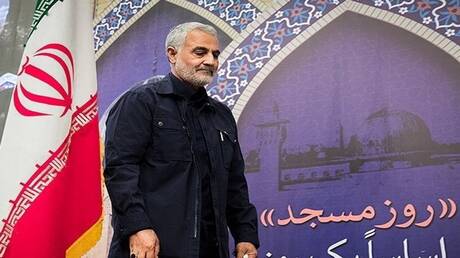
The U.S. State Department announced that federal agents arrested two relatives of the late commander of the Iranian Revolutionary Guard Corps' Quds Force, Qassem Soleimani, last night. This arrest is part of the United States' efforts to combat what it describes as destabilizing Iranian activities in the region.
This move is considered part of the U.S. policy towards Iran, as Washington seeks to undermine Tehran's influence in the Middle East. The arrest has sparked mixed reactions in political and media circles, with some viewing it as an escalatory step in the already tense relations between the two countries.
Details of the Arrest
According to reports, Soleimani's relatives were apprehended during an operation carried out by U.S. federal authorities, but no precise details about the circumstances of the arrest or the charges against them have been disclosed. It is worth noting that Qassem Soleimani, who was killed in a U.S. airstrike in January 2020, was a prominent figure in the Iranian Revolutionary Guard and played a significant role in directing Iranian military operations in the region.
The United States had placed Soleimani on a target list due to what it considers threats to its national security, and strict measures have been taken against several individuals associated with him since then. The recent arrests may reflect the continuation of this U.S. policy in confronting Iran.
Background & Context
U.S.-Iranian relations date back to the period following the Islamic Revolution in Iran in 1979, during which tensions have escalated over various issues, including Iran's nuclear program and Tehran's support for armed groups in the region. In recent years, these tensions have notably intensified, especially after the United States withdrew from the Iranian nuclear agreement in 2018.
The arrests carried out by the United States against individuals linked to Iran come in the context of the maximum pressure policy adopted by former President Donald Trump's administration, which has continued in some aspects under the current President Joe Biden. This policy aims to reduce Iran's influence in the Middle East, raising concerns among many countries in the region.
Impact & Consequences
These arrests could escalate tensions between the United States and Iran, potentially affecting diplomatic efforts to revive the nuclear agreement. Additionally, this step may provoke reactions from Iran, which may view it as a violation of its sovereignty, increasing the likelihood of military escalation in the region.
Furthermore, these events could impact U.S. relations with its allies in the region, as some allies may feel concerned about the rising tensions, while others may see it as an opportunity to strengthen their cooperation with the United States against Iran.
Regional Significance
These events are particularly significant for the Arab region, where Iran plays a pivotal role in many regional conflicts. The recent arrests may lead to increased tensions in Iraq, Syria, and Lebanon, where Iran-linked groups are present.
Moreover, these developments could affect the stability of the Gulf Arab states, which are concerned about Iran's growing influence in the region. Under these circumstances, Gulf countries may seek to strengthen their alliances with the United States and Western nations to counter potential threats.
In conclusion, these arrests reflect the ongoing tensions between the United States and Iran, highlighting the challenges facing the region amid these changing circumstances. It is crucial to monitor developments in this matter, as they may have far-reaching implications for security and stability in the Middle East.