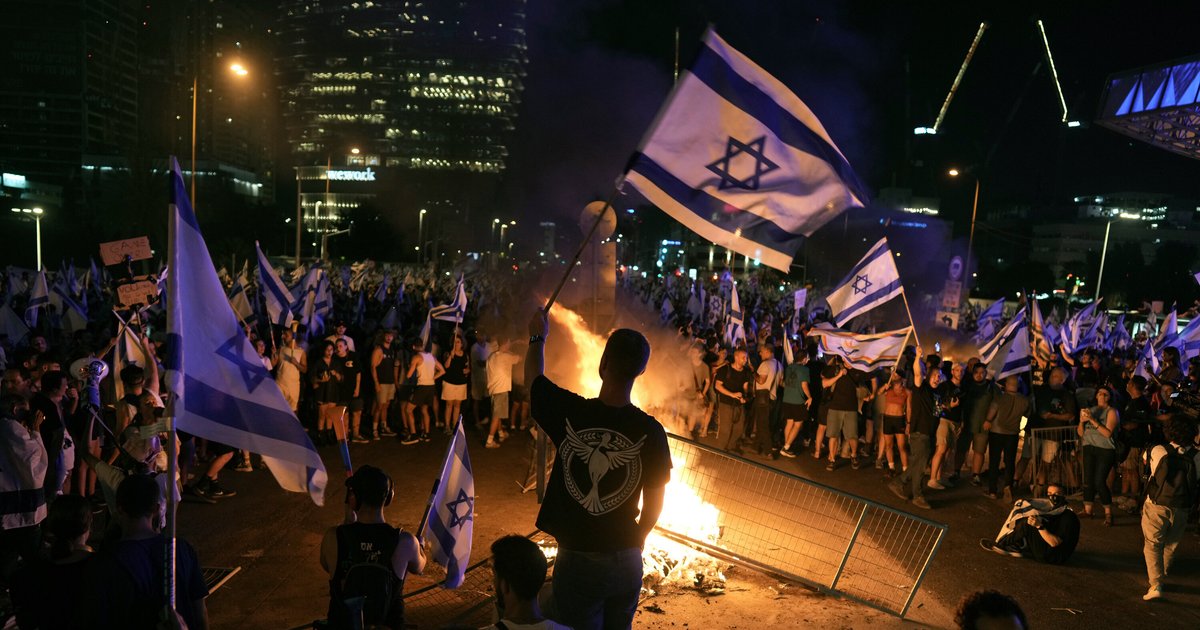
In Tel Aviv, violent protests erupted against the new death penalty law, resulting in the arrest of five demonstrators as police used force to disperse the crowds. This event comes amid a sensitive debate in the country regarding capital punishment, which has raised significant human rights concerns both locally and internationally.
Demonstrators gathered in a central square of the city, expressing their strong opposition to the recently passed death penalty law. The police deployed tear gas and batons to disperse the crowds, leading to injuries among the protesters, in addition to the arrests.
Details of the Event
These protests come at a time when there is increasing pressure on the Israeli government to adopt more humane policies in dealing with crimes. Reports indicate that many protesters carried signs calling for the abolition of the death penalty, pointing out that this punishment does not align with human values.
At the same time, police confirmed that they took necessary measures to maintain security and public order, stating that the use of force was essential to disperse protesters who attempted to disrupt traffic.
Background & Context
The death penalty in Israel is not new, but it has been a subject of controversy for a long time. It has been enacted in specific cases, but the discussion around expanding its use has raised significant concerns among human rights advocates. Historically, there have been numerous attempts to abolish this penalty, but none have succeeded so far.
These events coincide with rising political tensions in the country, as some politicians seek to promote laws that reflect their hardline stances on crime. However, civil society continues to push for human rights and justice.
Impact & Consequences
These protests may lead to increased public awareness regarding human rights issues in Israel, potentially encouraging more people to voice their opinions against the death penalty. Additionally, these events could influence public policy, as the government may be compelled to reconsider its stance on this punishment.
It is also likely that these protests will lead to international calls for a reevaluation of Israeli policies, which may affect relations with other countries closely monitoring the situation.
Regional Significance
The issue of the death penalty is a sensitive topic in many Arab countries, where opinions on it vary widely. Some countries still enforce this penalty, while others are striving to abolish it. Events in Israel could impact discussions in Arab nations regarding human rights and criminal penalties.
In conclusion, these protests reflect a state of public discontent towards government policies and highlight the importance of dialogue around human rights in the region. It is crucial that discussions on these issues continue to ensure justice and equality for all.