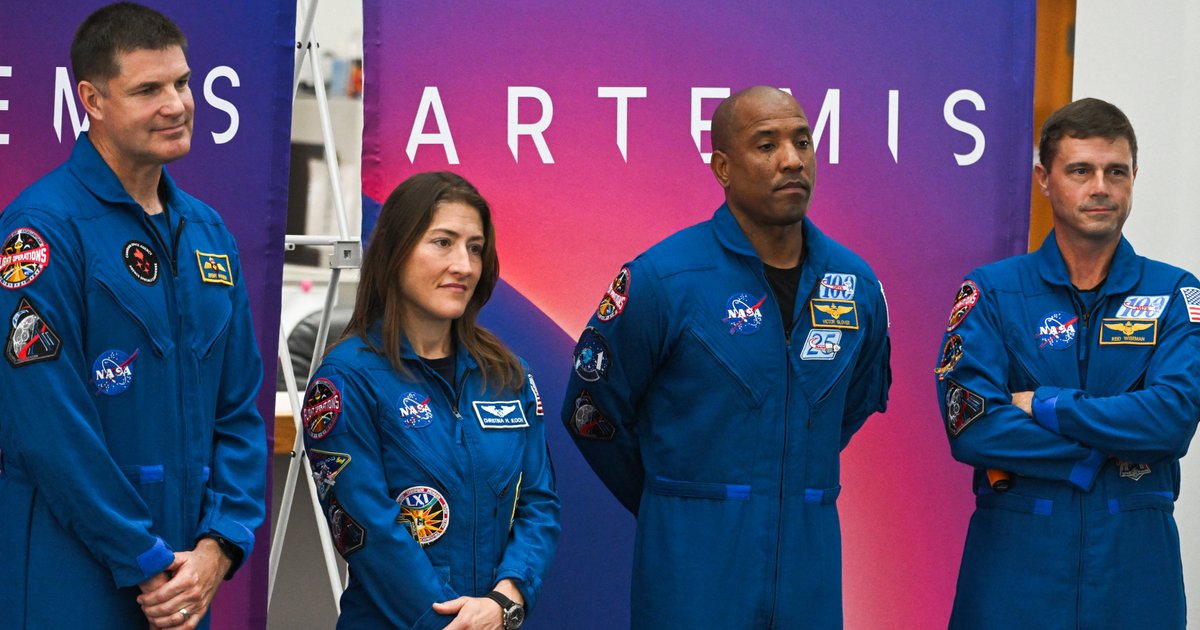
The astronauts of the Artemis II mission have crossed the midway point to the Moon, where they aim to break the record set by Apollo 13. The spacecraft launched from Kennedy Space Center in Florida and continues to achieve historic milestones in space exploration.
The Artemis II mission consists of four astronauts: Jason Holtz, Austin Kraft, Christina Koch, and Greg Schmidt. The spacecraft is on a journey lasting approximately 10 days, during which it will orbit the Moon before returning to Earth.
Event Details
This mission is part of the Artemis program, which aims to return humans to the Moon, specifically to the lunar south pole by 2025. The program also seeks to lay the groundwork for future Mars exploration. The Orion spacecraft has been designed to carry astronauts on long-duration missions, making it a crucial component of this ambitious program.
During this journey, the astronauts will conduct a series of scientific experiments, in addition to testing the spacecraft's systems under real space conditions. Bill Nelson, the Administrator of NASA, stated that this mission represents an important step towards achieving space exploration goals.
Background & Context
The history of lunar exploration dates back to the 1960s when the United States launched the Apollo program, which witnessed the first human landing on the Moon in 1969. Since then, there have been multiple attempts to explore the Moon, but the Artemis program marks the first return in decades. Following the success of Apollo 13, which faced significant challenges but managed to return safely, Artemis II seeks to surpass those achievements and attain even greater successes.
This mission is also part of global efforts to explore space, with many countries developing their own programs for lunar and planetary exploration. In recent years, investments in space have increased, reflecting growing interest from governments and private companies.
Impact & Consequences
The Artemis II mission represents a significant step in enhancing international cooperation in space, as many countries collaborate in developing the technologies necessary for lunar exploration. Success in this mission could open doors for further collaboration on future projects, such as Mars exploration.
Moreover, this mission could lead to the development of new technologies that can be utilized in other fields, such as communications and navigation. The scientific experiments conducted during the journey may contribute to a better understanding of the space environment and its effects on humans.
Regional Significance
The Arab region is part of this global development in space, with some Arab countries beginning to invest in their own space programs. For instance, the United Arab Emirates launched the Hope Probe to Mars, reflecting its interest in technology and innovation.
Successes like Artemis II can inspire Arab youth to pursue fields in science and technology, contributing to the development of the region's capabilities in these vital areas. Additionally, international cooperation in space could open new opportunities for Arab countries to participate in global projects.
The Artemis II mission represents a significant step towards achieving space exploration goals, opening new horizons for international cooperation and technology development. The success of this mission could have positive impacts on the Arab region, enhancing its standing in the world of space.