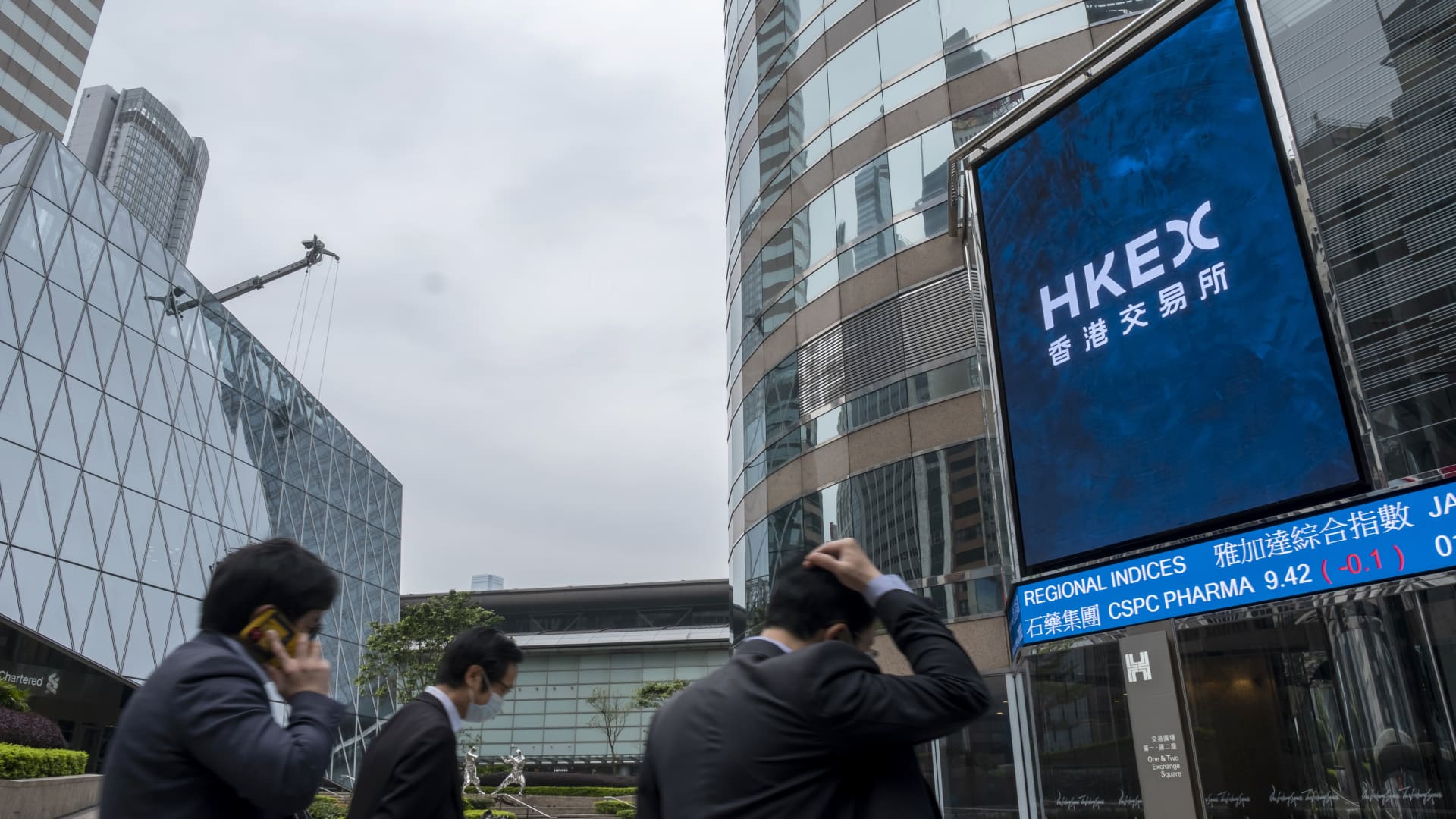
Asian markets fell on Friday, influenced by losses on Wall Street, as investors continue to analyze conflicting messages from the U.S. and Iran regarding the Middle East. President Donald Trump announced an extension of the deadline for an attack on Iranian energy infrastructure by ten days, raising questions about market stability.
In a statement, Trump confirmed that the extension was made at the request of the Iranian government, with an agreement to exchange 10 oil tankers as a gift from Tehran. Trump wrote in a post on Truth Social: "At the request of the Iranian government, I would like to confirm that I am suspending the period for the destruction of energy facilities." He also added that talks are ongoing and progressing well, despite misleading statements from the media.
Details of the Event
These developments come at a time when the global market is experiencing significant volatility, with oil prices rising in recent days but starting to decline following positive signals towards a peace agreement between the U.S. and Iran. U.S. crude oil prices (West Texas Intermediate) recorded a decrease of 1.3%, reaching $93.29 per barrel, while the benchmark Brent crude stabilized at $108.01 per barrel.
In Asian markets, the Australian S&P/ASX 200 index fell by 0.42%, while Japan's Nikkei 225 index declined by 0.9%. The South Korean KOSPI index saw a decrease of 3%, while the KOSDAQ index fell by 1.5%. In Hong Kong, futures for the Hang Seng index dropped to 24,782, down from its previous close of 24,856.43.
Background & Context
Historically, U.S.-Iran relations have been marked by increasing tensions, especially following Washington's withdrawal from the nuclear agreement in 2018. Since then, the U.S. has imposed strict sanctions on Iran, leading to heightened tensions in the Middle East. The current tensions arise at a sensitive time, as both parties seek to achieve their interests amid challenging economic conditions.
The Middle East is a vital energy hub, and any escalation in the conflict could significantly impact global oil prices, reflecting on the global economy. There are also concerns that any military escalation could destabilize the entire region.
Impact & Consequences
The impact of these events on global markets will be substantial, as the global economy heavily relies on stable oil prices. Any increase in tensions could lead to rising oil prices, which may affect inflation and economic growth in many countries. Additionally, financial markets may experience further volatility due to these developments.
At the same time, the U.S. is seeking a peaceful resolution, which could positively reflect on the markets if an agreement is reached. However, the conflicting statements from both sides may raise concerns among investors, leading to a decline in market confidence.
Regional Significance
The current developments are particularly significant for Arab countries, as any escalation in the conflict between the U.S. and Iran could impact security and stability in the region. Gulf countries, in particular, heavily depend on stable oil prices, and any increase in tensions could lead to a significant rise in prices.
Moreover, the relations between Arab countries and Iran may be affected by the current developments, potentially leading to heightened tensions in the region. It is crucial for Arab nations to closely monitor these events and be prepared to respond to any emerging developments.
In light of these volatile circumstances, hope remains for a peaceful agreement between the U.S. and Iran, which could contribute to global market stability and enhance economic growth in the region.