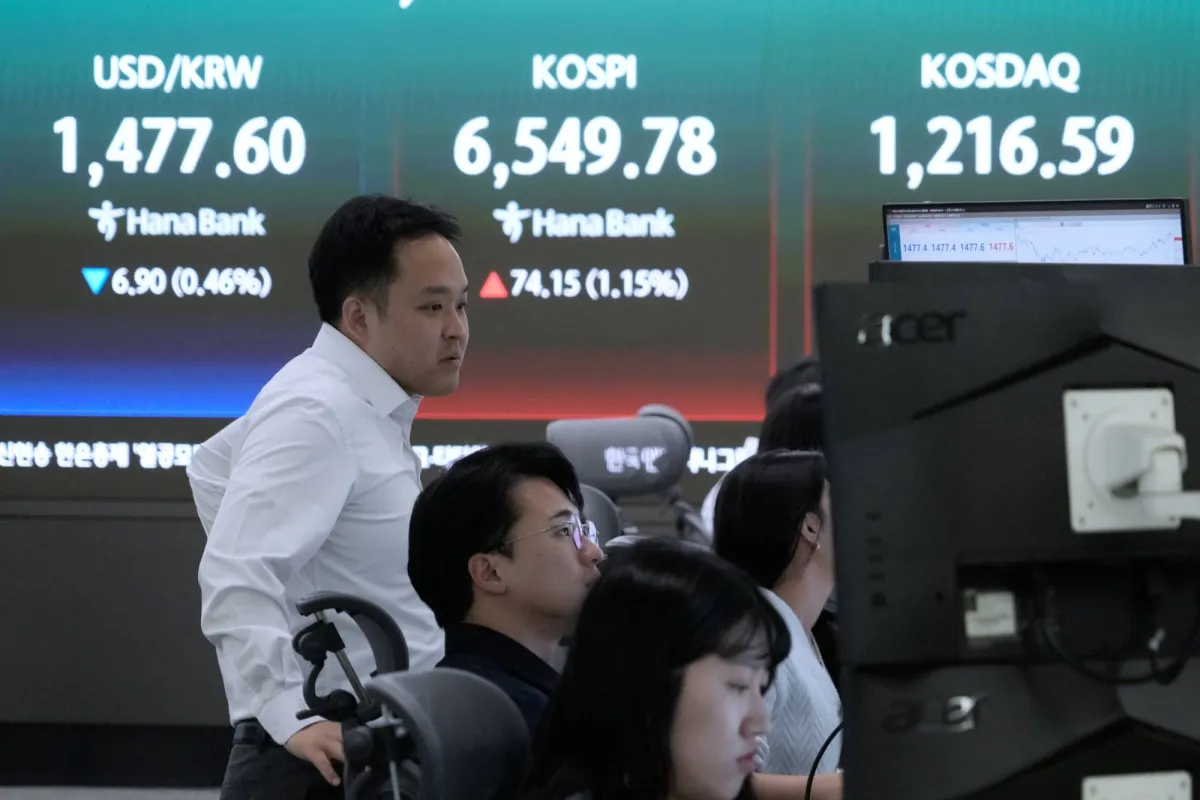
Asian stock markets experienced a decline on Tuesday, coinciding with a rise in oil prices as diplomatic negotiations to conclude the war with Iran remain stalled. Concerns regarding energy supplies are escalating, especially with the closure of the Strait of Hormuz, a vital corridor for oil shipments, raising alarms for several Asian countries, including Japan, which is facing resource shortages.
In the markets, the Nikkei 225 index in Japan fell by 1% to 59917.46 points after the central bank decided to keep the main interest rate unchanged at 0.75%. The Bank of Japan indicated that economic growth may slow down due to rising oil and commodity prices resulting from the war. The monetary policy board's decision was not unanimous, with 6 members voting for the hold against 3, amid increasing pressure to gradually raise interest rates after years of being near zero.
Event Details
The bank stated in a report that there are multiple risks surrounding the forecasts, emphasizing the need to pay special attention to developments in the Middle East and their future impacts. In other Asian markets, the South Korean KOSPI index rose by 0.4% to 6641.02 points, while the Hang Seng index in Hong Kong dropped by 1.1% to 25642.69 points. The Shanghai composite index also fell by 0.3% to 4074.47 points.
In Australia, the Standard & Poor's/Australia 200 index decreased by 0.6%, recording 8710.70 points. Regarding energy prices, the price of Brent crude for June delivery rose by $1.85 to $110.08 per barrel, while the July contract increased by nearly $2 to $103.69. Prices were hovering around $70 per barrel before the outbreak of the war, before briefly jumping to nearly $120.
Background & Context
This week, markets are focused on anticipated interest rate decisions from the U.S. Federal Reserve, the European Central Bank, and the Bank of England, amid widespread anticipation of monetary policy directions in light of rising inflationary pressures linked to energy. On Wall Street, the Standard & Poor's 500 index recorded a slight increase of 0.1%, closing at a new record level of 7137.91 points, following a strong earnings rally supported by corporate results.
Conversely, the Dow Jones Industrial Average fell by 0.1% to 49167.79 points, while the Nasdaq composite index rose by 0.2%. Investors are also awaiting earnings results from several major market-influencing companies, including Alphabet, Amazon, Meta Platforms, Microsoft, and Apple.
Impact & Consequences
In the bond market, U.S. Treasury yields rose slightly in tandem with rising oil prices, with the yield on 10-year bonds climbing to 4.33%, compared to 4.31% at the end of last week. In the currency market, the U.S. dollar slightly decreased to 159.04 Japanese yen from 159.42 yen, while the euro fell to $1.1702 from $1.1720.
Barclays announced on Tuesday that its first-quarter profits met expectations, as the stable performance of the investment bank, bolstered by a trading boom, offset provisions of £200 million to cover losses from exposure to a single company. The British bank recorded pre-tax profits for the period from January to March of £2.8 billion, a slight increase from £2.7 billion reported a year earlier.
Regional Significance
These developments directly impact the Arab region, where many countries rely on importing oil from these areas. Additionally, the ongoing war with Iran may complicate security and economic conditions in the region, negatively affecting regional stability. Under these circumstances, Arab countries must take proactive steps to ensure the stability of energy supplies.
In conclusion, markets remain under continuous pressure from geopolitical developments, necessitating close monitoring of price trends and upcoming economic decisions.