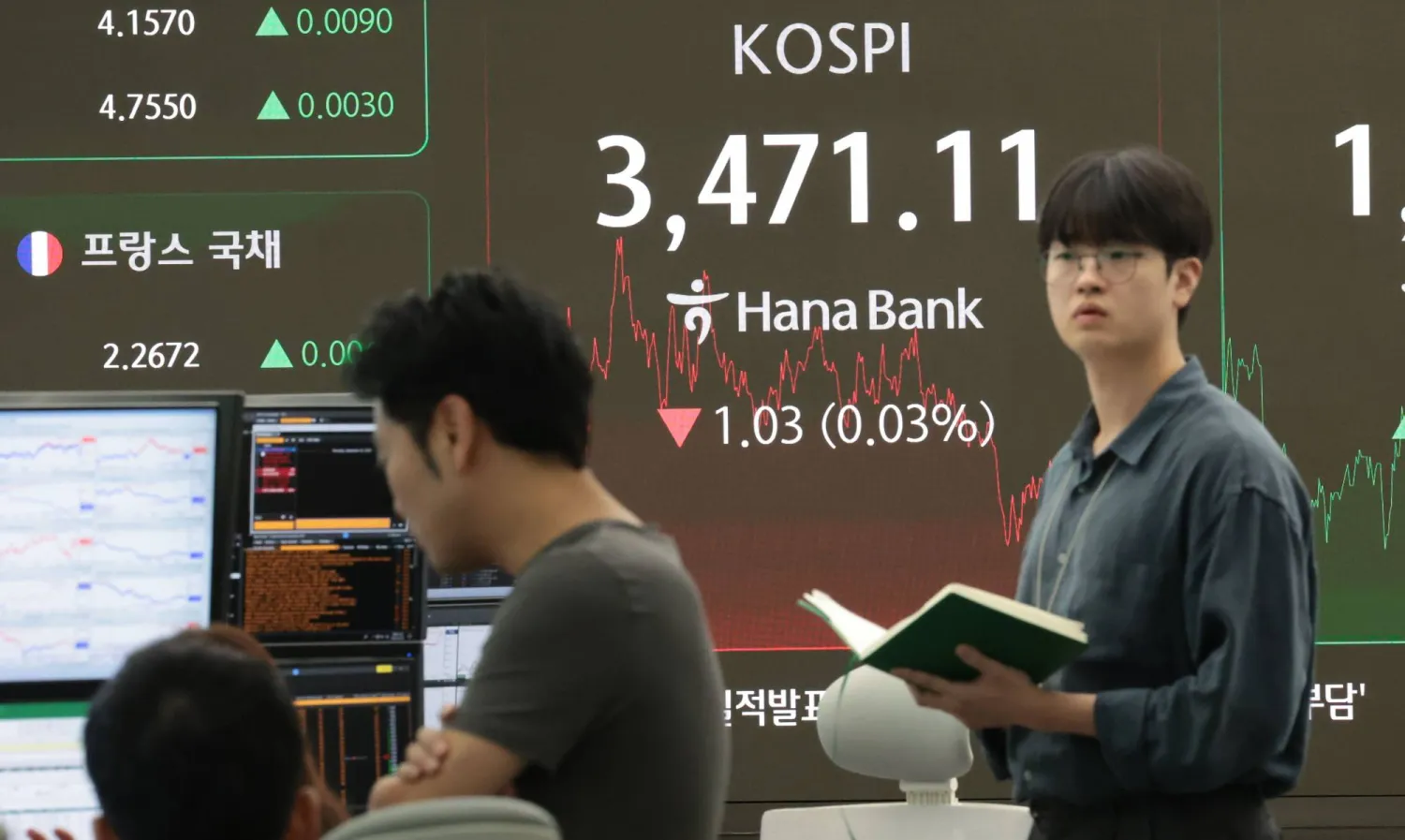
Asian stock markets experienced a decline on Thursday, influenced by new US military strikes on Iran that undermined the recent wave of optimism regarding the possibility of a near-term peace agreement. With key US inflation data set to be released, investors are shifting towards a more cautious approach.
Market sentiment in Asia was clearly affected after reports indicated that the US carried out new military strikes on Iran on Wednesday evening, marking the second wave of attacks this week. This military escalation has raised fresh concerns about stability in the region, leading to a decrease in investor confidence.
Details of the Event
The Japanese Nikkei 225 index fell by 0.1% to 64,921.1 points, after reaching a record high of 66,428.81 points in the previous session. The broader Topix index also dropped by 0.2%. In South Korea, the Kospi index declined by 1.1% to 8,139.21 points, following its record high of 8,457.09 points on Wednesday, reflecting a halt in the strong upward trend of AI-related stocks.
Major semiconductor stocks were also affected, as investors reduced their exposure to high-risk assets amid renewed geopolitical tensions. In Hong Kong, the Hang Seng index fell by approximately 2%, impacted by weak technology stocks, while the Shanghai Composite index dropped by 0.4%, and the CSI 300 index of leading stocks fell by 1.1%.
In Singapore, the Straits Times index lost 0.7%, while contracts linked to India's Nifty 50 index decreased by 0.3%. The S&P/ASX 200 index in Australia also fell by 1.1%, reflecting the broad impact of geopolitical pressures on the markets.
Background & Context
These developments come at a sensitive time, as investors are awaiting the release of the US Personal Consumption Expenditures (PCE) index, which is the Federal Reserve's preferred inflation gauge. Markets are concerned that the ongoing rise in energy prices linked to the conflict with Iran could complicate the trajectory of US monetary policy, potentially prompting the Federal Reserve to raise interest rates this year.
This military escalation reflects the ongoing tensions between the US and Iran, which have notably intensified in recent times. Military and economic pressures could have broader ramifications for global markets, increasing uncertainty.
Impact & Consequences
Financial markets are highly sensitive to any geopolitical developments, as military pressures can lead to significant price volatility. Investors tend to reduce their exposure to high-risk assets during times of tension, which may lead to further declines in the markets.
The potential impacts on the global economy could be profound, as tensions in the Middle East may lead to rising oil prices, affecting inflation and economic growth in many countries. Additionally, the continuation of these pressures could complicate recovery efforts following the COVID-19 pandemic.
Regional Significance
For the Arab region, the escalation of tensions between the US and Iran could affect regional stability. Arab countries that rely on energy imports may face new challenges amid rising oil prices, which could impact their economies.
Moreover, any military escalation could heighten tensions in the region, negatively affecting investments and business activities. It is crucial for Arab nations to closely monitor these developments, as regional stability heavily depends on the balance of international relations.
In conclusion, markets remain under significant pressure under these circumstances, requiring investors to make informed decisions amid prevailing uncertainty.