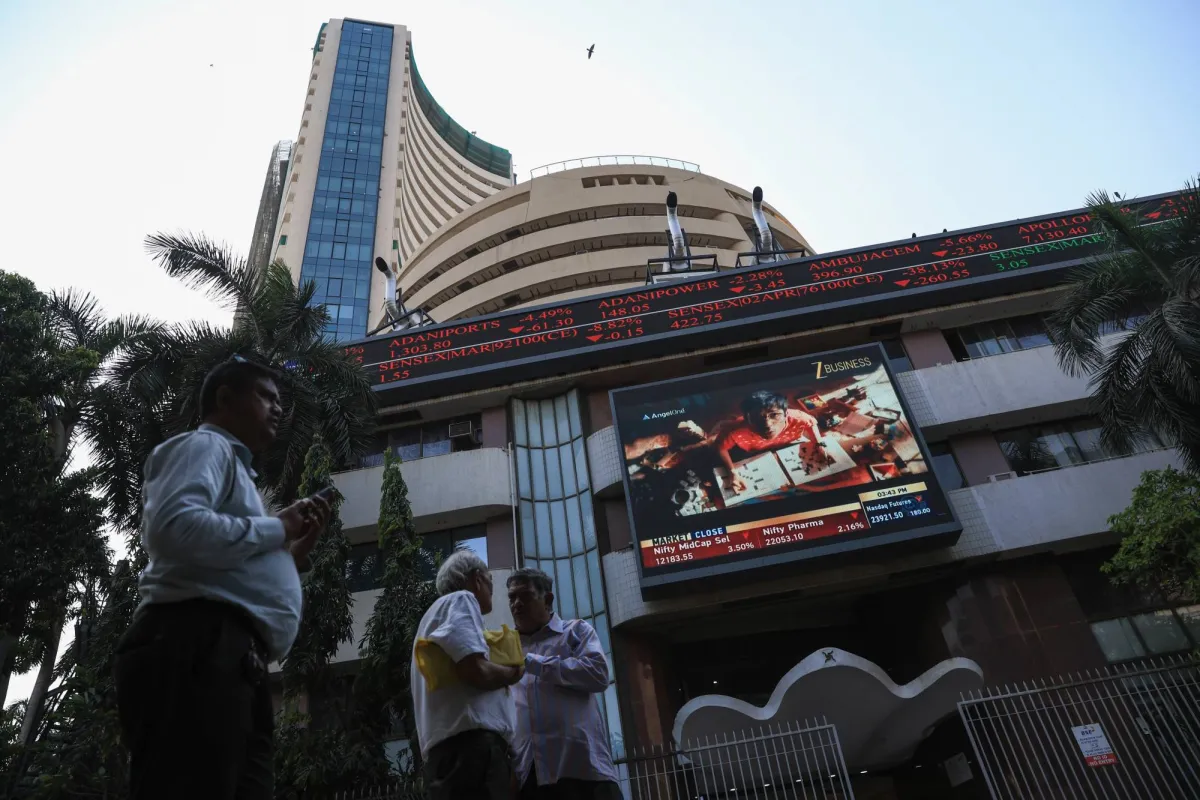
Asian stocks have witnessed massive capital outflows since the beginning of March, with foreign investors selling regional equities valued at $50.45 billion. These outflows suggest the possibility of recording the largest monthly exit from markets since 2008, amid rising concerns about an oil shock resulting from disruptions in energy supplies in the Middle East.
These developments come at a time of escalating tensions due to the U.S.-Israeli war on Iran, increasing worries about the stability of energy markets. Jason Liu, Head of Equity and Derivatives Strategy at BNP Paribas, reported that the outflows were particularly concentrated in emerging markets in Asia, where most economies rely heavily on energy imports.
Details of the Event
Brent crude prices surged by up to 65% this month, reaching $119.5 per barrel, which has intensified pressures on investors. Abdulaziz Al-Baghdadi, Market Research Director at the brokerage firm FXEM, explained that the outflows were exacerbated by rising global yields and a reassessment of interest rate expectations.
Taiwanese stocks recorded outflows of approximately $25.28 billion, the highest level in 18 years, while South Korea and India saw outflows of $13.5 billion and $10.17 billion, respectively. These outflows were heavily concentrated in artificial intelligence and technology stocks, which had previously seen significant gains.
Background & Context
These events coincide with increasing volatility in global markets, as major central banks signaled that interest rates may remain steady or rise if the conflict continues to pressure prices. Analysts at Nomura noted that shares of tech hardware manufacturers in Korea and China remain among the promising sectors, as they have not been directly affected by the conflict in the Middle East.
At the same time, Thailand, the Philippines, and Vietnam recorded net outflows of $1.35 billion, $182 million, and $21 million, respectively, while Indonesia attracted net inflows of $59 million.
Impact & Consequences
Markets are expected to remain volatile in the near term, amid conflicting news and increasing geopolitical risks. Liu clarified that recovery from the current energy shock may take longer due to disruptions in production facilities in the Middle East.
On another note, the Thai Ministry of Commerce announced that customs-cleared exports in February rose by 9.9% year-on-year, although this rate was below expectations. Nevertheless, exports are expected to maintain their growth this year, despite the likelihood of a slowdown in shipments in March due to rising fuel prices and transportation costs.
Regional Significance
These developments directly impact the Arab region, where oil prices are a key factor in the stability of the economies of oil-producing Arab countries. Rising oil prices may lead to increased revenues in some countries, but at the same time, they could exert economic pressure on importing countries.
In conclusion, it appears that Asian markets are facing significant challenges amid the current geopolitical conditions, necessitating that investors exercise caution and focus on more stable sectors.