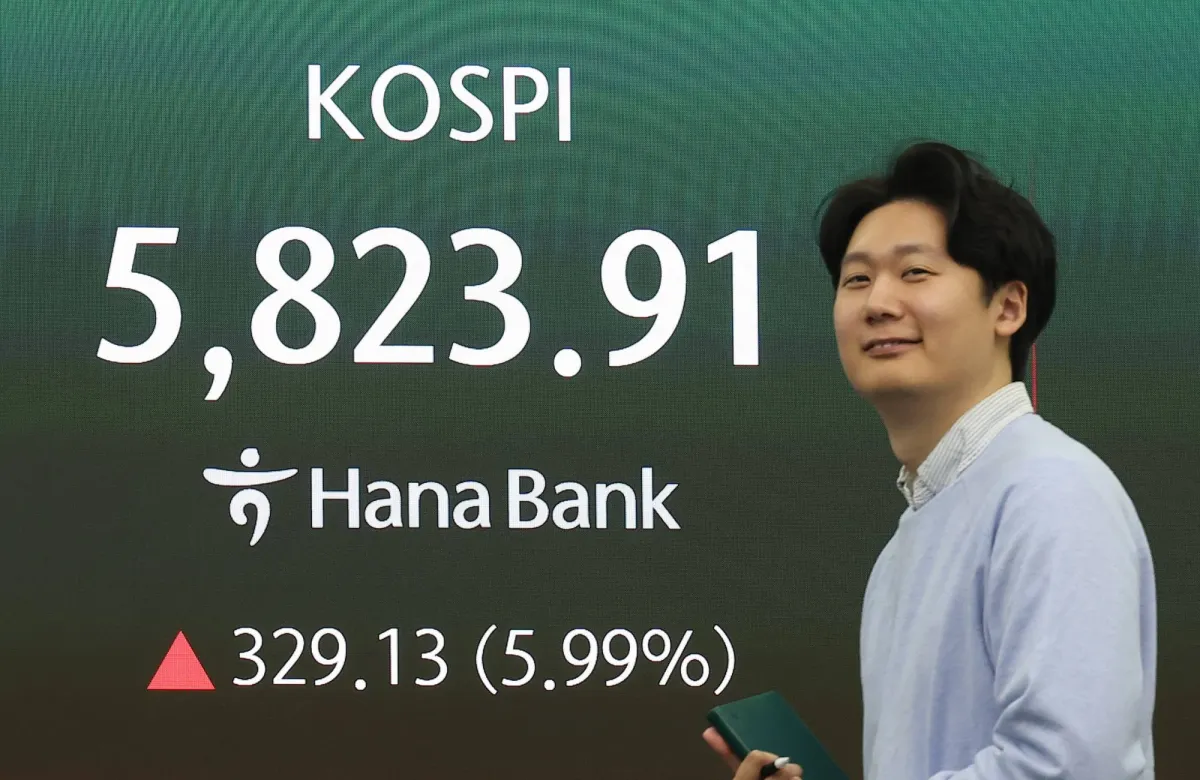
Asian emerging markets experienced a strong recovery during Wednesday's trading, with stocks and currencies rising collectively. This increase followed the announcement by U.S. President Donald Trump of a ceasefire agreement with Iran, which helped alleviate the pressures that markets had faced in recent weeks.
The decline in oil prices below $100 per barrel had a positive impact on Asian assets, which had suffered from immense pressure due to oil supply shocks. Consequently, the MSCI Emerging Markets Index surged by 5%, reaching its highest level in three weeks.
Details of the Event
The gains were not limited to regional markets but extended to global markets, where the global emerging stocks index recorded a 4% increase. Trump's decision to de-escalate military tensions had a significant effect on developing economies in Asia, which heavily rely on energy imports. This situation propelled indices such as South Korea's KOSPI and Taiwanese stocks to achieve their highest levels in several weeks.
As the dollar index fell to its lowest level in four weeks, Asian currencies made notable gains. In another development, FTSE Russell confirmed that it would upgrade Vietnam from 'frontier market' to 'emerging market' in September, leading to a 3.5% rise in the Vietnamese stock index.
Background & Context
These developments come at a sensitive time, as tensions between the United States and Iran had previously led to a significant rise in oil prices over the past months. Financial markets experienced sharp fluctuations due to these tensions, negatively impacting investor confidence. With the announcement of the truce, investors' risk appetite quickly returned, contributing to the market recovery.
It is worth noting that the decline in oil prices directly influenced central bank expectations, as futures contracts began to price in a 50% likelihood of the Federal Reserve cutting interest rates in December. This trend reflects market concerns about the geopolitical tensions' effects on the global economy.
Impact & Consequences
Despite the optimism that prevailed in the markets, analysts from MUFG Bank warned of the need for caution, as there are still existing risks that require close monitoring of the negotiations during the truce period. Additionally, geopolitical tensions have not completely disappeared, as the South Korean won ignored North Korea's launch of several missiles, achieving its largest daily gains since the onset of the crisis.
In a related context, South Korean and Taiwanese stock exchanges witnessed remarkable jumps, rising by 7% and 4.5% respectively. In India, the Nifty 50 index climbed by 3.4% despite the central bank holding interest rates steady. These movements reflect a return of confidence in Asian markets.
Regional Significance
These developments are of great importance to the Arab region, as many countries rely on energy imports from the Gulf. The stabilization of oil prices and the return of calm to the markets could contribute to improving economic conditions in Arab countries. Moreover, geopolitical tensions directly affect the region's stability, making it essential to monitor the developments in negotiations between the United States and Iran.
In conclusion, it appears that Asian markets have begun to recover after a period of pressure, but the question remains about the sustainability of this recovery amid ongoing geopolitical risks.