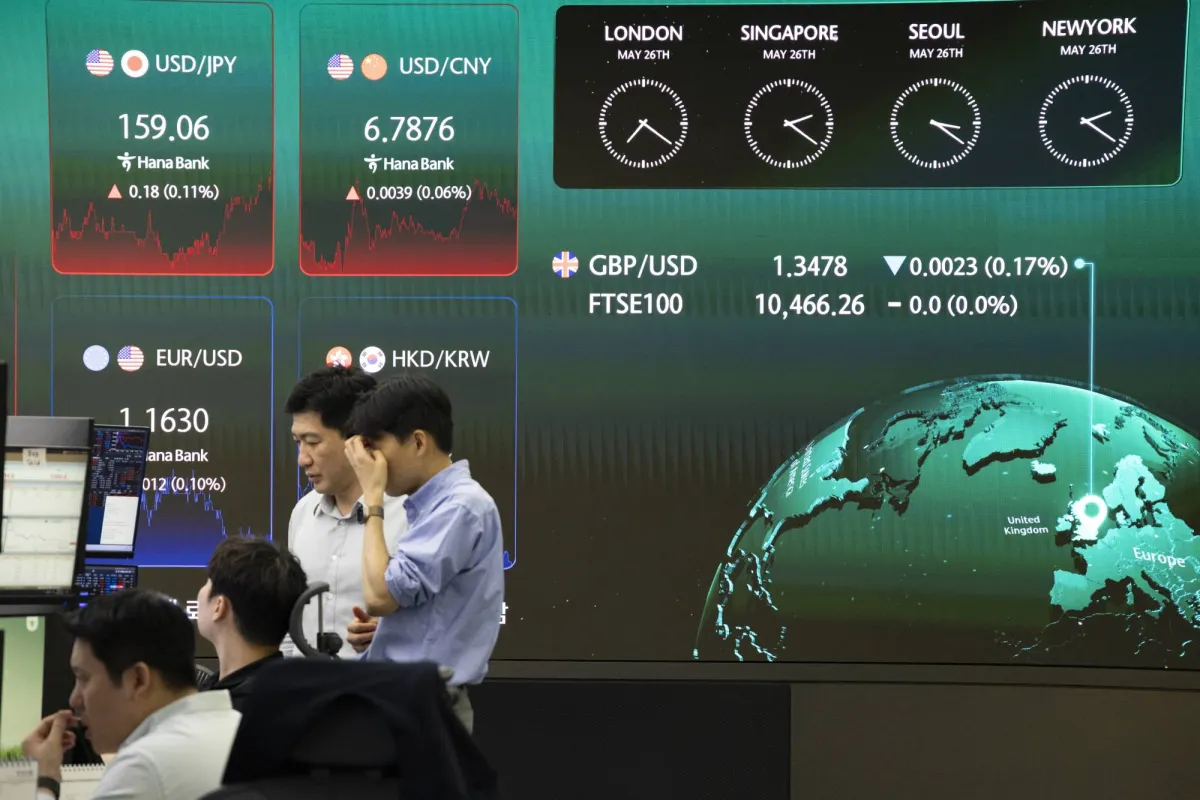
Asian markets experienced a significant increase on Friday, supported by positive forecasts regarding the potential for the United States and Iran to reach an agreement to extend their ceasefire for another 60 days. This optimism contributed to enhancing investor sentiment, even as warnings about over-optimism were issued.
Earlier, oil prices had dipped amid this news, yet they remain above pre-war levels, as restrictions on navigation through the Strait of Hormuz continue. Analysts noted that the recovery of oil supplies may take time, reflecting a cautious atmosphere in the markets.
Details of the Event
The Nikkei 225 index in Japan rose by 1.8% to reach 65,814.96 points, following data showing that inflation in Tokyo increased at a slower pace than expected. In South Korea, the KOSPI index recorded a rise of 2.3% to 8,369.81 points, while the Hang Seng index in Hong Kong increased by 0.4% to 25,098.68 points. Conversely, the Shanghai Composite index fell by 0.2% to 4,092.22 points.
On another front, Brent crude fell by 0.8% to $91.97 per barrel, while West Texas Intermediate dropped by 1.2% to $87.85 per barrel. Investors are closely monitoring developments regarding the reopening of the Strait of Hormuz, with U.S. officials indicating that the preliminary agreement stipulates that Iran will not impose fees on passing ships.
Background & Context
These developments come at a sensitive time as both the U.S. and Iran seek to make progress in negotiations concerning Iran's nuclear program. An American official reported that negotiators reached a preliminary agreement, although Iran has not yet confirmed this officially, leaving room for future developments.
In the United States, stocks recorded record gains, with the S&P 500 index rising by 0.6% to close at a new record level. Currency markets showed stability, with the dollar declining against major currencies, reflecting the impact of news regarding the ceasefire.
Impact & Consequences
Reaching an agreement to extend the ceasefire could help ease geopolitical tensions, potentially leading to stability in energy markets. However, analysts warned that a full recovery of oil supplies may take time, meaning that markets will remain under pressure from potential tensions.
Additionally, any progress in negotiations could positively impact global financial markets, reflecting investors' desire to seize opportunities amid changing conditions. Nevertheless, caution remains essential given the uncertainty surrounding the course of negotiations.
Regional Significance
The Arab region is directly affected by developments in U.S.-Iranian relations, as any agreement could contribute to stabilizing oil prices, benefiting the economies of producing countries. At the same time, the situation in the region remains complex, with political and economic interests intertwining.
In conclusion, attention remains focused on the developments in negotiations, as any progress could open new avenues for regional and international cooperation, while caution remains a key characteristic in the current circumstances.