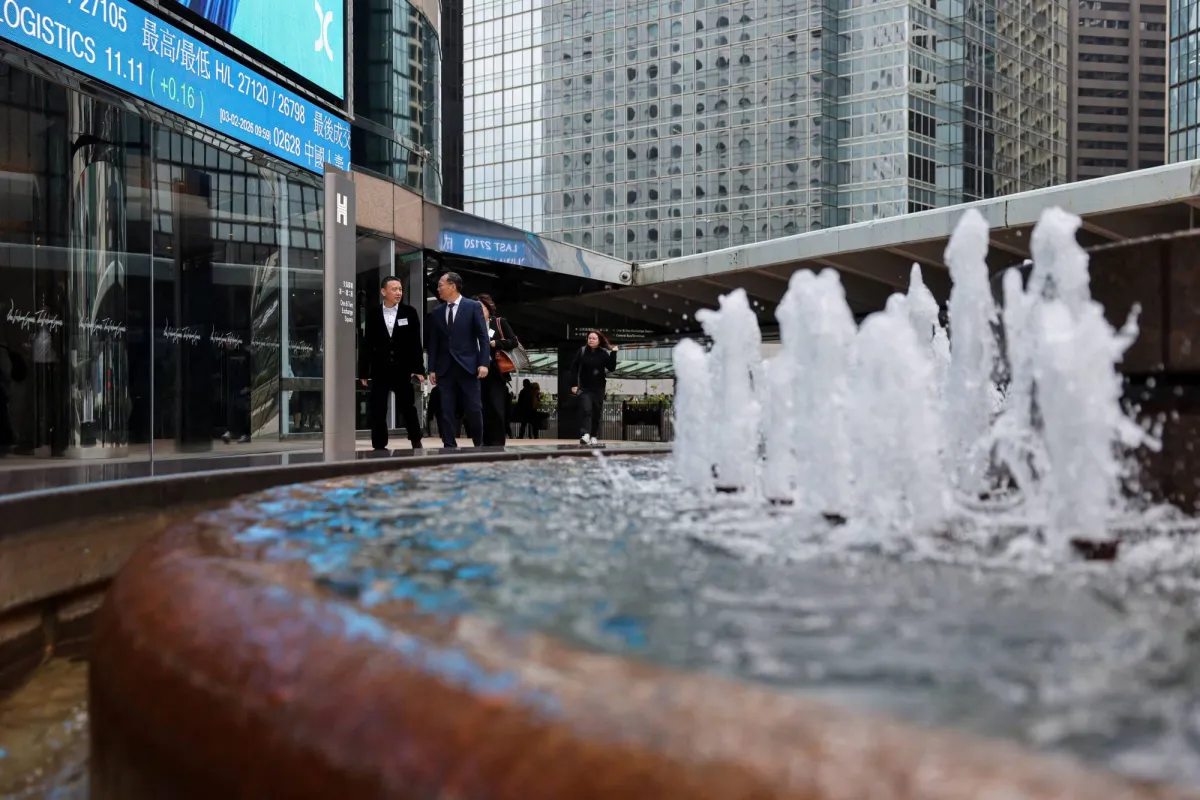
Asian stocks experienced significant gains on Wednesday, as investor risk appetite returned following the announcement of a two-week ceasefire agreement between the United States and Iran. This agreement created a sense of geopolitical relief, leading to a broad wave of buying across various sectors, particularly in technology and real estate.
Chinese stocks led the charge, with the CSI 300 index of leading stocks rising by 2.8%, while the Shanghai Composite index gained 1.9%. In Hong Kong, the Hang Seng index surged by 2.8%, driven by a significant rise in technology giants, with shares of Meituan climbing by 9.9% as regulatory and geopolitical risks eased.
Event Details
The gains were not limited to the Chinese market, as the Japanese Nikkei index saw a remarkable jump of 5.27%, marking one of its best daily performances. In the Asian currency markets, the yen regained strength by 0.8% against a declining dollar, while the South Korean won recorded its strongest daily performance since the onset of the crisis, rising by 1.6%, despite North Korea's missile tests occurring simultaneously.
The semiconductor and gold sectors led the increases, with gains exceeding 6%, while real estate companies in Hong Kong notably outperformed. Analysts viewed this as a sign of renewed buyer and investor confidence in domestic demand. Strategic experts believe this rally may extend in the near term, supported by the strength of local currencies and declining energy cost pressures that had loomed.
Background & Context
In a related context, U.S. President Donald Trump announced that the United States would assist in ending disruptions to maritime traffic in the Strait of Hormuz, just hours after Washington and Tehran agreed to a two-week ceasefire. This agreement came just one hour before the deadline Trump set for reaching an agreement under the threat of extensive strikes, raising concerns in global markets.
The two countries agreed to ensure safe passage through the Strait of Hormuz, a vital shipping route for oil, which had effectively been paralyzed for weeks due to the war in the Middle East, leading to rising crude oil and derivative prices worldwide. Trump wrote on his social media platform, Truth Social, indicating that the United States would help end the disruptions in the strait.
Impact & Consequences
All eyes are now on what the next fourteen days of the ceasefire will yield. Despite the current recovery, there is a slight divide among analysts regarding the sustainability of this rise. While some believe that improvements in the real estate sector and the strength of the yuan will bolster gains, others think that the scope of the rebound in Chinese stocks may remain limited, as they did not experience violent panic selling during the period of tension compared to other global markets.
Trump indicated that the United States would stockpile large amounts of supplies and remain on standby to ensure matters proceed as necessary. This stance contrasts with his previous threats to return Iran to the Stone Age, reflecting a shift in U.S. strategy towards Tehran.
Regional Significance
This agreement represents an opportunity for de-escalation in the Middle East, which has seen ongoing tensions. Stabilizing navigation in the Strait of Hormuz could alleviate pressure on oil prices, benefiting the economies of Arab countries that heavily rely on oil exports. Additionally, this development may contribute to strengthening economic relations between Arab nations and the United States.
In conclusion, the question remains regarding the sustainability of this calm amid ongoing tensions. The success of this agreement depends on both parties' commitment to the ceasefire, which could open new avenues for cooperation in the region.