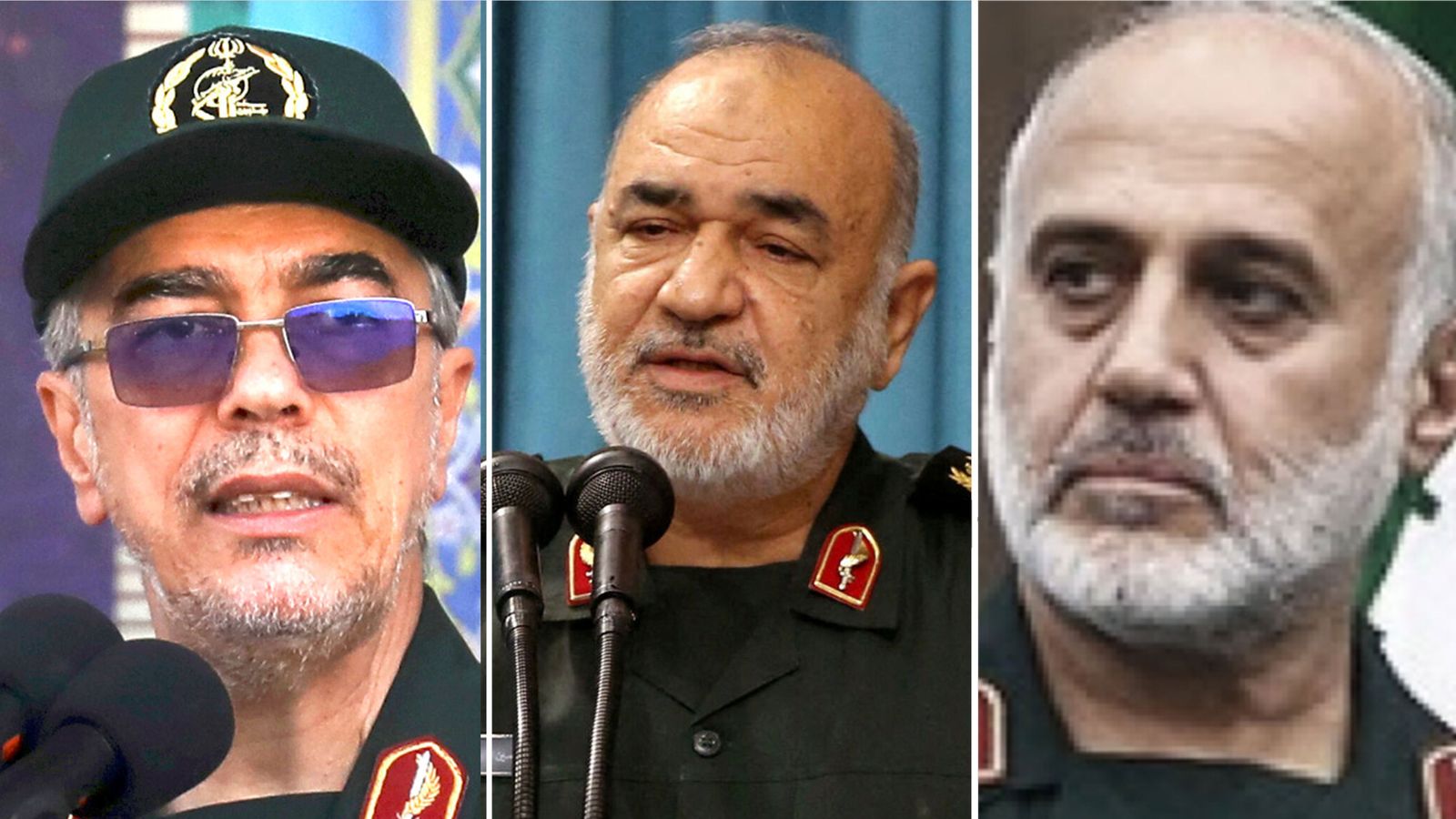
In a serious escalation of events within Iran, local news agencies reported the assassination of Bahnam Rezai, head of the Iranian Revolutionary Guard Navy Intelligence. Memorial services were held for him yesterday, following the Israeli army's announcement of his assassination in a military operation targeting the city of Bandar Abbas in southern Iran.
The operation, which took place last Thursday, also resulted in the death of the commander of the Revolutionary Guard Navy, Ali Reza Tangsiri. Israeli Defense Minister Israel Katz confirmed that this assassination serves as assistance from his country's army to the United States in opening the Strait of Hormuz, which is a vital artery for transporting about one-fifth of global oil supplies.
Details of the Incident
The assassinations carried out by Israel deep within Iran have become a strategy followed since the beginning of the current war on Iran on February 28 of last year. These operations have targeted prominent figures in the Iranian regime, including Supreme Leader Ali Khamenei, Revolutionary Guard commander Mohammad Pakpour, Secretary of the Supreme National Security Council Ali Larijani, Minister of Intelligence Ismail Khatib, and commander of the Basij forces Gholam Reza Soleimani.
These operations come amid an increasing escalation between Iran and Israel, as the latter seeks to undermine Iranian military capabilities, particularly in the naval domain, which is a strategic focal point in the regional conflict.
Background & Context
Historically, the relations between Iran and Israel have been marked by increasing tensions, with Israel considering Iran an existential threat. For years, Israel has adopted a policy of assassinations as a means to eliminate Iranian military leaders it perceives as threats. This policy also reflects growing Israeli concerns about Iranian influence in the region, especially in Iraq, Syria, and Lebanon.
The Israeli military operations against Iran occur within a broader context of regional conflict, where major powers are competing for influence in the Middle East. As tensions escalate, it has become clear that assassinations have become one of the main tools in the conflict between the two sides.
Impact & Consequences
The deaths of Rezai and Tangsiri could lead to greater escalation in military operations between Iran and Israel. Iran is expected to respond to these assassinations in various ways, either through retaliatory operations or by enhancing its military capabilities. This escalation could create instability in the region and heighten tensions among regional and international powers.
Additionally, these events could affect global oil markets, as the Strait of Hormuz is a vital point for oil transportation. Any escalation in this context could lead to rising oil prices and impact the global economy.
Regional Significance
The recent events in Iran are part of a broader conflict in the region, where Arab countries are directly affected by these tensions. The escalation of assassinations and military operations could lead to increased divisions in the region and exacerbate instability in countries like Iraq and Syria.
These events may also affect relations between Arab countries and Iran, as many Arab nations are watching with concern the rising Iranian influence in the region. Under these circumstances, some Arab countries may seek to strengthen their alliances with Western powers to counter the increasing Iranian threats.
In conclusion, the assassination of Bahnam Rezai marks a significant event in the context of the conflict between Iran and Israel, reflecting an increasing escalation in military operations. It is expected to have wide-ranging implications for the region, necessitating close monitoring by the international community.