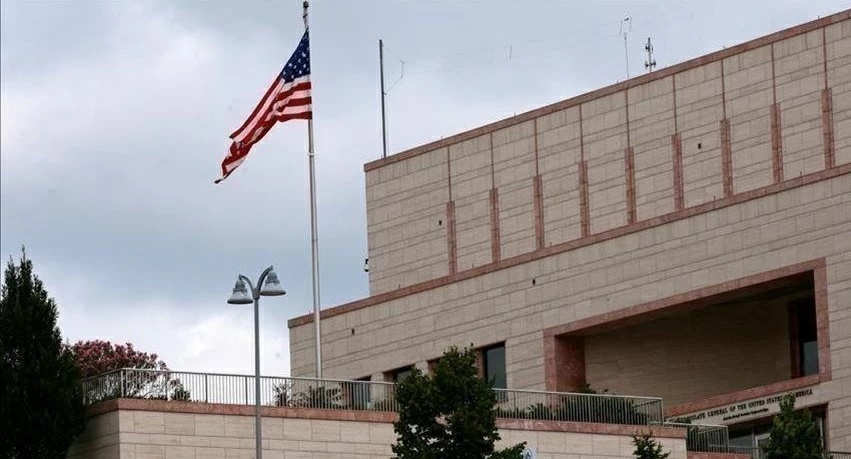
The US Embassy in Baghdad accused Iranian-backed Iraqi militias today (Sunday) of attempting to assassinate American diplomats during the night, confirming that two attacks were carried out on American diplomatic facilities in Iraq.
A spokesperson for the embassy stated in an official statement: "Iranian-backed Iraqi terrorist militias executed two heinous attacks on American diplomatic facilities last night in an attempt to assassinate American diplomats." These remarks reflect the growing concern over the escalating violence in the country.
Details of the Attacks
The attacks targeted the US consulate general and civilian areas in Erbil, condemned by the Prime Minister of the Kurdistan Region, Masrour Barzani, who described them as "heinous and deliberately aggressive," threatening the security and stability of Iraq and the region. Barzani emphasized that these attacks pose a significant danger and cannot be tolerated under any circumstances, stressing the urgent need to put an end to them.
Simultaneously, the Erbil area witnessed several nighttime attacks, affecting the US consulate and other civilian areas. The Iraqi Popular Mobilization Forces also announced today that one of their headquarters was attacked in Tuz Khurmatu, north of Baghdad, further complicating the security situation in the country.
Background & Context
These events come amid rising tensions between the United States and Iran, with Washington accusing Tehran of supporting armed factions in Iraq. In recent years, there has been an increase in attacks on American facilities by Iranian-backed militias, reflecting the ongoing struggle for influence in the region.
Moreover, these attacks occur at a sensitive time as the Iraqi government seeks to enhance security and stability in the country after years of conflict. These incidents have impacted the relations between Iraq and the United States, complicating the political landscape further.
Impact & Consequences
The recent attacks could escalate tensions between the armed factions and the Iraqi government, potentially negatively affecting security and stability in the country. Additionally, these events may influence the relationship between Iraq and the United States, as Washington might be compelled to reassess its military presence in the region.
These attacks could increase pressure on the Iraqi government to conduct security operations against the armed factions, which might provoke violent reactions from these groups. The escalation of violence could also impact the economic and social situation in Iraq, exacerbating the suffering of citizens.
Regional Significance
These events signal a rise in tensions in the region, reflecting the ongoing conflict between regional and international powers. The escalation of violence in Iraq may also affect neighboring countries, potentially leading to an influx of refugees and increased border tensions.
Under these circumstances, the international community must urgently intervene to support peace and stability efforts in Iraq, as the continuation of violence could lead to dire consequences for the entire region.