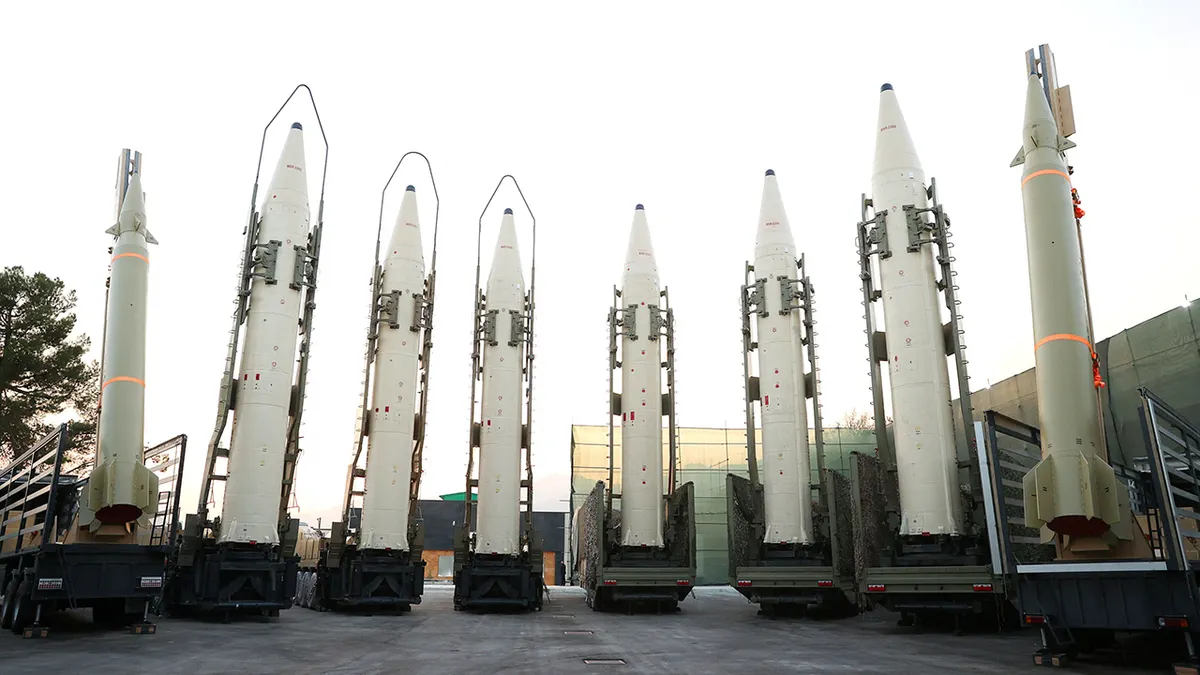
Recent reports have shown that Iran is facing significant challenges in its missile program, with a notable decline in stockpiles and operational capabilities. Despite military pressures from the United States and Israel, Tehran remains capable of adapting and rebuilding its military capabilities.
The Times and the iPaper have separately addressed the state of Iran's missile program, noting that stockpiles have decreased significantly. Iran previously possessed around 2,500 ballistic missiles, but this number has dropped to approximately 1,000 due to ongoing military pressures.
Details of the Situation
The Times reported that Iran has regained part of its missile stockpile following U.S. pressures, but the use of cluster munitions in Israeli attacks indicates that stockpiles are beginning to dwindle again. Reports have shown that the rate of missile launches has decreased from dozens daily to about ten, reflecting a decline in Tehran's operational capability.
Despite this decline, reports confirm that Iran is capable of rapid recovery, having rebuilt a significant portion of its arsenal in a short time following previous pressures. Additionally, the use of cluster munitions poses an extra challenge to Israeli air defense systems, complicating the security situation in the region.
Background & Context
Historically, Iran's missile program has been a central component of its military strategy, serving as a means of deterrence and enhancing its regional influence. However, increasing military pressures from the United States and Israel have led to the erosion of this program, raising questions about Iran's ability to maintain its military strength.
At the same time, Iran continues to develop its military capabilities, with reports suggesting that it may have deliberately concealed the true range of its missiles. This has raised concerns in Europe, where Iran has been accused of launching missiles towards the Diego Garcia base, heightening fears that its threats could reach European cities like London and Paris.
Impact & Consequences
Despite the noticeable decline in missile stockpiles, Iran can still employ less complex means to threaten regional and global stability. It may remain capable of targeting oil tankers or disrupting navigation in the Strait of Hormuz, potentially leading to widespread economic repercussions.
Reports indicate that the decline in stockpiles does not signify the end of the threat, as Tehran can utilize alternative strategies to bolster its position. The ambiguity surrounding the range of its missiles enhances its deterrent posture, keeping its adversaries in a state of constant vigilance.
Regional Significance
The state of Iran's missile program is of significant importance to the Arab region, as Iran remains a key player in regional conflicts. The decline in its missile capabilities may alter the dynamics of conflict, but it does not eliminate the threats posed by Tehran to its neighbors.
In conclusion, the situation in Iran remains complex, as the country continues to face significant challenges in its missile program while striving to maintain its military strength in the face of external pressures. This ambiguity regarding its true capabilities may remain a weapon in Tehran's hands, allowing it to influence regional and international events.