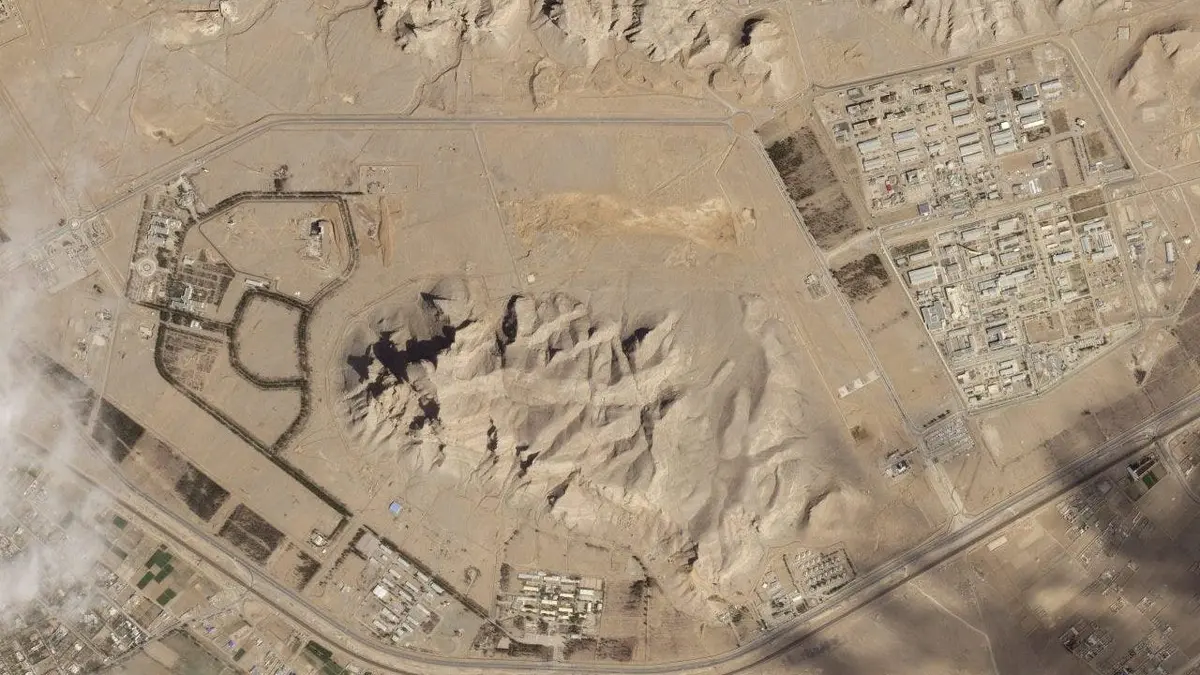
The military pressure applied by the United States on Iran raises questions about its effectiveness, as enriched uranium remains fortified under the mountains. While the U.S. administration promotes its successes, new assessments indicate that these successes may be exaggerated, putting the credibility of the White House at stake.
The military strikes carried out by the United States against Iranian nuclear facilities aimed to undermine Tehran's nuclear program. However, it seems that this pressure has not led to the desired results, as Iran continues to enrich uranium, raising concerns in the international community.
Details of the Event
In recent years, the United States has intensified its military and economic pressure on Iran, based on claims that Tehran seeks to develop nuclear weapons. However, reports indicate that this pressure has not significantly impacted Iran's nuclear program, as it continues to enrich uranium at high rates.
Many questions arise regarding the effectiveness of these strategies, especially in light of reports suggesting that some Iranian nuclear facilities are well-fortified against military pressure. This raises doubts about whether military pressure is merely a display of power or if it has real effects on the ground.
Background & Context
Historically, relations between the United States and Iran have been tense, especially following the Islamic Revolution in 1979. Since then, the United States has taken several steps to limit Iran's influence in the region, including imposing economic and military sanctions. However, these strategies have not fully achieved their objectives.
In 2015, a nuclear agreement was reached between Iran and the major powers, but the U.S. withdrawal from the agreement in 2018 heightened tensions. Since then, Iran has resumed enriching uranium at higher rates, raising international concerns.
Impact & Consequences
New assessments confirm that U.S. military pressure may be ineffective, raising questions about the credibility of the U.S. administration. If Iran continues to develop its nuclear program, this could escalate tensions in the region, threatening both regional and international security.
The failure of military pressure to achieve its goals may also impact U.S. policy in the Middle East, necessitating a reevaluation of strategies for dealing with Iran. This could lead to changes in regional alliances and complicate international relations.
Regional Significance
The Arab countries neighboring Iran are among those most affected by developments in Iran's nuclear program. If Iran continues to enrich uranium, these countries may feel increasing security threats, prompting them to bolster their military capabilities.
Moreover, escalating tensions between the United States and Iran could lead to increased instability in the region, affecting the economy and security of Arab countries. Therefore, monitoring developments in this issue is crucial for the entire region.
In conclusion, the question remains: Will the United States be able to achieve its objectives in confronting Iran's nuclear program, or will military pressure remain merely a show of force without tangible results?