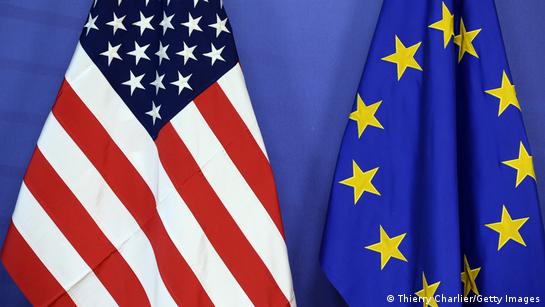
Reports indicate that US-European relations are at a critical juncture, with diverging priorities and rising discontent. Analysts are questioning the future of the alliance between the two parties.
In the spring of 1982, former British Foreign Secretary William Hague was a student at Oxford University, where he witnessed a moment reflecting the depth of relations between London and Washington. An American police officer overlooked his traffic violation after hearing his British accent, symbolizing US support for Britain in its dispute with Argentina over the Falkland Islands.
Details of the Current Situation
Today, it seems that those friendly sentiments have faded, as an internal memo from the Pentagon indicates that the US administration is reassessing its diplomatic support for what is known as European "imperial possessions." This shift is seen as a result of the US administration's dissatisfaction with the UK's stance on the war with Iran, alongside the deterioration of US-European relations in recent years.
These analyses coincided with King Charles III of Britain's visit to the United States, raising questions about the impact of this visit on the future of relations between the allies. Hague advocates for the continuation of the British-American relationship under new terms, while Gideon Rachman, chief foreign affairs commentator for the Financial Times, believes that the relationship between Washington and Europe as a whole is experiencing unprecedented tension.
Context and Background
Hague believes that the relationship between Britain and the United States has not ended but has transitioned to a "more mature" phase. He likens it to a relationship between two close friends who have moved to different areas, with the United States focusing on countering Chinese influence while Britain strengthens its ties with Europe to face the Russian threat.
This transformation reflects changing priorities in international relations, where interests have begun to diverge since previous administrations, including those of Presidents Trump and Biden. Hague also points out that Britain has become militarily and economically weaker, affecting its role as a strong ally.
Consequences and Implications
On the other hand, Rachman notes that the American military presence in Europe may be threatened, as European countries have shown reluctance to support US operations, which has angered the US administration. Europeans also feel that Washington has ignored them, leading to a erosion of trust in American leadership.
This crisis comes in the broader context of deteriorating relations, including the imposition of US tariffs on allies. However, Rachman warns that talk of a complete "divorce" overlooks the intertwined interests between the two parties, as the United States still relies on its bases in Europe, while Europe needs the American security umbrella to face threats.
Impact on the Arab Region
The Arab region is indirectly affected by these developments, as many Arab countries rely on Western support to confront security challenges. Any decline in US-European relations could impact security strategies in the region.
In conclusion, despite rising tensions, a "divorce" does not seem imminent, but it is no longer impossible as it once was. Western relations are entering a sensitive transitional phase, where alliances may not collapse, but they will not return to their previous state.