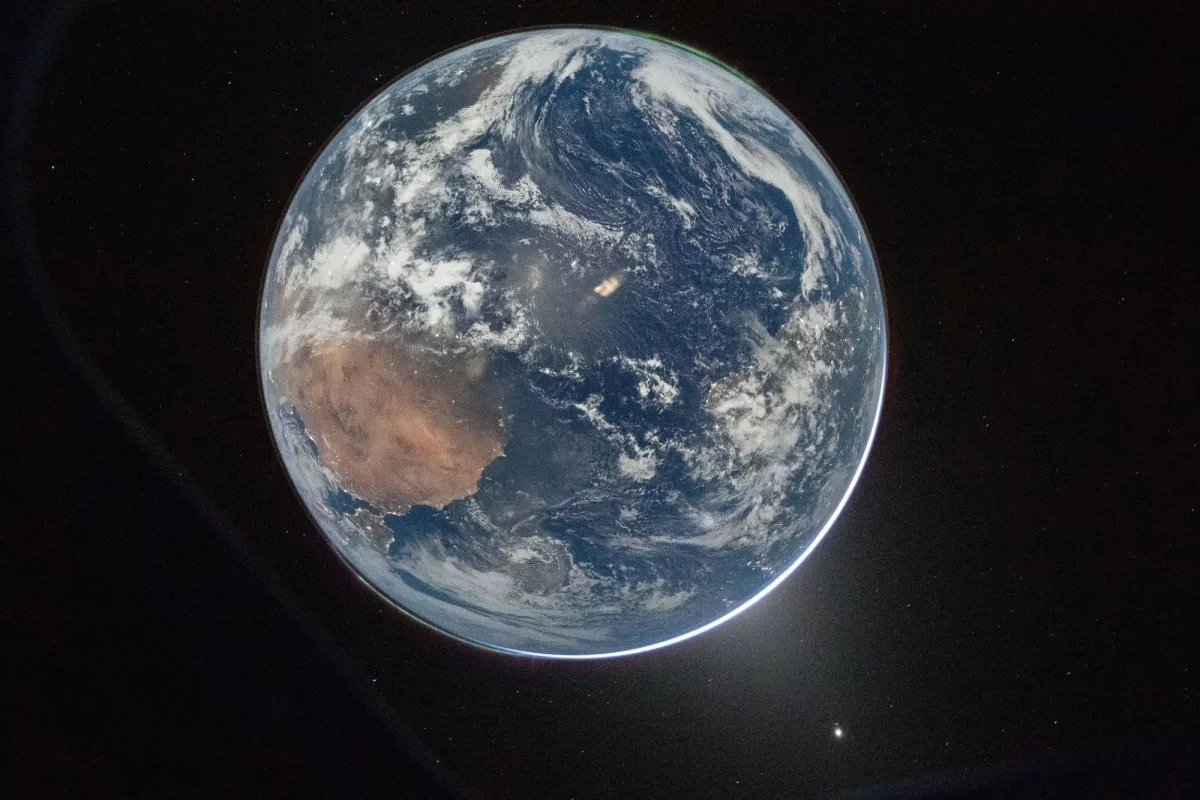
The four astronauts on the Artemis 2 mission to the Moon have sent back the first images of Earth, with NASA astronaut Victor Glover expressing his admiration for the planet from inside the Orion capsule, saying, "You look amazing. You look beautiful."
This historic mission is the first of its kind in over 50 years, featuring Glover alongside his American colleagues Christina Koch and Reid Wiseman, as well as Canadian astronaut Jeremy Hansen. The four astronauts launched aboard the Orion capsule using the Space Launch System rocket from Cape Canaveral Space Force Station in Florida.
Mission Details
Approximately 24 hours after their launch, the astronauts successfully exited Earth's orbit using a special maneuver, completing nearly half of their journey to the Moon about 24 hours later. During this period, the crew conducted a series of scientific tests and training missions, reflecting the significance of this mission in enhancing scientific knowledge and space research.
The Artemis 2 mission is scheduled to last around 10 days, including the astronauts' flight around the Moon, where they will reach a distance from Earth further than any human has traveled before. This mission represents a crucial step in the Artemis program, which aims to return humans to the Moon and explore space more broadly.
Background & Context
Apollo 8 was the first crewed mission to orbit the Moon, circling its far side before returning to Earth. Similar to the Artemis 2 mission, the crew of that flight did not land on the lunar surface but spent about 20 hours in orbit before returning. The entire mission lasted just over 6 days before the crew landed in the Pacific Ocean.
It is noteworthy that the Artemis 2 mission carries historical significance, as Christina Koch will become the first woman to travel to the Moon, while Victor Glover will be the first Black man to achieve this milestone. Additionally, Jeremy Hansen will be the first non-American to accomplish this feat, reflecting diversity and inclusivity in space exploration.
Impact & Consequences
The Artemis 2 mission is part of a larger vision by NASA for space exploration, aiming to enhance international cooperation in space. This mission could open new avenues for scientific research and technology development, contributing to a greater human understanding of the universe.
This mission also reflects the technological advancements humanity has made in space, potentially encouraging other countries to invest in their own space programs. The return to the Moon could be the beginning of larger explorations, such as sending missions to Mars and other planets.
Regional Significance
As Arab countries continue to develop their space programs, the success of the Artemis 2 mission may inspire a new generation of scientists and engineers in the region. This mission could serve as a catalyst for developing Arab space projects, fostering scientific and technological collaboration among Arab nations.
In conclusion, the Artemis 2 mission represents a historic step in space exploration, bringing humanity back to the Moon and opening new horizons for scientific research and international collaboration. This mission is not just a journey to the Moon; it is the beginning of a new era of space discoveries.