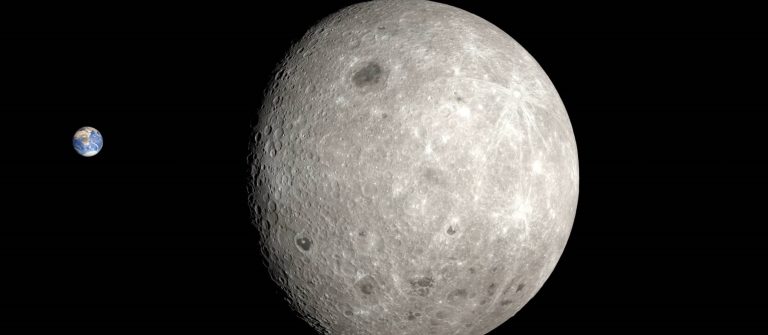
Astronauts on the Artemis 2 mission are preparing for a historic journey around the Moon, where they will analyze and photograph its surface. This mission marks a significant step in humanity's return to the Moon after more than half a century. The mission launched from the Johnson Space Center in Houston, where commander Reid Wiseman confirmed that morale is high among the crew.
On Saturday morning, the astronauts woke up to the famous song by Chappell Roan, while they were approximately 169,000 miles (271,979 kilometers) from Earth, heading towards the Moon at a speed of 110,700 miles (178,154 kilometers) per hour. The crew is expected to enter the "Moon's sphere of influence" overnight, where the Moon's gravity will become stronger than that of Earth, enabling them to achieve an unprecedented milestone.
Mission Details
The crew includes Christina Koch and Victor Glover from the United States and Jeremy Hansen from Canada, on a journey that Wiseman described as a "Herculean task." This mission represents a return of humans to the Moon after more than fifty years since the last flight in the Apollo program.
The astronauts began their day with a breakfast that included scrambled eggs and coffee, while Glover prepared to conduct a manual piloting demonstration to gather additional data on the spacecraft's performance in deep space. The crew also reviewed their checklist for documenting their experience while traveling around the Moon.
Background & Context
Historically, the Apollo missions in the 1960s and 1970s achieved significant milestones, flying at an altitude of about 70 miles above the Moon's surface. However, the Artemis 2 mission will allow the crew to view the Moon from an altitude exceeding 4,000 miles, giving them the opportunity to see the full circular surface of the Moon, including areas near the poles.
The astronauts' training includes studying lunar geology, enabling them to photograph and describe lunar features such as ancient lava flows and impact craters. NASA-approved smartphones have been used to capture images, and the agency has released photos from the Orion spacecraft showing Earth in its deep blue colors with rising clouds.
Impact & Consequences
The Artemis 2 mission is part of a long-term plan for repeated returns to the Moon, aiming to establish a permanent lunar base that will provide a platform for future explorations. This journey is not only a scientific achievement but also reflects technological advancement and innovation in the field of space.
This mission is a significant step towards achieving goals for further space exploration, including missions to Mars. The success of this mission could enhance international cooperation in space and encourage greater investments in this sector.
Regional Significance
Although the mission focuses on the Moon, its impact extends to the Arab world, where it can inspire new generations of scientists and engineers in the region. International cooperation in space can also open new avenues for collaboration between Arab countries and advanced nations in this field.
In conclusion, the Artemis 2 mission represents a turning point in space exploration, bringing humanity back to the Moon and opening new horizons for further space exploration. This journey is not just a technical achievement; it embodies humanity's aspirations to explore the unknown.