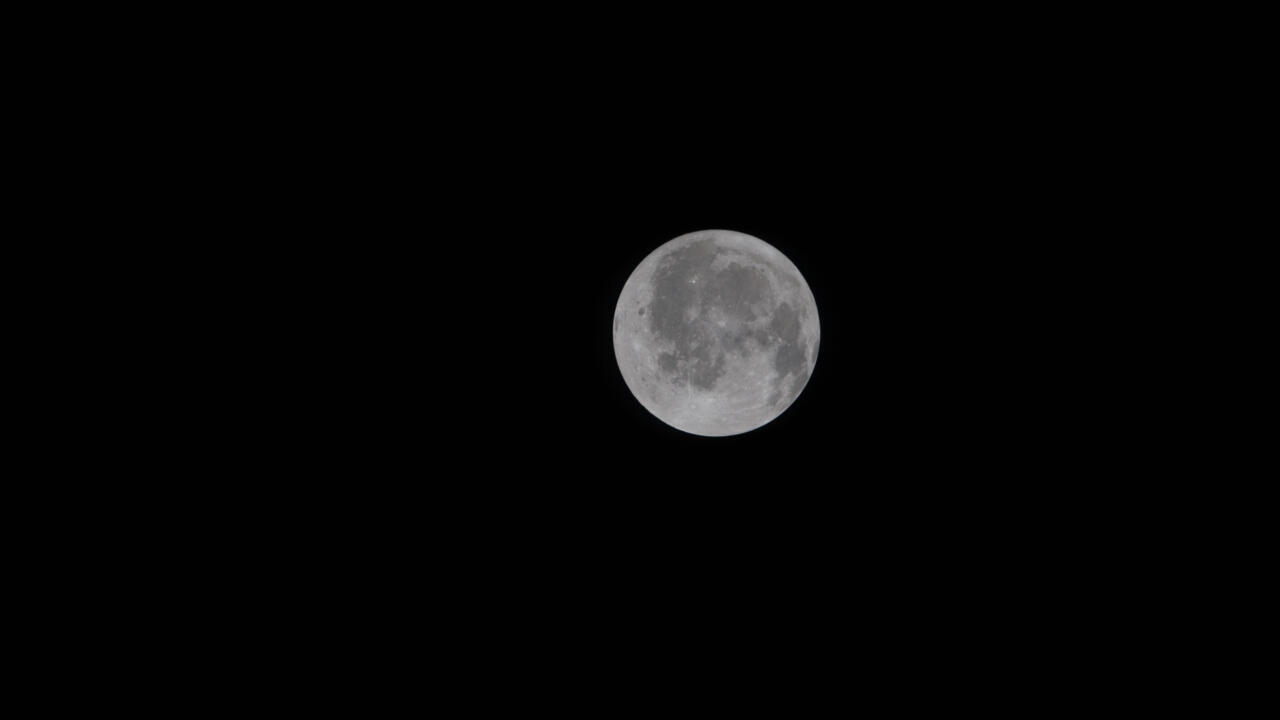
The four astronauts on the Artemis 2 mission have experienced unprecedented views of the Moon's far side, seeing the eastern basin for the first time with human eyes. NASA confirmed that this moment marks a historic achievement in space exploration.
At the conclusion of their fourth day of a ten-day mission, the spacecraft was approximately 321,869 kilometers from Earth and 131,965 kilometers from the Moon. The U.S. space agency released an image captured by the astronauts showing the eastern basin, which had never been seen before by human eyes.
Details of the Event
Astronaut Christina Koch, during a conversation with Canadian children from space, stated that her team was excited to see the basin sometimes referred to as the Moon's "Grand Canyon." She noted that the view was incredibly special, as no human eye had ever seen this crater before.
The next major milestone in the journey is expected to occur late Sunday into Monday, when the astronauts enter the "Moon's gravitational influence zone," where the Moon's gravitational pull will become stronger than that of Earth. If all goes as planned, the astronauts will make history by reaching the farthest point from Earth ever achieved by humans.
Background & Context
The Artemis 2 mission is part of NASA's ambitious plan to return to the Moon regularly, aiming to establish a permanent base that allows for deeper lunar exploration. This mission follows a series of previous missions, such as Apollo, which flew at much lower altitudes above the Moon's surface.
While Apollo missions flew at an altitude of about 113 kilometers above the Moon, the Artemis 2 team will be at an altitude exceeding 64,000 kilometers at their closest point, allowing them a broader view of the Moon's surface, including polar regions.
Impact & Consequences
This mission opens new horizons in space exploration, potentially contributing to a better understanding of the Moon's history and geological formations. The technologies used in this mission will also aid in developing new strategies for exploring other planets.
Moreover, the success of this mission could enhance international cooperation in space, enabling multiple countries to participate in space exploration and the development of new technologies.
Regional Significance
This mission serves as an inspiration for Arab countries seeking to develop their space programs. With growing Arab interest in space, these achievements could encourage Arab youth to engage in science and technology fields.
Additionally, international cooperation in space may open new avenues for Arab countries to collaborate with global space agencies, contributing to the enhancement of their technological and scientific capabilities.