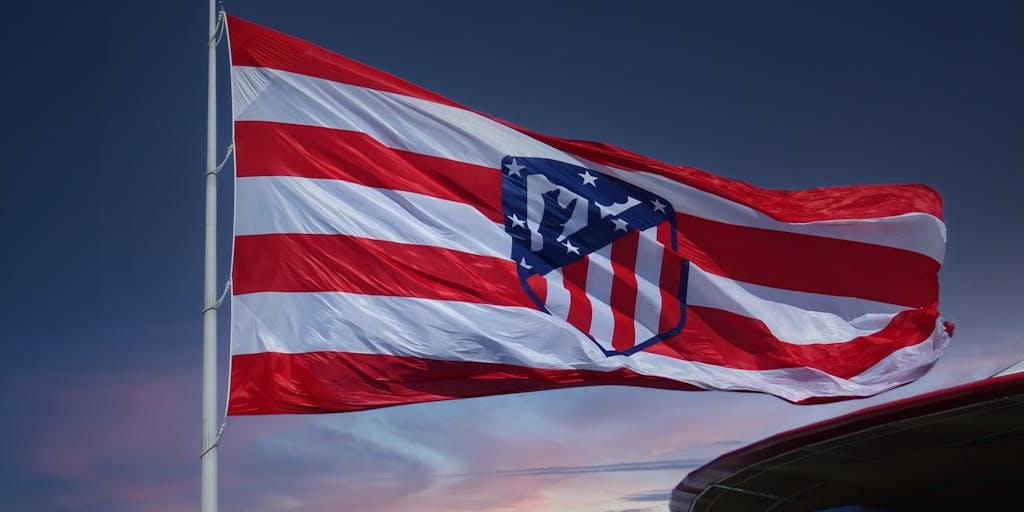
Atletico Madrid has sparked widespread controversy after releasing a statement in both Arabic and English, suggesting the deletion of a post due to "confusion" caused by a video clip. However, it soon became clear that this statement was merely part of a marketing campaign aimed at attracting public attention.
Initially, the club's official account published a visually striking statement featuring a red background and the club's logo, creating the impression of an urgent official announcement. But upon tracking the series of tweets, it became evident that what was presented as an "official statement" was nothing more than an interactive gimmick to draw attention.
Details of the Incident
The account clarified in subsequent tweets that no post had been deleted, and the aim of this campaign was to encourage the public to interact with a video showcasing player Nahuel Molina's goals. The campaign began with a post suggesting a crisis, before gradually revealing that it was merely an "interactive gimmick," culminating in a direct invitation to watch the video and engage with it.
This incident raises concerns regarding the potential for such statements to be easily mimicked by fake accounts, which could lead to the dissemination of false information in the name of trusted entities. Furthermore, these practices contribute to the erosion of trust in official data, as the public may treat any similar statement in the future as merely a marketing campaign.
Background & Context
This campaign follows Atletico Madrid's loss to their traditional rival Real Madrid, with a score of 3-2 in the Madrid Derby on March 22, 2026. Despite Nahuel Molina scoring a goal in the match, the timing of the campaign drew widespread criticism, as followers felt that the campaign was ill-timed, exacerbating the frustration among fans.
It is worth noting that the use of visual and linguistic templates associated with official data during crises, such as apologies or urgent clarifications, may weaken their significance and make it difficult for the public to distinguish between genuine statements and marketing content.
Impact & Consequences
The repercussions of this campaign include a negative impact on the credibility of official data, as the dissemination of incorrect information could erode trust between the public and official entities. Additionally, the use of unconventional marketing methods may diminish the impact of genuine messages during times of crisis.
Public reactions to the campaign were predominantly sarcastic and critical, with some followers stating that the account "prolongs the story without any real substance," while others expressed feeling that they had "fallen for" the statement before discovering its marketing nature. Other comments linked the campaign to the decline in sporting results, reflecting fan dissatisfaction with performance both on and off the field.
Regional Significance
This incident serves as an example of how social media influences fan engagement with sports clubs, especially in the Arab world where football enjoys immense popularity. The use of unconventional marketing strategies may affect how fans respond to news and information, necessitating clubs to seriously reconsider their communication strategies.
In conclusion, this incident highlights the importance of maintaining the credibility of official data, especially in the age of rapid information dissemination, where marketing gimmicks can lead to a deterioration of trust between the public and official entities.