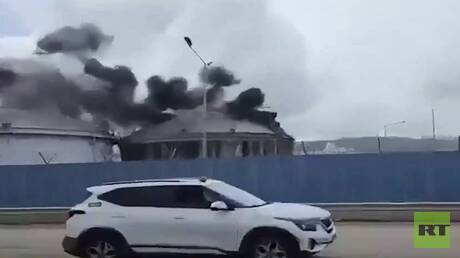
Israeli media reported that the Haifa oil refinery was struck by an Iranian drone attack for the second time since the war began. The attack comes at a time when tensions are escalating between Iran and Israel, raising concerns about the stability and security of the region.
Footage released shows that the attack caused significant damage to the refinery, raising questions about Israel's ability to protect its vital installations from aerial assaults. This attack follows closely on the heels of the first strike targeting the same facility, indicating that Iran may be determined to expand its military operations against Israeli targets.
Details of the Incident
In detail, the Haifa oil refinery was targeted by Iranian drones, with Israeli media reporting the aftermath of the attack that resulted in severe damage. This attack is part of a mutual military escalation between the two sides, as Iran seeks to enhance its influence in the region by targeting Israel's critical infrastructure.
The Haifa refinery is one of the largest oil refineries in Israel, playing a vital role in meeting the country's energy needs. Repeated attacks on this facility could lead to oil supply shortages, negatively impacting the Israeli economy.
Background & Context
The roots of the conflict between Iran and Israel date back decades, with Israel accusing Iran of supporting armed groups in the region, such as Hezbollah, which pose a direct threat to its security. In recent years, tensions have escalated significantly, particularly after the United States withdrew from the Iranian nuclear deal and imposed strict economic sanctions on Tehran.
Attacks on oil facilities are not new; the region has witnessed several similar attacks in recent years, reflecting the intensification of regional conflict. Iran, for its part, seeks to use these attacks as a means to pressure Israel and demonstrate its capability to carry out complex military operations.
Impact & Consequences
The repercussions of the attack on the Haifa refinery extend beyond Israeli borders, potentially leading to greater military escalation in the region. If attacks continue, Israel may find itself compelled to respond militarily, which could further escalate the conflict.
Additionally, attacks on oil facilities could affect global oil prices, as any disruption in oil supplies from the Middle East could lead to price increases. This situation could impact the global economy, especially amid current economic crises.
Regional Significance
These events serve as a wake-up call for Arab countries, as the escalating tensions between Iran and Israel could impact security and stability in the region. Arab nations striving for economic and political stability may find themselves facing the repercussions of these conflicts.
Moreover, repeated attacks may increase divisions among Arab states, with some countries adopting pro-Israel stances while others may support Iran. This division could complicate the political landscape in the region.
In conclusion, the events in Haifa reflect a state of instability in the region, necessitating serious steps from Arab nations to address these challenges. Strengthening regional cooperation may be the only way to achieve security and stability under these tense circumstances.