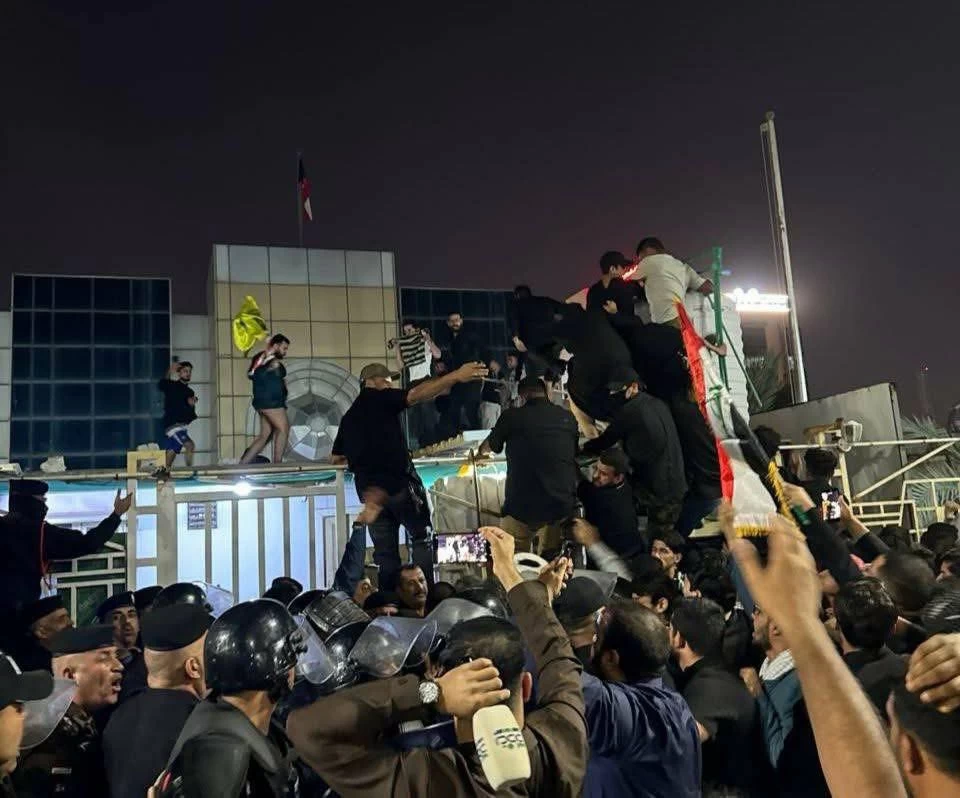
The Secretary-General of the Arab League, Ahmed Aboul Gheit, strongly condemned the attack on the Kuwaiti consulate in Basra, southern Iraq, describing it as a "flagrant violation of the sanctity of diplomatic and consular missions." In a statement issued by the League today (Wednesday), Aboul Gheit emphasized that this attack represents a definitive rejection of any violation of the sanctity of diplomatic or consular premises, or any invasion or vandalism occurring within or around them under any pretext.
Spokesperson for the Secretary-General, Jamal Rushdi, conveyed that Aboul Gheit welcomed Iraq's announcement of forming an investigation committee into the incident, stressing the importance of taking necessary legal actions against those involved to ensure that such attacks do not recur. He noted that this incident constitutes a serious violation of the Vienna Convention on Diplomatic Relations (1961) and the Vienna Convention on Consular Relations (1963), which affirm the immunity and sanctity of diplomatic premises and obligate the host state to protect them.
Details of the Incident
The attack on the Kuwaiti consulate in Basra has sparked widespread condemnation from Arab and international entities, including from Gulf Cooperation Council countries and Kuwait itself, which held the Iraqi government responsible for protecting its missions. In this context, the Iraqi Ministry of Foreign Affairs condemned the incident and announced the formation of an immediate investigation committee, reflecting the Iraqi government's seriousness in addressing this type of violation.
This incident comes amid escalating regional tensions, as the area has witnessed attacks and missile strikes targeting Kuwaiti territory and other Gulf states. This situation raises concerns about the security of diplomatic missions and underscores the urgent need to enhance legal protections for these missions.
Background & Context
Historically, diplomatic missions are considered symbols of national sovereignty and must receive the necessary protection under international law. In recent years, there has been an increase in attacks on diplomatic premises in various countries, necessitating a reevaluation of available protection mechanisms. The attack on the Kuwaiti consulate in Basra is not an isolated incident but is part of a series of events that threaten regional stability.
This incident highlights the necessity of respecting international laws governing diplomatic relations, which aim to protect the rights of states to exercise their sovereignty without external interference. Any violation of these laws can exacerbate security situations in the region.
Impact & Consequences
The potential consequences of this attack could be severe, as it may lead to a deterioration of relations between Iraq and Kuwait, in addition to affecting Iraq's relations with Gulf Cooperation Council countries. Any escalation in this context could negatively impact regional security and heighten tensions.
Moreover, this incident may open the door to further international criticism of the Iraqi government, which could affect its standing on the international stage and increase pressure on it to improve security levels and protect diplomatic missions.
Regional Significance
This incident serves as a wake-up call for Arab countries regarding the importance of enhancing protection for diplomatic missions, as any attack could lead to negative repercussions on inter-state relations. Respecting sovereignty and protecting diplomats should be a priority for Arab governments, especially in light of current regional conditions.
In conclusion, the attack on the Kuwaiti consulate in Basra underscores the challenges facing diplomatic missions in the region and emphasizes the need for enhanced cooperation among Arab states to protect their sovereignty and rights.