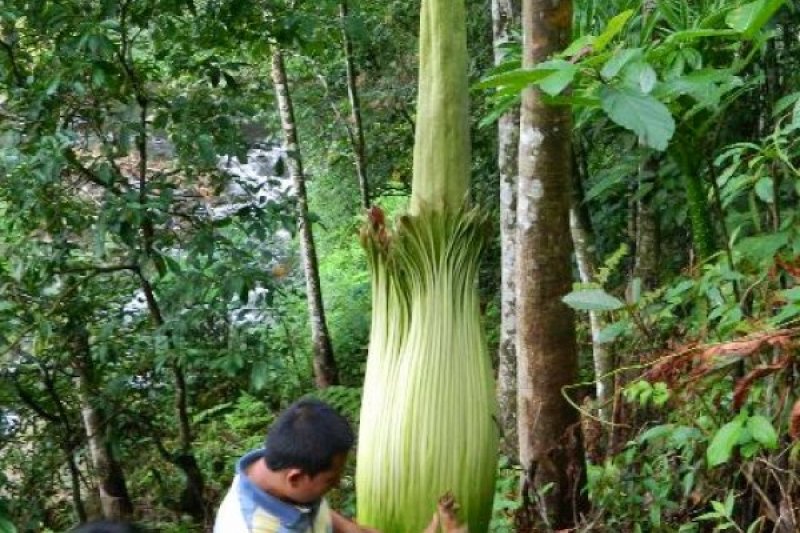
The corpse flower, scientifically known as Amorphophallus titanum, is one of the strangest and rarest flowers in the world, having fully bloomed in Koto Rantan, a region in Agam, Indonesia. This unique natural event has drawn many tourists from various countries, including Malaysia, Russia, and France, who flocked to witness this rare phenomenon.
According to Joni Hartono, a tourism activist in the area, the flower is in perfect bloom and is expected to wilt and decompose in the coming days. This makes visiting the flower a rare opportunity, as it takes between 3 to 5 years for the flower to bloom again.
Event Details
The corpse flower attracts tourists due to its unique shape and strong odor, which resembles the smell of rotting flesh, making it intriguing. The area has seen dozens of tourists who expressed their joy at the chance to see this rare flower. Hartono also noted that previous flowers of the same species had bloomed in nearby areas, contributing to increased tourism awareness in the region.
The corpse flower is a protected species under Indonesian law, prohibiting its destruction or harm. Ade Putra, head of the Natural Resources Protection Agency in the area, emphasized the importance of preserving this rare flower, which is considered part of Indonesia's natural heritage.
Background & Context
Historically, the corpse flower has been a symbol of mystery and natural beauty in Indonesia. It was first discovered in the 19th century, and since then, it has attracted the attention of both scientists and tourists alike. This flower is known for its ability to grow in harsh conditions, making it an example of nature's resilience.
Indonesia is home to many rare species, and eco-tourism plays a significant role in the local economy. The Indonesian government aims to promote sustainable tourism by protecting such rare species, contributing to the preservation of biodiversity in the country.
Impact & Consequences
The visit of tourists to the corpse flower highlights the importance of eco-tourism in raising awareness about the protection of rare species. These visits also help support the local economy, as communities benefit from the revenues generated by tourism. This type of tourism is an opportunity to enhance local culture and introduce visitors to the beauty of Indonesian nature.
The flower is also a symbol of scientific research, contributing to the study of biodiversity and climate change. By understanding how this flower grows, scientists can gain valuable insights into how to protect other endangered species.
Regional Significance
This phenomenon underscores the importance of biodiversity and environmental conservation, a topic relevant to all countries, including Arab nations. Arab countries can learn from Indonesia's experiences in promoting eco-tourism and preserving rare species in their natural environments.
In light of climate change, it is crucial for Arab nations to adopt strategies to protect biodiversity, which contributes to promoting sustainable tourism and benefits local communities.