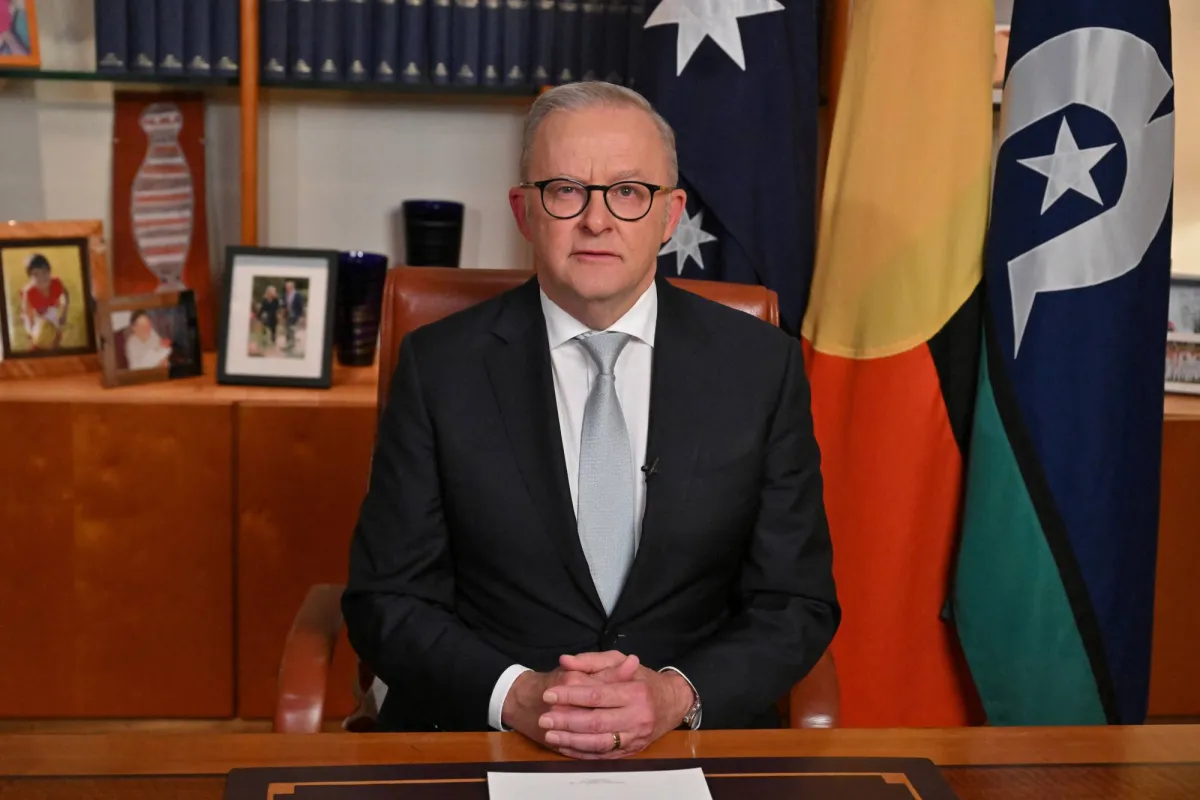
Australian Prime Minister Anthony Albanese delivered a rare speech today, warning that the economic shocks resulting from the war in the Middle East will last for several months. Albanese called on citizens to utilize public transport as a means to ease the growing economic pressures.
The speech was broadcast across major television and radio channels at 7 PM local time (08:00 GMT), reflecting the importance of the message he aimed to convey. Albanese noted that Australia, which relies on importing about 90% of its fuel needs, has experienced a sharp rise in gasoline prices and supply shortages due to the US-Israeli war against Iran and the blockade imposed on the Strait of Hormuz.
Details of the Address
Albanese stated, "I recognize that it is currently difficult to be optimistic... The war in the Middle East has caused the largest increase in gasoline and diesel prices in history. Australia is not a party to this war, but all Australians are bearing higher costs because of it." He emphasized that the economic shocks resulting from this war will continue for several months, necessitating action from both the government and citizens.
In a related context, Albanese urged citizens to avoid stockpiling fuel ahead of the upcoming Easter holiday, stressing the importance of relying on public transport to alleviate supply pressures. He explained that the coming months may be challenging, but assured that the government would do everything in its power to assist Australians in facing these challenges.
Background & Context
Albanese's remarks come at a critical time as concerns grow over the impacts of the war in the Middle East on the Australian economy. Fuel prices have surged to unprecedented levels, affecting the cost of living and raising inflation rates. This situation serves as a reminder of past crises, such as the 2008 global financial crisis and the COVID-19 pandemic, where previous Australian Prime Ministers played roles in delivering similar messages to citizens.
Australia imports most of its energy needs, making it vulnerable to fluctuations in global markets. As conflicts in the Middle East continue, analysts expect these pressures to persist for a long time, requiring effective responses from both the government and citizens.
Impact & Consequences
The repercussions of the war in the Middle East extend beyond Australia, affecting the global economy as a whole. With rising energy prices, many countries face similar challenges, increasing pressure on governments to provide support to citizens. While reliance on public transport may be a temporary solution, it requires improvements in infrastructure and more efficient options for travelers.
Under these circumstances, the Australian government must take effective steps to ensure local market stability and alleviate burdens on citizens. This may necessitate investments in renewable energy and enhanced international cooperation to address global economic challenges.
Regional Significance
These events underscore the importance of stability in the Middle East and its direct impact on other countries, including Australia. Conflicts in the region affect energy prices and global economies, making it essential to seek lasting solutions to ongoing conflicts.
Moreover, the situation in the Middle East highlights the need for international cooperation in energy and security, as crises in this region affect all nations, whether they are parties to the conflict or not. In this context, Arab countries must work to strengthen their internal stability and develop strategies to deal with global economic crises.
In conclusion, hope remains pinned on governments' ability to adapt to rapid changes in the global economic landscape and work towards achieving lasting stability in the region.