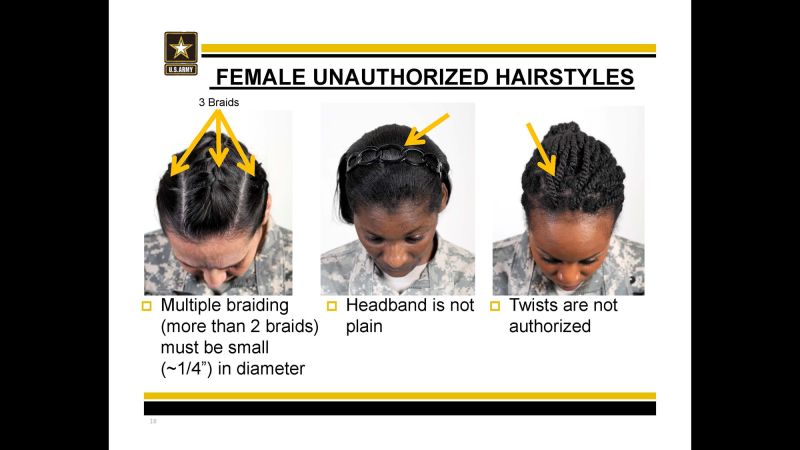
The Austrian Constitutional Court has issued a historic ruling to abolish the ban on hair braids for soldiers, considering the ban to be a form of gender discrimination. This decision came after a soldier was fined €2200 for his hairstyle, which was in the form of a 'ponytail'. The court rejected the justifications provided by the Austrian army and mandated the military institution to establish uniform regulations that align with the principles of equality.
This ruling reflects a shift in how military institutions address issues of identity and personal expression, as hairstyles are considered part of the cultural and individual identity of soldiers. The topic has sparked widespread debate in Austrian society, with some arguing that military laws should reflect diversity and respect for individual rights.
Details of the Case
In the details of the case, the soldier faced a financial penalty due to his hairstyle, which caused significant discontent among his colleagues and community members. The court deemed that the ban on various hairstyles, including braids and 'ponytails', contradicts the principle of gender equality. The court affirmed that military laws must align with modern values regarding individual rights.
The court also emphasized the necessity for a unified legal framework that guarantees the rights of all soldiers, regardless of their appearance, reflecting the social and cultural changes occurring in Austrian society.
Background & Context
This case is part of a broader discussion on human rights and equality across various sectors, including the military. In recent years, many European countries have experienced transformations in how they deal with issues of identity and diversity, as governments strive to promote values of equality and inclusivity.
In Austria, there have been previous attempts to amend military laws to be more in line with human rights principles, but this ruling represents a significant step toward achieving that goal. It comes at a time when there is increasing pressure on military institutions to be more open and accepting of diversity.
Impact & Consequences
This ruling is expected to have a significant impact on how the Austrian army addresses issues of identity and diversity in the future. Furthermore, this decision may encourage other countries to reconsider their policies regarding soldiers' appearances, potentially leading to positive changes in many armies worldwide.
Additionally, this ruling could contribute to enhancing the dialogue around human rights and equality across various sectors, reflecting the social and cultural changes being witnessed in European societies.
Regional Significance
Although this ruling pertains to Austria, it carries important implications for Arab countries facing similar challenges regarding identity and diversity issues. This decision could serve as a model for promoting individual rights and respecting diversity in Arab societies.
Moreover, fostering values of equality and inclusivity within military institutions can contribute to building more just and tolerant societies, positively impacting social and political stability in the region.
In conclusion, the decision of the Austrian Constitutional Court represents an important step toward enhancing individual rights and equality within military institutions, reflecting the social changes occurring in modern societies.