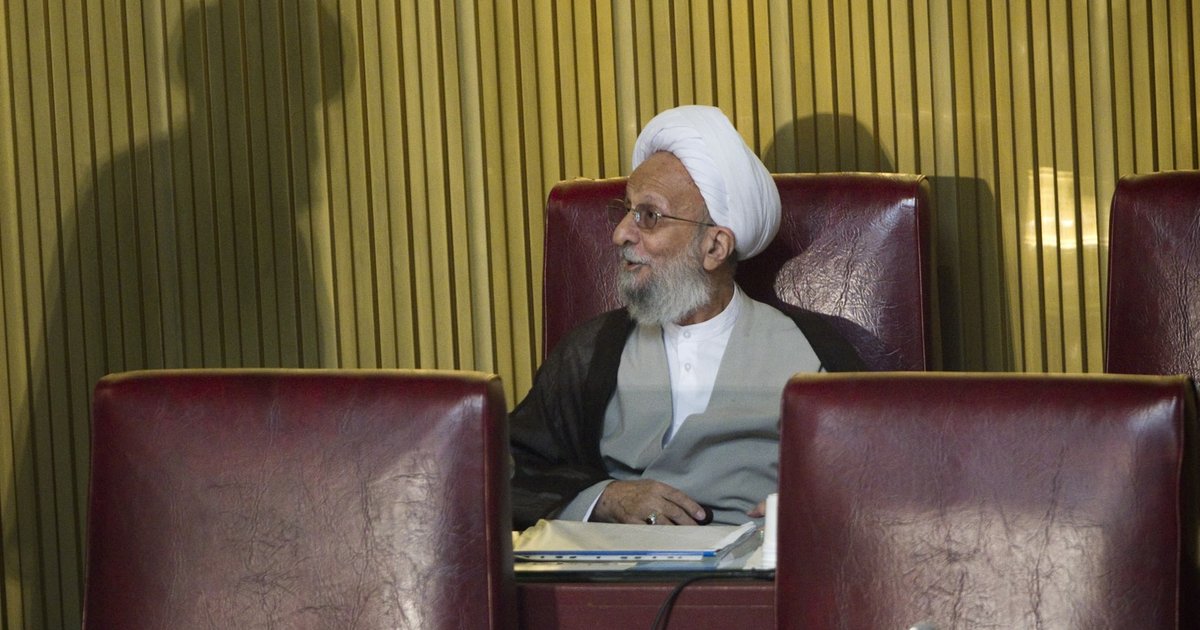
Ayatollah Muhammad Taqi Misbah Yazdi, one of the most significant religious and political figures in Iran, passed away on January 1, 2021, at the age of 85. Misbah Yazdi is considered one of the foremost theorists of absolute guardianship (Wilayat al-Faqih) and played a pivotal role in shaping the new fundamentalist thought in the country, being closely associated with the rise of a conservative generation that spanned from Mahmoud Ahmadinejad to Mojtaba Khamenei.
Born in Yazd in 1934, Yazdi began his education at the Najaf seminary before moving to Qom, where he studied under prominent scholars such as Ruhollah Khomeini and Muhammad Hussein Tabatabai. This religious environment significantly influenced his early intellectual development, leading him to engage in political and cultural activities during the Shah's regime, where he founded anti-regime magazines.
Details of the Event
Yazdi emerged as a key contributor to the modernization of the seminary in the years leading up to the Islamic Revolution of 1979, striving to connect it with the academic field. He managed the "Montazeri" school in Qom, offering lessons in philosophy, ethics, and Quranic interpretation. He also established several scientific institutions, the most notable being the "Baqir al-Uloom" Foundation, which later evolved into the Imam Khomeini Foundation for Education and Scientific Research, which he led until his death.
Politically, Yazdi was a member of the Assembly of Experts since 1990, representing Khuzestan Province and later Tehran, and returned to the assembly in the 2020 by-elections. He was known for his steadfast positions in support of Wilayat al-Faqih, viewing it as the only viable form of Islamic governance, which made him a controversial figure in the Iranian political landscape.
Background & Context
The theory of Wilayat al-Faqih was established in Iran after the Islamic Revolution, considered the legal basis for governance. Yazdi was one of the most prominent defenders of this theory, asserting that the authority of the Supreme Leader reflects God's will and that the people have no role in legitimizing this authority. This stance led him to adopt strict views towards reformist currents, perceiving them as a threat to religious authority.
Yazdi also vehemently criticized calls for referendums on the Wilayat al-Faqih system, arguing that such calls reflected an influence from Western models, highlighting the deep tensions between fundamentalists and reformists in Iran.
Impact & Consequences
Yazdi's ideas significantly influenced the trajectory of Iranian politics, contributing to the centralization of Wilayat al-Faqih in governance. They also helped shape an ideological vision for the conservative faction, bolstering their power against reformist movements. He was known for his strong support of Mahmoud Ahmadinejad, reflecting his influence in decision-making circles.
It is noteworthy that Yazdi was not merely a religious scholar but a prominent political figure, having established numerous institutions that contributed to the promotion of fundamentalist thought. He left behind a vast intellectual legacy, authoring over 150 books in various fields, making him one of the most prominent thinkers in the Shiite arena.
Regional Significance
The death of Misbah Yazdi marks a turning point in the Iranian political landscape, as he was one of the most prominent symbols of fundamentalism. His ideas and institutions may influence Islamic movements in the Arab region, as many of these movements seek to draw inspiration from the Iranian experience in governance. Additionally, the ongoing conflict between fundamentalists and reformists in Iran may have implications for the stability of the region as a whole.
In conclusion, the passing of Ayatollah Muhammad Taqi Misbah Yazdi is a significant loss for the fundamentalist movement in Iran, as he played a central role in shaping the political and religious thought in the country, making him a prominent figure in contemporary Iranian history.