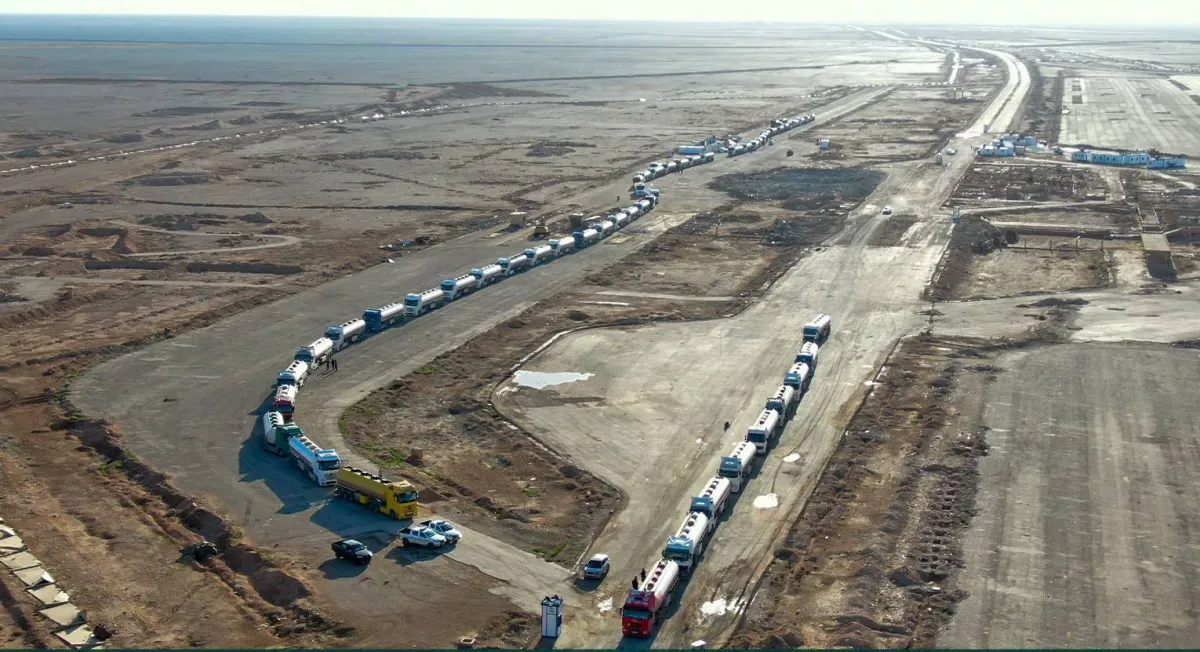
Baghdad has officially started exporting crude oil overland through Syrian territory, aiming to overcome the paralysis affecting traditional maritime trade routes. This move reflects a strategic shift in regional energy pathways, as Damascus views this operation as a return to being a "transit hub" and a vital platform for global energy.
The first convoys of Iraqi fuel tankers departed through the "Tanf-Al-Walid" border crossing, heading towards the Baniyas refinery on the Syrian coast, marking the actual launch of a new phase of economic cooperation between the two countries. The Syrian news agency (SANA) reported that a load of 299 tanker trucks transporting Iraqi fuel will subsequently be loaded for export.
Details of the Event
Since 2015, the Tanf crossing had been closed after the Islamic State (ISIS) took control of it. In 2016, U.S.-backed forces established a military base at Tanf. With Syrian forces regaining control of the base last month, the crossing was reopened, allowing for the export of Iraqi oil through Syrian territory.
The Syrian Minister of Energy, Mohammad Al-Bashir, wrote on his account on the "X" platform: "From the Syrian-Iraqi border to maritime carriers in Baniyas... Syria returns to be the transit hub and strategic export platform for global energy." He confirmed that this step enhances national interests and pushes the wheel of Arab economic integration to broader horizons.
Context and Background
This move comes at a time when geopolitical transformations are shaking the region, imposing a new economic reality based on overland integration between Iraq and Syria. The General Authority for Ports and Customs announced that this step represents an important milestone in the development of economic cooperation between the two countries by activating trade and energy routes.
Alongside the opening of the "Al-Walid" crossing, efforts are underway to activate the "Al-Yarubiyah-Rabi'ah" crossing at the beginning of May, in addition to monitoring the status of the "Simalka-Fishkhabour" crossing, thereby enhancing the comprehensive border connectivity network between Iraq and Syria.
Implications and Impact
This operation gains double significance given the escalating conflict between the United States and Iran, which has resulted in direct threats to navigation in the Strait of Hormuz, through which about 20% of global energy supplies pass. The special envoy to Syria, Tom Barak, stated that Syria could be the "solution" to the energy crisis resulting from the situation in the Strait of Hormuz.
Economic expert Dr. Fadi Ayash pointed out that Iraq, as one of the major oil producers, has found in Syria a vital option to continue the flow of its exports, especially with the inability to ensure safe maritime exports. He confirmed that the current trend aims to raise the rate of tanker entries to between 500 and 700 tankers daily.
Impact on the Arab Region
The process of exporting Iraqi oil through Syrian territory is considered a strategic step that enhances economic cooperation between the two countries and may contribute to improving the economic situation in Syria through the financial returns it will receive from transit fees. This operation is expected to generate financial returns ranging between $150 and $200 million annually, contributing to revitalizing economic activity and providing hard currency.
Under the current circumstances, these returns are vital for Syria, as they could provide the possibility of obtaining oil shares at preferential prices, helping to alleviate the energy import bill. However, the sustainability of this operation depends on the stability of the security situation at the borders and the ability of security forces in both countries to secure the route.