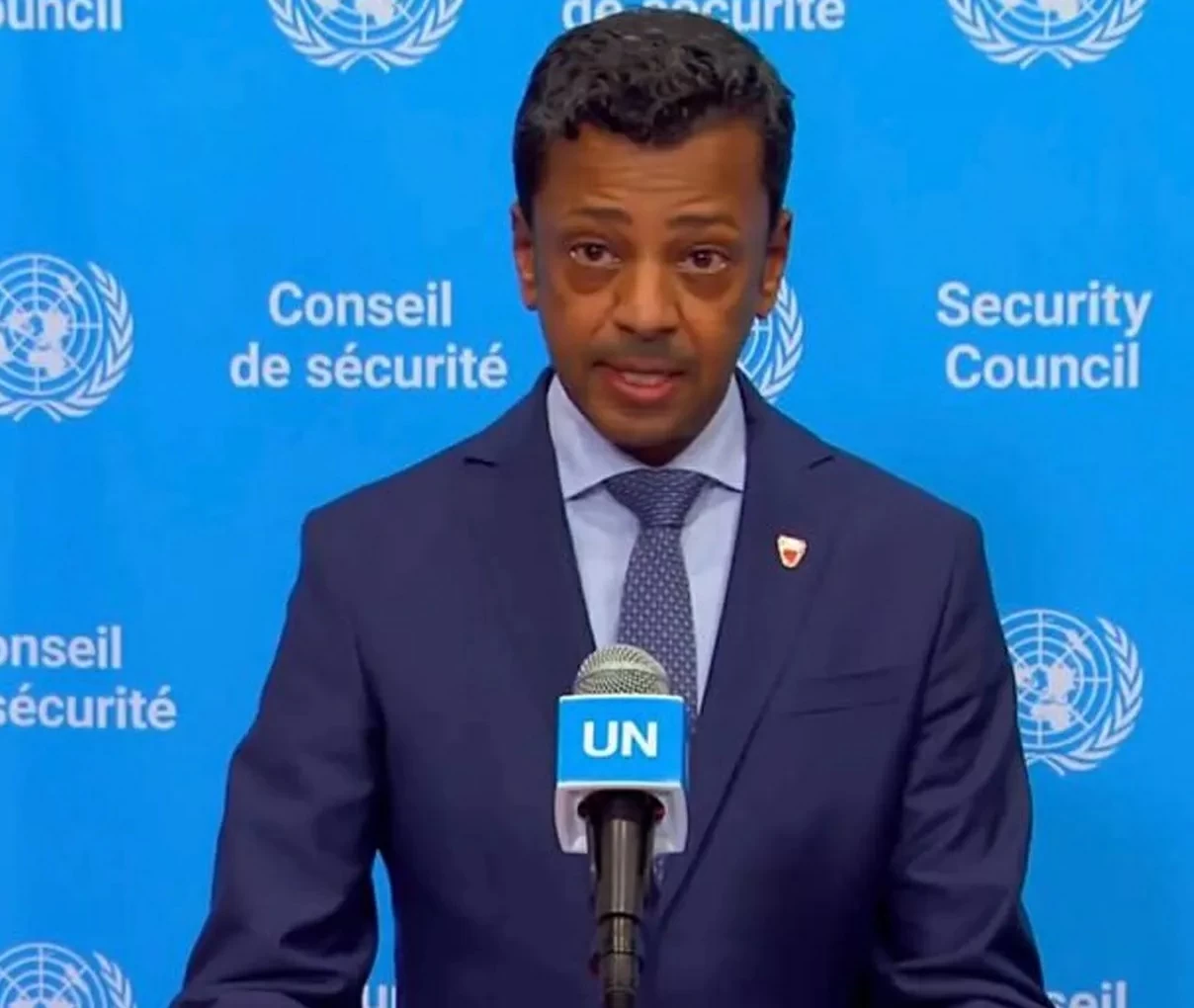
On Wednesday, Ambassador Jamal Al-Ruwaie, the Permanent Representative of the Kingdom of Bahrain to the United Nations, called for the urgent issuance of an international resolution aimed at protecting navigation in international corridors. This statement came as Bahrain assumed the presidency of the UN Security Council for the month of April, where Al-Ruwaie emphasized that his country seeks to enhance freedom of navigation and prevent the exploitation of international corridors as a means of pressure.
In his remarks, Al-Ruwaie pointed out that Iran has only targeted the infrastructure and civilian facilities in Gulf countries and Jordan, clarifying that Gulf states have not been parties to the conflict with Iran but have faced unjustified Iranian attacks. He considered these assaults as violations of the UN Charter and international law, raising concerns that affect both regional and international security.
Details of the Event
Ambassador Al-Ruwaie confirmed that Iranian assaults are not merely a national or regional issue but an international matter that transcends the boundaries of the region. He explained that the repercussions of these security and economic assaults could extend to other parts of the world, necessitating urgent international action to address these threats. He also noted that if Iran's irresponsible behavior is not dealt with seriously, it could recur in other areas, which no one wishes to see.
These statements come at a sensitive time when the region is witnessing increasing tensions, with growing fears of escalating Iranian activities in the Gulf, threatening the stability of maritime navigation, which is a vital artery for global trade.
Context and Background
Historically, the Arabian Gulf region has experienced ongoing tensions between Iran and Gulf countries, where Gulf states accuse Iran of supporting armed groups that threaten regional security. These tensions have intensified in recent years with the escalation of Iranian military activities in international waters, leading to increased international calls for the protection of navigation.
Navigation in the Arabian Gulf is considered one of the most important maritime corridors in the world, through which a significant portion of global oil trade passes. Therefore, any threat to this navigation can significantly impact the global economy, making it essential to take measures to protect these corridors.
Consequences and Impact
The Iranian assaults on Gulf countries, as Al-Ruwaie pointed out, represent a threat not only to regional security but also to international security. Tensions in the Gulf could lead to rising oil prices and a slowdown in the global economy, affecting all countries, especially those that rely on oil as a primary source of revenue.
Moreover, the continuation of these tensions could lead to increased divisions among countries in the region, hindering peace and stability efforts. Thus, the call for an international resolution to protect navigation is considered an important step towards enhancing security and stability in the region.
Impact on the Arab Region
Bahrain and other Gulf countries find themselves in a sensitive position, facing ongoing threats from Iran. Strengthening international cooperation to protect navigation can contribute to enhancing regional security and bolster these countries' ability to confront common challenges.
In conclusion, Bahrain's call to the United Nations for action to protect navigation in international corridors reflects the significant challenges facing the region and highlights the urgent need for international cooperation to address these threats.