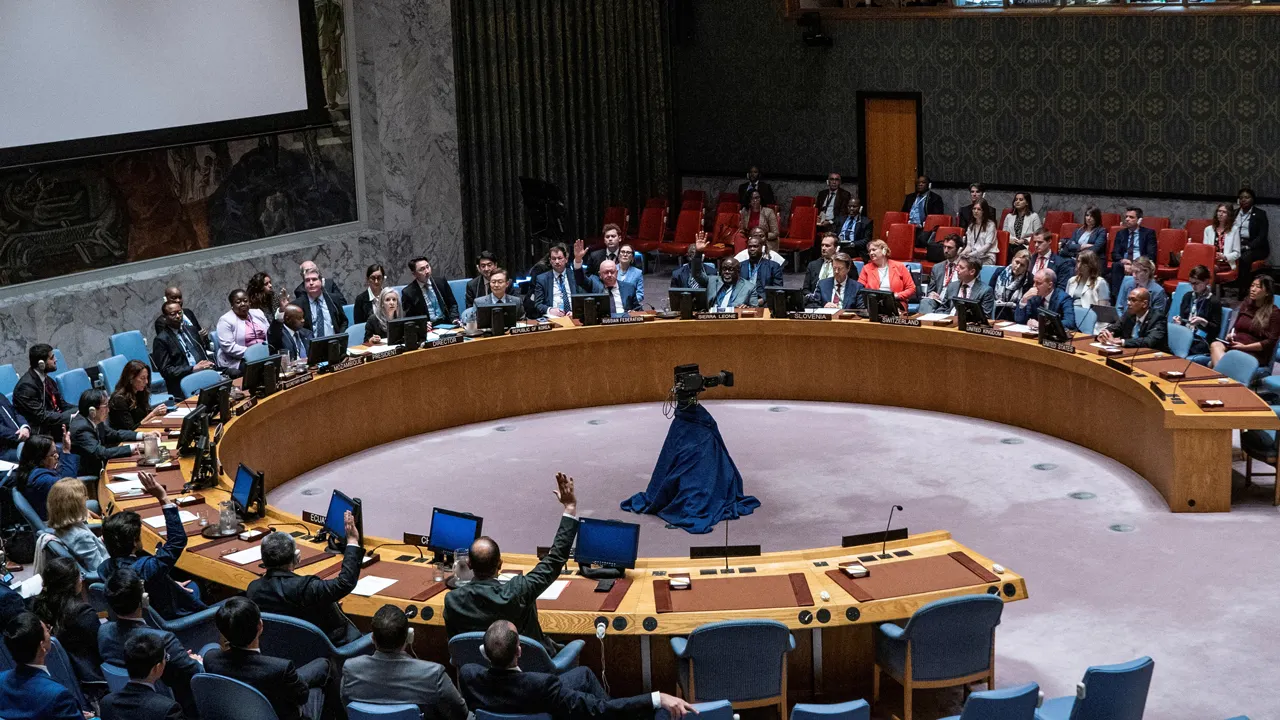
Bahrain has placed Iranian attacks at the forefront of its agenda during its presidency of the UN Security Council. This comes amid rising regional tensions, reflecting Manama's concerns over Iranian activities in the area.
Bahrain, which holds the rotating presidency of the Security Council for October, aims to enhance international efforts to counter the threats posed by Iran. The Bahraini Foreign Ministry has confirmed that these attacks represent a threat to both regional and international security, necessitating decisive action.
Details of the Event
During a Security Council session, Bahrain emphasized the need to unify efforts to confront the security challenges posed by Iran. Several issues were discussed regarding attacks targeting commercial vessels in the Gulf, which are attributed to Tehran-backed militias. The importance of cooperation among member states of the council to address these threats was also underscored.
In this context, the Bahraini representative to the United Nations pointed out that Iranian attacks are not only a threat to regional security but also affect global trade movement. He stressed the necessity for a unified stance from the international community to tackle these challenges.
Background & Context
Relations between Bahrain and Iran are characterized by ongoing tension, with Manama accusing Tehran of supporting armed groups in the region, exacerbating sectarian conflict. In recent years, there has been an increase in attacks targeting commercial vessels, raising concerns within the international community.
Historically, Bahrain has always been at the forefront of countries expressing concern over Iranian activities, viewing them as a threat to its national security. These fears have contributed to strengthening relations between Bahrain and the United States, as Manama seeks greater support to confront Iranian threats.
Impact & Consequences
This move by Bahrain is seen as an indicator of escalating tensions in the region and may lead to increased pressure on Iran from the international community. Additionally, focusing on Iranian attacks could enhance security cooperation among Arab states and the United States, potentially altering the dynamics of regional security.
On the other hand, these actions may escalate tensions between Iran and Arab states, increasing the likelihood of new conflicts in the region. Observers believe that these developments could impact the overall stability of the Gulf.
Regional Significance
These developments place Arab states in a sensitive position, as they must take clear stances against Iranian threats. Such positions could strengthen cooperation among Arab countries to address common security challenges.
Moreover, focusing on Iranian attacks may bolster international support for Arab states in facing these threats, potentially leading to the formation of new alliances in the region. This is crucial given the increasing security challenges faced by Arab nations.
In conclusion, Bahrain remains in a strong position during its presidency of the Security Council, seeking to enhance international efforts to confront Iranian threats. This is an important step towards achieving security and stability in the region.