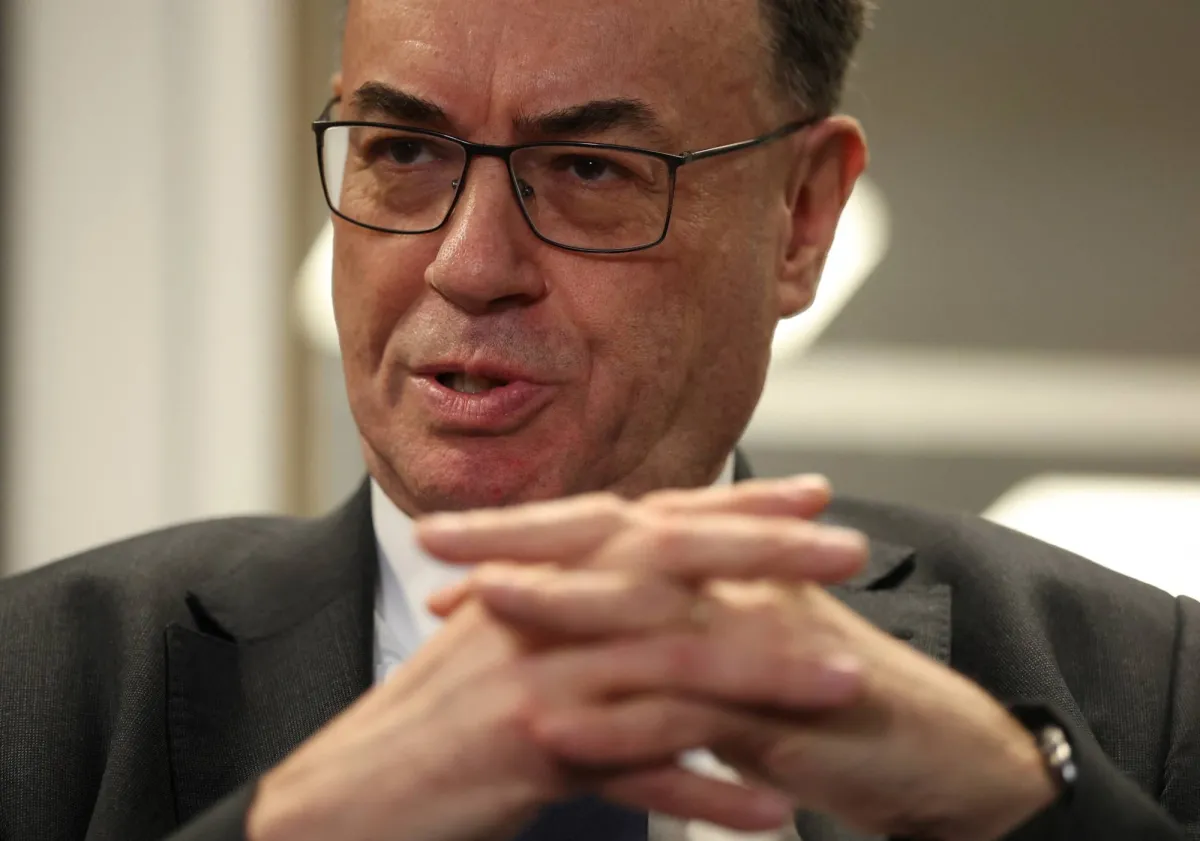
Bank of England Governor Andrew Bailey stated on Wednesday that financial markets continue to overestimate the central bank's interest rate hikes, particularly in light of the Iranian war's repercussions on the British economy.
In an interview with Reuters from the bank's headquarters in London, Bailey explained that the central bank must focus on the risks threatening growth and jobs, in addition to inflation, when making its upcoming decisions regarding interest rates.
Details of the Statement
Bailey remarked, "Of course, we will have to take action on monetary policy if we see it appropriate. But it seems to me, and still seems to me today, that the most important thing to do is to address the source of the shock." He noted that the central bank is closely monitoring the sharp rise in inflation expectations but emphasized that companies have confirmed to him that they are operating in an environment where they lack pricing power.
Currently, financial markets expect the Bank of England to raise interest rates twice this year, after previously anticipating up to four hikes. However, most economists surveyed by Reuters expect interest rates to remain stable. Bailey clarified that markets still expect interest rate increases, but he considered that this decision rests with the markets, indicating that they are anticipating events.
Context and Background
Before the outbreak of the Iranian war, British inflation was on track to return to its target of 2%, and the Bank of England had indicated the possibility of lowering interest rates. However, the situation changed drastically with the escalation of conflict in the region, significantly impacting the British economy.
Bailey reported that the Bank of England is carefully studying the impact of the Iranian war on the economy, noting that the message received from companies is that they have limited ability to raise prices. He confirmed that businesses are operating under challenging conditions, complicating the economic situation further.
Implications and Effects
Bailey's statements underscore the challenges faced by the Bank of England under current circumstances, as investors expect interest rates to rise two or three times this year in an attempt to contain inflation. However, most economists believe that the bank may prefer to wait until the impact of the conflict on the British economy becomes clearer, especially given the weak pace of economic growth.
The UK's manufacturing purchasing managers' index has also declined, reflecting a drop in production and a slowdown in new orders. This decline indicates that the reduction in production reflects supply-side issues rather than a decrease in demand.
Impact on the Arab Region
The Iranian war is considered a significant factor influencing the global economy, including Arab markets. Disruptions in the region affect oil and gas prices, increasing inflationary pressures in many Arab countries.
These conditions require Arab countries to take proactive measures to address the war's effects on their economies, including monitoring interest rates and inflation. Additionally, the economic challenges facing the UK may impact trade and investment relations between Arab countries and the UK.
In light of the current circumstances, it remains important to monitor developments in the British economy and their impact on global markets, including Arab markets.