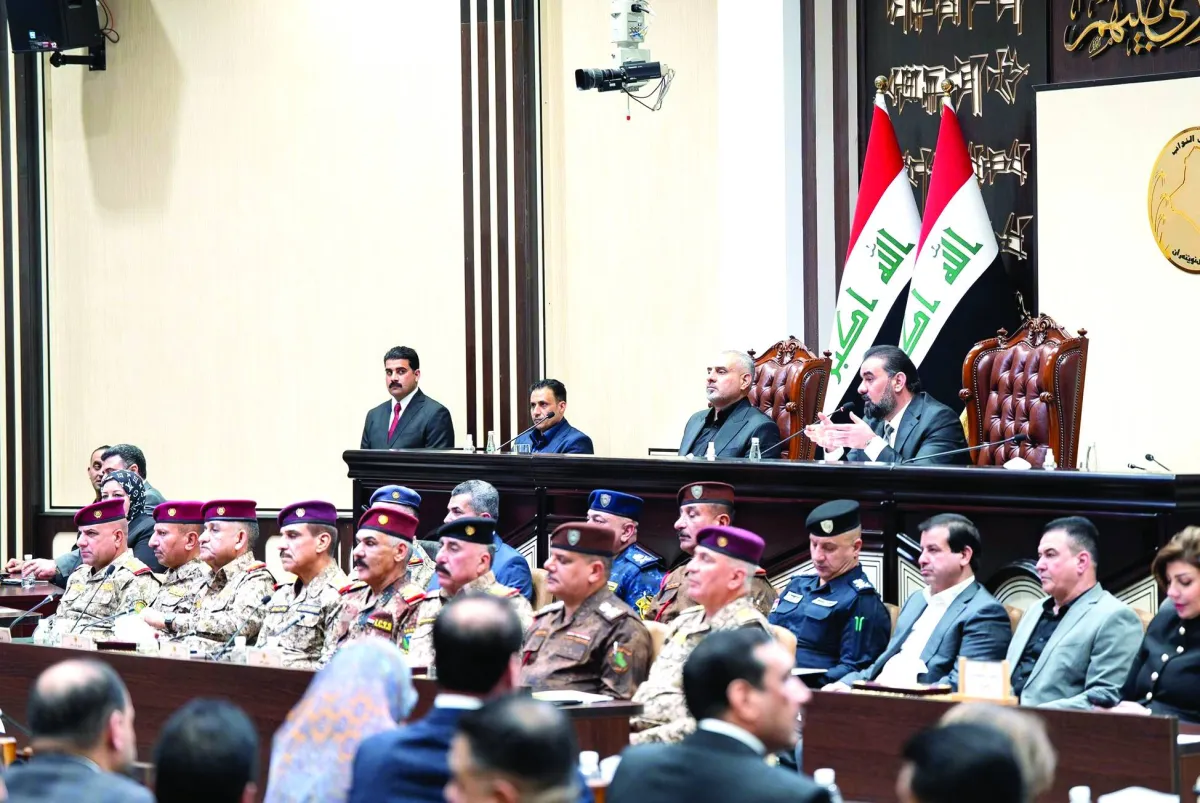
Kurdish leader Masoud Barzani has called on the ruling coalition, known as the "Coordination Framework," to exercise patience in convening the session to elect the President of the Republic and appoint a candidate for the Prime Minister position, after the Iraqi Parliament gathered more than 226 signatures, which is the required number to hold the session. This call comes at a time when Iraq is experiencing heightened political tensions, raising questions about the future of the political process in the country.
In a statement, Barzani urged Iraqi political forces to prioritize dialogue and understanding before the session convenes. He emphasized that the current phase requires "a high degree of national responsibility and joint action" to steer Iraq away from the repercussions of regional conflicts and to maintain internal societal peace in line with constitutional principles.
Details of the Event
Although the message was primarily directed at the Shiite forces, which represent the largest bloc in Parliament and the government, it also included Sunni leadership represented by the National Political Council. Barzani stressed the "necessity of intensifying both bilateral and collective dialogues among political forces and working to temporarily freeze contentious issues," with the aim of completing constitutional entitlements based on partnership, balance, and national consensus.
Some forces within the "Coordination Framework" were surprised by the recent parliamentary movement, which threatens the traditional consensus in selecting the three presidencies since the first parliamentary elections in 2005. While the forces have been unable to establish a clear mechanism for selecting a Prime Minister, with the nomination process opening up to dozens of candidates who were later narrowed down to 12 candidates, confusion escalated following former U.S. President Donald Trump's intervention through a post on the "Truth" platform, where he rejected the nomination of former Prime Minister Nouri al-Maliki.
Background & Context
These developments come at a sensitive time for Iraq, where political tensions among various forces are escalating. Historically, Iraq has witnessed repeated political conflicts, especially after 2003, leading to radical changes in the political system. These tensions have resulted in deep internal divisions, negatively impacting the country's stability.
After the "Coordination Framework" agreed to Barzani's request, the scheduled parliamentary session was postponed to April 11, allowing for a reevaluation of the candidates for the Prime Minister position. Meanwhile, the issue of electing the President of the Republic has returned to the Kurds, where disagreements between the two main Kurdish parties, the Kurdistan Democratic Party and the Patriotic Union of Kurdistan, remain unresolved.
Impact & Consequences
These developments underscore the importance of dialogue and understanding among political forces in Iraq, as any escalation in disputes could exacerbate the situation. The postponement of the elections may provide an opportunity to reassess the political landscape, but it may also raise citizens' concerns about the country's stability.
On the other hand, the ongoing disagreements between the two main Kurdish parties may affect the Kurds' ability to influence national decisions, potentially leading to their marginalization in the political process. Barzani's statements highlight the importance of internal understanding before any parliamentary alliances, reflecting the need for Kurdish unity in facing political challenges.
Regional Significance
The political situation in Iraq has significant implications for the Arab region, as Iraq's stability is a crucial element in achieving stability in neighboring countries. Any escalation in the political situation could have negative repercussions on regional security, especially amid existing tensions in countries like Syria and Lebanon.
In conclusion, all eyes remain on how events will unfold in Iraq and whether political forces will be able to overcome their differences and reach a consensus that ensures the country's stability.