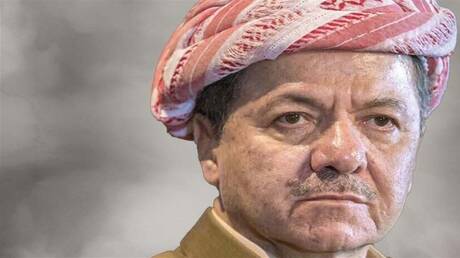
Masoud Barzani, the leader of the Kurdistan Democratic Party, condemned the Iranian attack targeting Peshmerga positions in the Kurdistan region, describing it as an "act of aggression that cannot be justified." This attack comes at a sensitive time when the region is facing multiple challenges related to security and stability.
The Iranian attack, which occurred on Tuesday, targeted Peshmerga sites in border areas, raising widespread concern among political and public circles in Kurdistan. Barzani, regarded as one of the prominent Kurdish leaders, emphasized that such actions not only reflect a lack of respect for the region's sovereignty but also threaten stability in the area.
Details of the Incident
The Iranian attack on the Peshmerga followed a series of tensions between Iran and Kurdish parties in Iraq, with Tehran accusing these parties of supporting groups opposed to the Iranian regime. The attack resulted in injuries among the Peshmerga forces, escalating tensions between the two sides.
In his statements, Barzani called on the international community to intervene and halt these hostile actions, pointing out that the Kurds in Iraq are always striving for peace and stability, and that such attacks only serve the interests of enemies.
Background & Context
Historically, relations between Iran and the Kurds in Iraq have been marked by recurring tensions, as Tehran seeks to enhance its influence in the region while the Kurds aim to maintain their rights and independence. These events are part of a broader struggle among regional powers, with Iran playing a pivotal role in supporting certain armed groups in Iraq and Syria.
Additionally, the situation in the Kurdistan region has been significantly affected by political events in Iraq, where the Kurds are seeking greater autonomy amid a central government that is weak and divided. The Iranian attack also reflects the internal conflicts within Iraq, where political forces compete for influence.
Impact & Consequences
The Iranian attack could lead to an escalation of tensions in the region, as the Peshmerga may respond to these assaults, increasing the likelihood of armed conflict. Furthermore, this escalation could negatively impact relations between the Kurdistan region and the central government in Baghdad, as Baghdad may feel pressured by Tehran to intervene in Kurdish affairs.
Moreover, this attack could affect relations between the Kurds and neighboring countries, as the Kurds seek international support to counter Iranian threats. The international community may also be compelled to intervene to prevent the situation from worsening, especially given the dire humanitarian conditions faced by the region's inhabitants.
Regional Significance
The Iranian attack on the Peshmerga highlights the increasing regional tensions, which could impact the stability of Iraq as a whole, and consequently, the security of the Middle East. These events may evoke memories of past conflicts in the region, where regional disputes led to the fragmentation of states and increased violence.
Ultimately, the current situation in Kurdistan and Iraq as a whole requires urgent international attention, as the continuation of these hostile actions could lead to dire consequences for regional and international security.