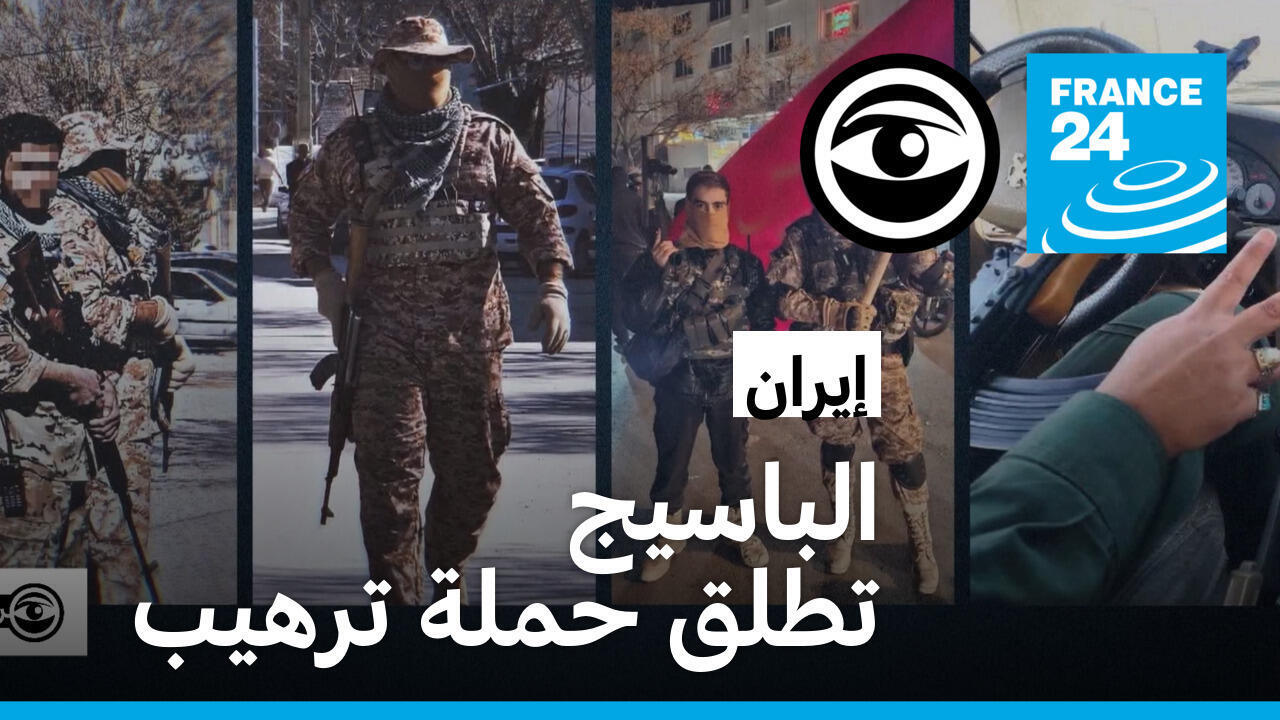
In a move aimed at suppressing protests, the Basij paramilitary forces have released images of their armed patrols in the streets of Tehran. Members of these forces, dressed in camouflage, are seen patrolling the city, reflecting the Iranian regime's attempt to deter citizens from resuming protests against the government.
These measures come at a sensitive time as Iran experiences increasing tensions, with protesters seeking to express their political and social demands. The Basij forces, which are affiliated with the Islamic Revolutionary Guard Corps, are one of the regime's main security arms and have played a prominent role in suppressing previous protests.
Details of the Event
Local and international media have circulated images of Basij members patrolling the streets of Tehran, heavily armed. These images represent part of a campaign of intimidation aimed at deterring citizens from participating in the protests that have erupted across the country in recent months. The individuals in the photos are seen roaming various areas of the capital, raising concerns among citizens who fear an escalation of violence.
This campaign follows a series of protests that erupted in Iran, which began in 2022 after the death of young woman Mahsa Amini. These protests elicited strong reactions from the government, which used force to suppress demonstrators, resulting in the deaths and arrests of many.
Background & Context
Historically, Iran has witnessed numerous popular protests expressing citizens' dissatisfaction with economic and political conditions. The Iranian government has utilized the Basij forces as a key tool to suppress these protests, assigning them the task of maintaining order and security. In recent years, the intensity of protests has increased due to deteriorating economic conditions and rising unemployment rates, making citizens more willing to take to the streets to demand their rights.
The Basij forces are part of the Islamic Revolutionary Guard Corps and were established in 1979 as a paramilitary force. Since then, they have played a significant role in maintaining the Iranian regime, being used to suppress protests and demonstrations at various times. With the current protests escalating, it appears that the Iranian government is seeking to bolster the presence of these forces on the streets as a means to deter protesters.
Impact & Consequences
These moves indicate rising concern within the Iranian regime about the possibility of protests resuming on a larger scale. As economic and social pressures mount, these actions could exacerbate the situation, as citizens may feel trapped between government repression and their desire to express their demands. Additionally, the use of force by the Basij could lead to backlash, potentially intensifying protests and causing further division within Iranian society.
Moreover, this campaign may affect Iran's international relations, as it could raise concerns among the international community regarding human rights in the country. Such potential violations could lead to new sanctions or increased pressure on the Iranian government from Western nations.
Regional Significance
The events in Iran have significant implications for the Arab region, as many Arab countries are closely monitoring developments there. Iran plays an important role in regional politics, and any changes in the regime or stability levels could affect relations between Arab nations and Iran. Additionally, the protests in Iran may inspire other peoples in the region to demand their rights, potentially leading to new waves of protests in other countries.
In conclusion, the situation in Iran remains under scrutiny as the Basij forces continue their efforts to suppress any protest movements. With mounting economic and social pressures, the Iranian government may find itself facing greater challenges in the future.