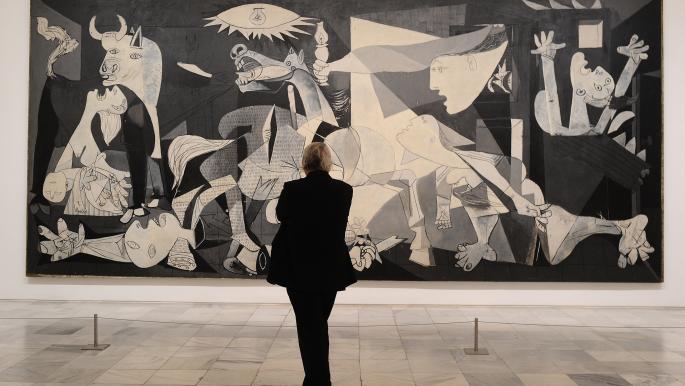
The Basque Country is seeking to borrow the famous painting 'Guernica' by artist Pablo Picasso from the Reina Sofia Museum in Madrid, despite facing technical and political reservations. This initiative is part of the region's efforts to enhance its cultural and historical identity, especially in light of the painful memories associated with the painting regarding the Spanish Civil War.
'Guernica' is considered one of the most famous artworks in history, depicting the atrocities witnessed in the city during the civil war. Completed in 1937, the painting reflects the pain and suffering caused by the war and has become a symbol of peace and anti-war sentiment.
Event Details
The regional government in the Basque Country is pursuing the borrowing of the painting as part of the annual commemorative celebrations of the Spanish Civil War. However, this initiative faces several challenges, including political reservations from the central government in Madrid, which may view this move as a threat to national unity. Additionally, there are technical considerations regarding the painting's condition and transportation methods, complicating the borrowing process.
This move comes at a time when discussions about cultural identity in Spain are intensifying, as many regions seek to promote their own culture and reclaim their history. Numerous artists and intellectuals in the Basque Country have expressed their support for this initiative, viewing it as a reflection of the region's desire to reclaim its historical memory.
Background & Context
Historically, Spain has been a stage for deep political and cultural conflicts, with the Spanish Civil War (1936-1939) marking a sharp division between Republicans and Fascists. The painting 'Guernica' embodies this conflict and has become a global symbol of anti-war sentiment. Since then, the painting has become part of Spain's cultural heritage and is regarded as one of the most significant artworks of the 20th century.
It is noteworthy that the Basque Country enjoys cultural and linguistic uniqueness, being one of the most autonomous regions in Spain. This pursuit to borrow the painting is part of the region's efforts to enhance its cultural identity, especially amid political tensions with the central government.
Impact & Consequences
If the borrowing of the painting is approved, it could have a significant impact on the relationship between the Basque Country and the central government. This move may be seen as a cultural victory for the region, enhancing the sense of identity and belonging among its inhabitants. Furthermore, this initiative could pave the way for increased cultural cooperation among various regions in Spain.
On the other hand, this step may provoke negative reactions from some political factions in Madrid, who may perceive it as a challenge to national unity. Therefore, the success of this initiative hinges on balancing cultural and political interests.
Regional Significance
The issue of cultural and historical identity is crucial in many Arab countries, where numerous nations strive to reclaim their cultural heritage and strengthen their identity. The experience of the Basque Country could serve as an inspiration for Arab countries seeking to enhance their culture and identity amid political and social challenges.
In conclusion, this initiative underscores the importance of art as a means of expressing identity and history, highlighting the need for cultural dialogue among regions and nations. Borrowing the painting 'Guernica' could be a step towards fostering mutual understanding and cultural cooperation in Spain, positively reflecting on the entire region.