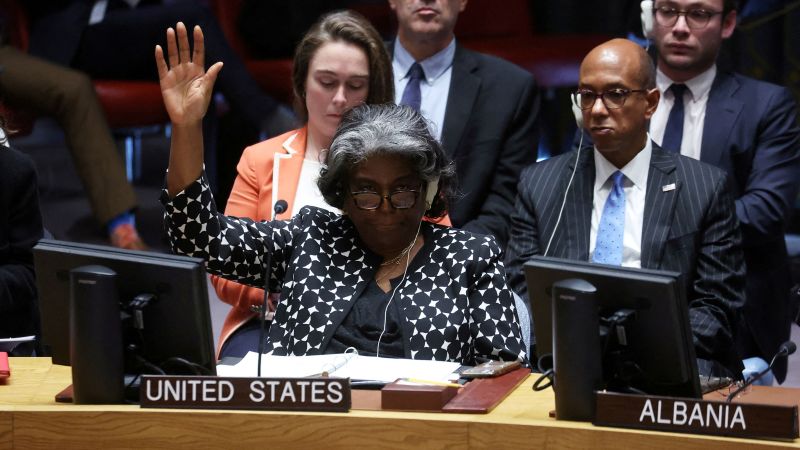
China and Russia have exercised their veto against a resolution in the UN Security Council, sparking widespread debate over navigation freedom in the Strait of Hormuz. The proposal, put forward by Bahrain in collaboration with Gulf Cooperation Council countries and Jordan, aimed to coordinate military efforts to safeguard commercial routes in the region.
While the majority of council members supported the proposal, the Chinese and Russian opposition emerged as a clear indication of profound disagreements over the definition of the roots of the Gulf crisis. The Chinese newspaper 'Global Times' described the recent Security Council session as a sharp diplomatic confrontation, culminating in the veto by Beijing and Moscow, which the Chinese representative claimed would "withstand the test of history."
Details of the Event
Eleven members voted in favor of the proposal, while China and Russia opposed it, and Colombia and Pakistan abstained from voting, leading to its rejection despite a majority. The Chinese permanent representative to the UN, Fu Cong, clarified that his country recognizes the urgent concerns of Gulf states, but argued that the proposed text failed to provide a comprehensive and balanced approach that reflects the full picture of the conflict.
The proposal focused on condemning one side, which Fu considered to be unilateral pressure, describing the situation as a "threat to international peace and security" with the endorsement of armed escort, which he deemed "prone to misunderstanding or even misinterpretation and exploitation."
Background & Context
Historically, the Strait of Hormuz is one of the most critical waterways in the world, through which approximately 20% of the world's total oil passes. The region has witnessed increasing tensions in recent years, particularly with the escalation of the dispute between Iran and Western countries. These tensions have led to repeated calls to secure navigation freedom in the strait, making the recent resolution proposal a focal point of international discussions.
China, seeking to enhance its role as a mediator in the region, emphasized the need to address the real roots of the tensions, stressing the importance of dialogue and peaceful settlement. Beijing has proposed a five-point initiative aimed at restoring peace and stability in the Gulf, reflecting its desire to play an active role in resolving regional conflicts.
Impact & Consequences
The rejection of the resolution reflects a narrative struggle between major powers over how to handle crises in the Gulf. While some countries seek to expand international cover for military actions, China and Russia focus on addressing the root causes of tensions. This narrative conflict could influence how international policies towards the region are shaped in the future.
Moreover, the use of the veto by China and Russia may bolster Iran's position, which welcomed this step, considering it a responsible behavior from both countries. This could lead to increased tensions between Western nations and Iran, complicating the security landscape in the Gulf.
Regional Significance
This development has direct implications for Arab countries bordering the Gulf, as it increases security and economic challenges. Gulf states need new strategies to ensure navigation security and protect their economic interests. Additionally, this situation may drive Arab countries to enhance cooperation among themselves to face common challenges.
In conclusion, the Strait of Hormuz remains a center of international tensions, reflecting the struggle between major powers over how to manage crises in the region. The continuation of these dynamics may affect regional stability and complicate international relations.