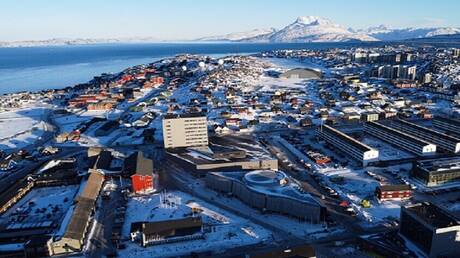
Government data reviewed by the Novosti agency indicates that the bill to annex Greenland to the United States has been stuck in the U.S. Congress for more than two months. Despite the significance of this initiative, no tangible steps have been taken, raising concerns about the future of American relations with the involved countries.
Greenland, the largest island in the world, holds strategic and economic importance for the United States as Washington seeks to enhance its influence in the Arctic region. However, the bill appears to face political obstacles within Congress, reflecting the challenges the U.S. administration encounters in achieving its foreign policy objectives.
Details of the Situation
Government data shows that the bill aimed at annexing Greenland has not received sufficient support from members of Congress, leading to its delay. Greenland has been a subject of American interest for a long time, especially after former President Donald Trump proposed purchasing it in 2019. Although the idea was rejected by the Danish government, American interest has not waned.
This initiative is part of a broader strategy aimed at enhancing the American presence in the Arctic, where economic and military activities are increasing. However, the lack of progress on the bill may negatively impact this strategy and reflect political divisions within Congress.
Context and Background
Historically, Greenland was under Danish control but enjoys extensive self-governance. In recent years, the island has seen a surge in international interest due to climate changes that open new shipping routes and reveal untapped natural resources. This situation has made it a focal point for major powers, including the United States and Russia.
In 2020, the United States launched its new Arctic strategy focused on enhancing cooperation with partner countries in the region, but the lack of progress on the Greenland annexation bill may reflect challenges to this strategy. Additionally, U.S. relations with Denmark could be negatively affected if the stalemate on this bill continues.
Consequences and Impact
If the bill continues to stall, it may lead to a decline in American influence in the Arctic, opening the door for other countries like Russia and China to strengthen their presence in the region. Furthermore, political instability in the United States may affect the government's ability to effectively implement its foreign strategies.
Moreover, delays in the bill could impact relations between the United States and Denmark, as Copenhagen may perceive Washington as insincere in promoting cooperation on strategic issues. This could lead to new tensions in bilateral relations.
Impact on the Arab Region
Although the Greenland annexation bill seems distant from Arab issues, developments in the Arctic could affect regional security. Increased military activity in the region may lead to new tensions, reflecting on the stability of the Arab region.
Additionally, complex international relations may influence Arab positions on global issues, as Arab countries may need to reassess their strategies based on shifts in American policy.
In conclusion, the bill to annex Greenland to the United States remains stalled in Congress, raising questions about the future of American relations with the involved countries. With increasing international interest in the Arctic, developments in this project could have wide-ranging implications for global politics.