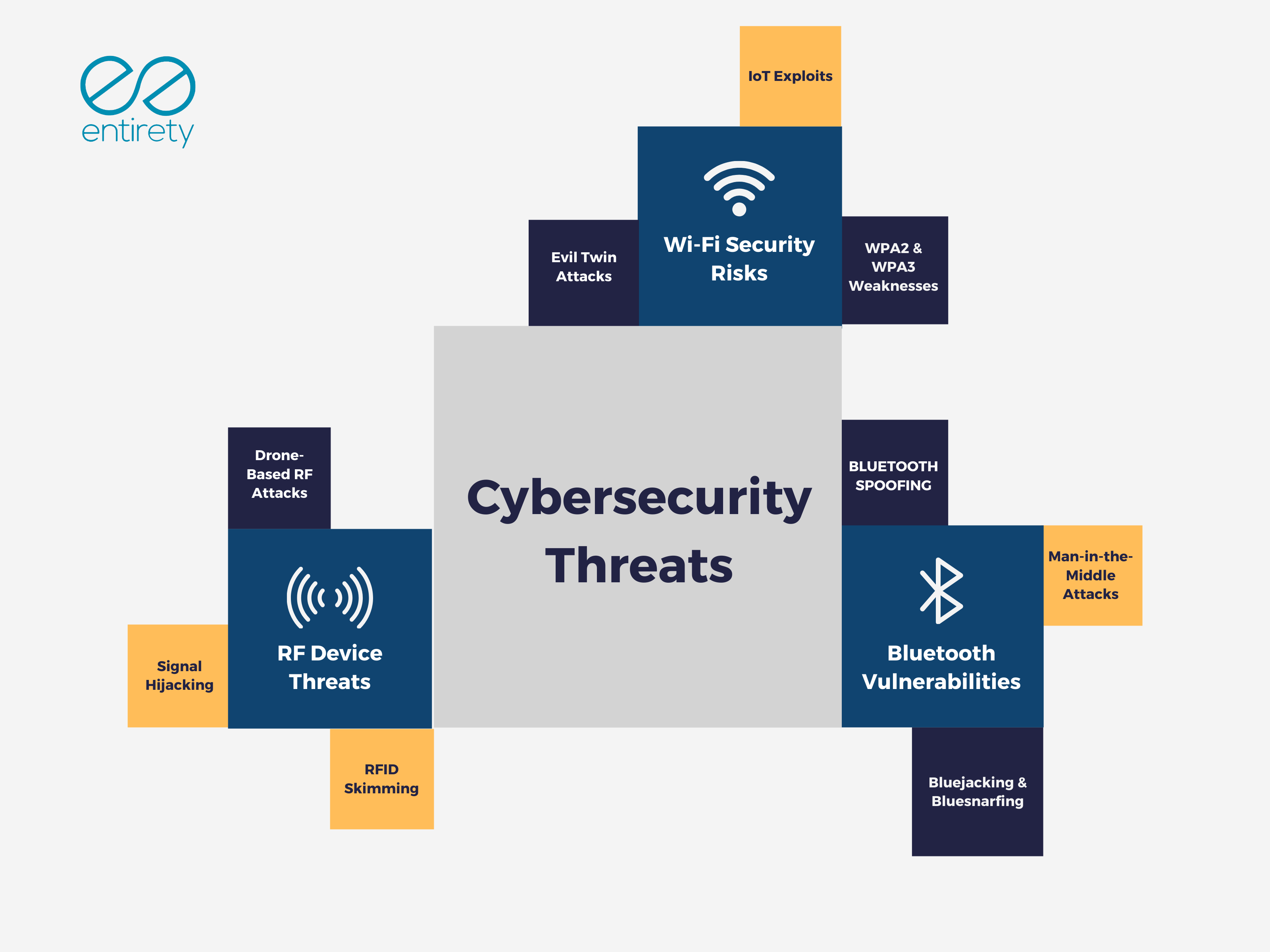
Bluetooth technology is one of the most widely used wireless protocols, connecting billions of devices around the world. However, this extensive reach has made it an attractive target for cybercriminals, as the primary risks stem from the fact that this technology operates in open radio frequency ranges (2.4 GHz) and relies on complex protocols that sometimes contain software vulnerabilities in encryption or authentication methods.
While users are increasingly attentive to passwords and encrypted Wi-Fi networks, Bluetooth remains in their pockets around the clock, broadcasting its signals into the air, often left open and unprotected. This contradiction makes it one of the most enticing attack vectors and one of the least regarded in contemporary digital security.
Event Details
Bluetooth was recognized in the late 1990s as a wireless alternative to short cables, and since then, multiple versions and protocol extensions have accumulated, leading to what security researchers describe as structural vulnerabilities that are difficult to patch without breaking compatibility with older devices. The deeper structural issue is that Bluetooth was not originally designed with security as a priority.
When Bluetooth is activated, it continuously broadcasts advertising pulses that reveal the device's presence and type, even if it is in a non-discoverable mode, allowing attackers to identify their targets and select suitable vulnerabilities.
Background & Context
The security risks associated with Bluetooth vary based on the protocol version and its implementation in mobile devices. These risks can be categorized into three main categories: implementation vulnerabilities, pairing protocol weaknesses, and location tracking and privacy issues.
Implementation vulnerabilities relate to how companies write the software that operates Bluetooth, while pairing protocol weaknesses refer to the potential for intercepting keys during the pairing process, enabling an attacker to trick the device into establishing a secure connection with a malicious device. As for location tracking, it can occur even without data breaches, as Bluetooth can be used to track users through signals broadcast by devices.
Impact & Consequences
Technology experts assert that Bluetooth is not inherently evil; rather, it is a useful tool if managed consciously. The real danger lies in negligence, such as keeping Bluetooth always on, ignoring updates, and accepting pairings without verification. Two decades of accumulated security research clearly indicate that new researchers uncover deeper vulnerabilities in this protocol each year.
Therefore, it is essential for users to adopt small, consistent habits to enhance their digital security, such as turning off Bluetooth when not needed, regularly updating devices, and verifying the devices they pair with.
Regional Significance
In the Arab region, where reliance on smartphones and modern technologies is increasing, awareness of Bluetooth risks becomes vital. Security vulnerabilities in this technology can lead to serious repercussions, such as personal data theft or location tracking, necessitating the enhancement of security culture among users.
In conclusion, users must recognize that digital security begins with small, consistent habits rather than rare complex solutions. By taking simple steps, they can protect themselves from potential risks that may arise from using Bluetooth.