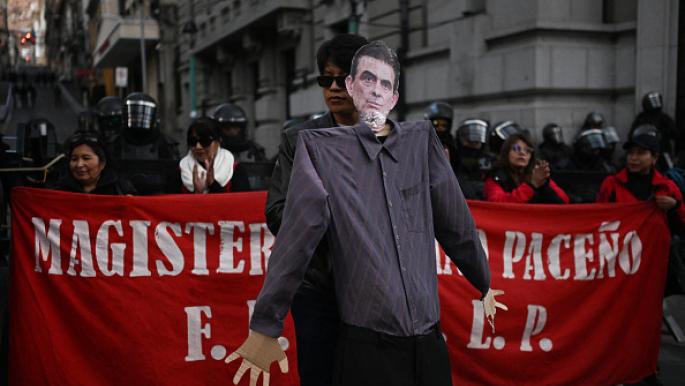
Bolivia's President, Rodrigo Paz, has cautioned that the crisis affecting the country for about a month is approaching a "breaking point," during a new day of protests sweeping the nation. These warnings come as Paz faces increasing pressure from the opposition and citizens expressing their dissatisfaction with the economic and political situation.
For weeks, Bolivia has witnessed massive demonstrations against the government, with protesters demanding improved living conditions and an end to corruption. The intensity of the protests escalated after the government announced austerity measures that significantly impacted the poor and middle classes.
Details of the Protests
The protests are intensifying across various Bolivian cities, with thousands taking to the streets demanding change. Police have used tear gas to disperse demonstrators in some areas, heightening tensions. In response, the President has called for dialogue with the opposition but indicated he would not back down from reforms he deems necessary.
This crisis comes at a sensitive time for Bolivia, which is grappling with significant economic repercussions from the COVID-19 pandemic, increasing pressure on the government. Paz noted that the current situation requires swift action to avoid a complete collapse.
Background & Context
Bolivia's history is fraught with political and economic challenges, having experienced numerous coups and protests over the decades. Since Rodrigo Paz took office, his government has faced multiple crises, including economic decline and rising unemployment rates. These crises stem from various factors, including mismanagement and corruption, as well as external influences like fluctuations in commodity prices.
In recent years, Bolivia has undergone significant political transformations, notably the ousting of former President Evo Morales in 2019, leading to a period of instability. Paz assumed power under complex circumstances, facing substantial challenges related to rebuilding trust in the government and improving economic conditions.
Impact & Consequences
If the current crisis persists, it could exacerbate economic and social conditions in Bolivia, negatively affecting the country's stability. Continued protests may lead to further divisions within Bolivian society, threatening national unity.
The impact of this crisis could extend to neighboring countries, as Bolivia's stability is vital for the Andean region. Any unrest in Bolivia could affect trade and economic relations with other countries in the area, potentially leading to broader economic repercussions.
Regional Significance
Although Bolivia is located in South America, its political and economic events may draw the attention of Arab nations. Political crises in any country can influence global markets, including commodity prices that many Arab countries rely on.
Furthermore, Bolivia's political experiences may offer lessons for Arab nations facing similar challenges, highlighting the need for comprehensive national dialogue to overcome crises and achieve stability.
As the situation in Bolivia remains under close observation, citizens are looking for urgent solutions from the government. With protests continuing, the question remains how the government will respond to these challenges and how this response will affect the country's future.