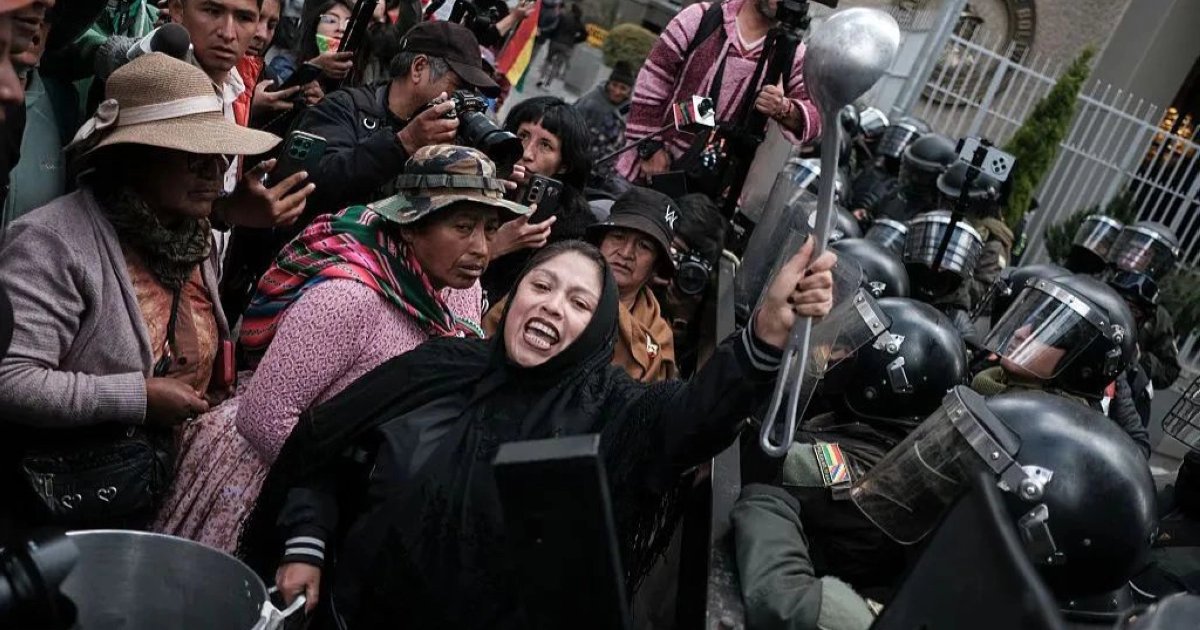
Bolivia's President, Rodrigo Paz, warns the nation is 'on the brink of collapse' following weeks of anti-government protests that have resulted in seven deaths and hundreds of arrests. In a move that could lead to the declaration of a state of emergency, the country has witnessed a significant escalation in unrest during the early months of Paz's administration. Demonstrators, led by unions and indigenous groups, have erected roadblocks across the nation, leading to severe shortages of essential goods and paralyzing large parts of the country.
The government is attempting to restore order through military force, which some opposition lawmakers have warned could exacerbate tensions. Protesters are demanding the reinstatement of fuel subsidies and the cancellation of austerity measures, along with the resignation of the president. However, Paz, who took office six months ago amid an economic crisis, has asserted that he will not hesitate to use 'the full force of the constitution' against anyone seeking to destroy the country.
Details of the Protests
The roots of the protests trace back to late April when Paz proposed a land reform that raised concerns among small farmers, who feared that the reform would enable large landowners to easily purchase their land. Despite the government's assurances that any sales would be voluntary, powerful organizations representing small farmers were not convinced, leading to the closure of major roads across the country.
Although the government has canceled the reform, anger has spread to include other sectors of society. The government also eliminated long-standing fuel subsidies amid shortages of goods and rising inflation, further increasing the cost of living and angering a broad segment of the population. The roadblocks set up by protesters have exacerbated fuel shortages, creating a vicious cycle of crises.
Background & Context
Historically, Bolivia has experienced numerous political and social upheavals, with previous governments facing similar challenges from unions and indigenous groups. In recent years, there have been increasing calls for economic and social reforms, especially in light of recurring economic crises. Paz assumed office at a critical time when the country was grappling with the impacts of the COVID-19 pandemic and its economic repercussions.
The current government is perceived as being supported by the United States, adding an additional dimension to the conflict, as some opponents accuse the government of neglecting the people's interests in favor of foreign agendas. These dynamics make it difficult for the government to achieve stability under current conditions.
Impact & Consequences
Estimates suggest that the protests are costing the Bolivian economy over $50 million daily. These figures reflect the significant impact of the protests on the daily lives of citizens, many of whom are suffering from shortages of essential goods and rising prices. The use of military force could further exacerbate the situation, intensifying social and political divisions.
The potential escalation in the use of military force may provoke violent reactions from protesters, creating a state of chaos and instability in the country. These dynamics could worsen humanitarian and social crises, necessitating urgent intervention from the international community.
Regional Significance
The events in Bolivia serve as an indicator of the social and political tensions that can arise anywhere in the world, including in Arab countries. Amid the economic and political crises facing some Arab nations, these events may act as a warning of the need to respond to the demands of the people and achieve social justice.
The protests in Bolivia illustrate how poorly conceived economic policies can lead to strong reactions from citizens, prompting Arab governments to consider how to more effectively address economic and social challenges.