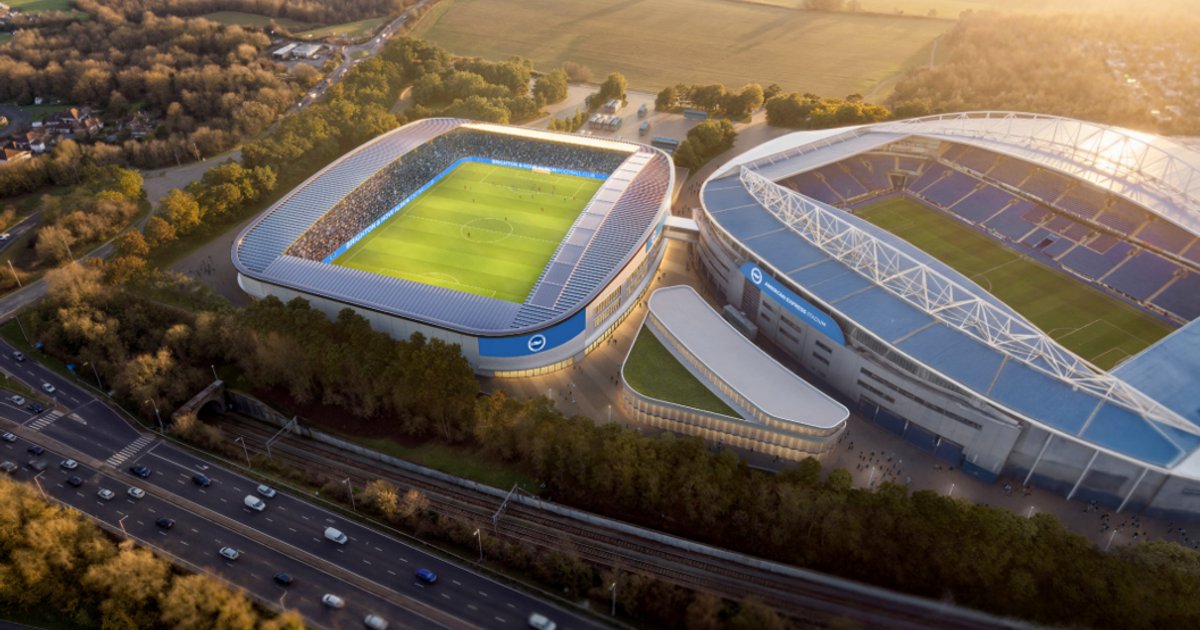
Brighton & Hove Albion's management has unveiled ambitious plans to create the first stadium entirely dedicated to women's football in Europe, with an estimated cost of between £75 million and £80 million. This announcement is part of the club's efforts to elevate the status of women's football and provide a conducive environment for female athletes, reflecting the club's commitment to developing the women's game both locally and internationally.
The new stadium is set to be a launching pad for women's sports in the UK, offering modern and advanced facilities that can accommodate a large audience, thereby contributing to the growing popularity of women's football. The project is expected to be completed in the coming years, allowing women's teams to play in a space specifically designed for them.
Project Details
The plans for the new stadium include state-of-the-art training facilities, as well as seating that can host a significant number of fans. The club aims to make the stadium a hub for women's sporting events, which will help enhance the presence of the game within the community. Additionally, the stadium will host both local and international matches, increasing opportunities for female players to compete at higher levels.
This project comes at a time when women's football is experiencing remarkable growth worldwide, with increasing popularity of women's tournaments and positive results achieved by teams on the international stage. Furthermore, this stadium will serve as a model for other clubs in Europe and beyond.
Background & Context
Over the years, women's football has seen significant development, with many countries beginning to invest in the growth of the sport. In the UK, this initiative is part of broader efforts to promote gender equality in sports. Major tournaments like the Women's World Cup have raised awareness about the importance of women's football.
Historically, women's football has suffered from a lack of support and resources compared to its male counterpart, but with increasing media attention and public interest, clubs have started to reassess their strategies towards the women's game. This new stadium represents a significant step towards achieving the necessary balance in support and resources between genders.
Impact & Consequences
The establishment of a dedicated women's football stadium in Brighton marks an important step towards enhancing the status of women's sports in society. This project is expected to attract more investments and sponsorships for women's teams, thereby improving opportunities for player development and skill enhancement.
Moreover, this initiative may encourage other clubs to take similar steps, leading to improved infrastructure for women's football across Europe. Such positive impacts could have long-term effects on the development of the game and increase participation in the sport.
Regional Significance
The construction of this stadium is not just a local development; it signifies a shift in the perception of women's sports in the region and beyond. By investing in women's football, Brighton & Hove Albion is setting a precedent that could inspire other clubs to follow suit, thereby fostering a more inclusive sporting environment.
In conclusion, this project is a groundbreaking effort to support women's football and enhance its status in society, reflecting the commitment of clubs to develop the game.