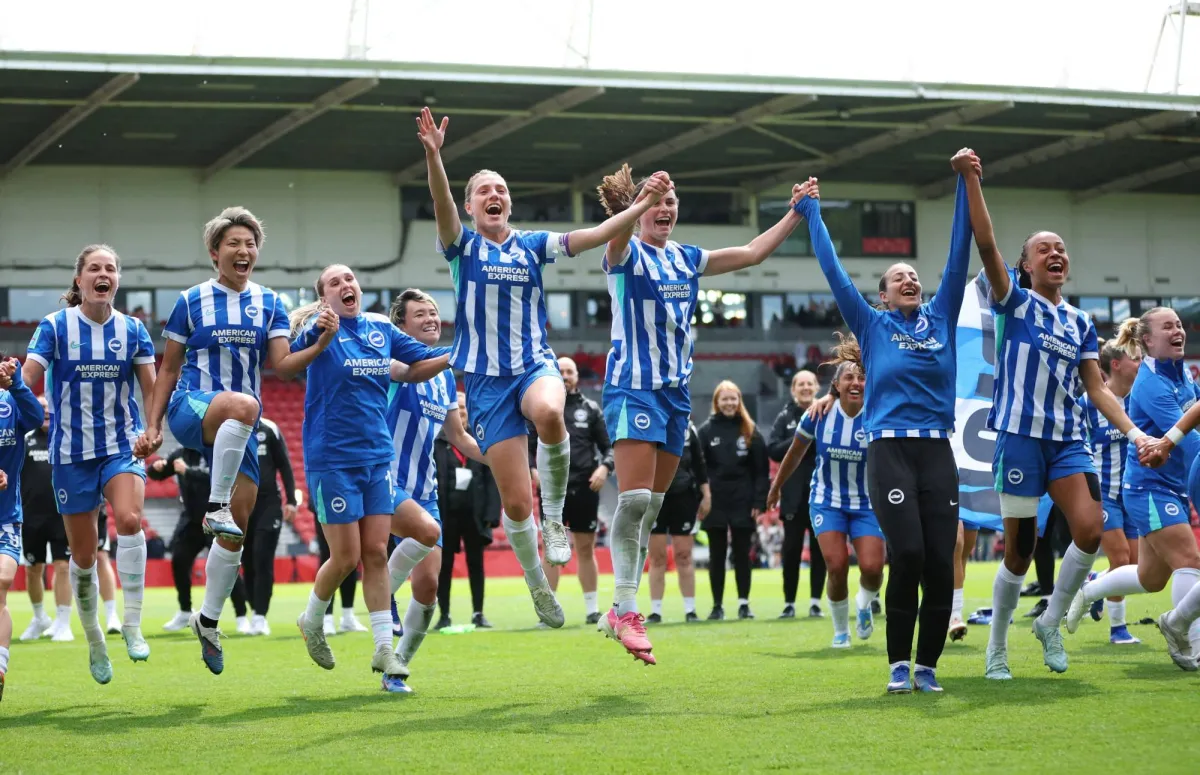
Brighton achieved a remarkable feat by overturning a two-goal deficit to win 3-2 against Liverpool in the semi-finals of the Women's FA Cup, securing a place in the final.
Liverpool took an early lead in the match, with player Dennis O'Sullivan scoring in the 11th minute, followed by teammate Peta Olsson adding a second goal in the 22nd minute, putting Brighton in a challenging position. However, the team did not give up, as Manuela Fangis managed to reduce the deficit just a minute later.
Match Details
The first half ended with Liverpool leading 2-1, but Brighton showed fighting spirit in the second half. In the 54th minute, Madison Haley scored the equalizer, providing a significant morale boost for the team. As the match approached its conclusion, in the fifth minute of stoppage time, Nadine Nordam scored the winning goal for Brighton, achieving a historic victory for the team.
This win sets Brighton up to face the winner of the other semi-final match between Chelsea and Manchester City, heightening the excitement among fans for the upcoming final.
Background & Context
The Women's FA Cup is one of the premier tournaments in women's football, bringing together the best teams in the country. The tournament has seen significant development in recent years, with increased interest and participation in women's football. Brighton, who faced immense pressure after falling behind, proved capable of competing at the highest levels.
Historically, English teams have struggled with performance inconsistency, but with growing support for women's sports, teams have begun to improve their performance noticeably. This victory for Brighton reflects the efforts made to develop women's football in England.
Impact & Consequences
This victory serves as a significant motivator for Brighton, boosting their confidence ahead of the final match. Additionally, this win may influence the morale of other teams in the tournament, demonstrating that anything is possible in football.
Moreover, this success highlights the importance of investing in women's football, as it can lead to increased interest and sponsorship for women's teams, contributing to the overall development of the game.
Regional Significance
Women's football in the Arab world is in its early stages, but such victories can inspire a new generation of girls in the region to take up the sport. With growing support for women's sports, we may see more Arab girls pursuing football as a career.
In conclusion, Brighton's victory in the semi-finals marks a milestone in the history of women's football and reflects the positive developments that this sport is experiencing worldwide.